
Filters
Size
Availability
All Products
Medicinal and Herb plants
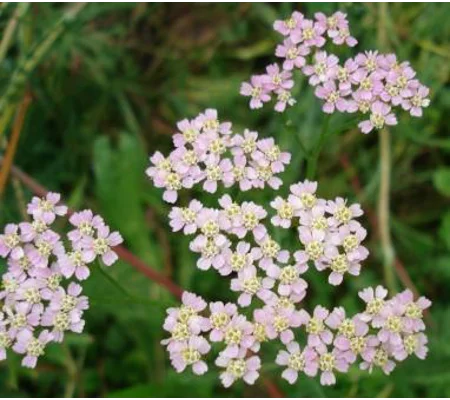
Achillea millefolium, 50 seedsAchillea millefolium is a common meadow plant of temperate zone of the Northern hemisphere. There are many closely related species of it and within it, their taxonomy is complex and not fully understood. A medicinal plant known since medieval times, it is good for digestion, soothes cramps and aids healing wounds. The genus is named after Achilles. Source of genetic material collection: Gabrovka, Slovenia
Medicinal and Herb plants
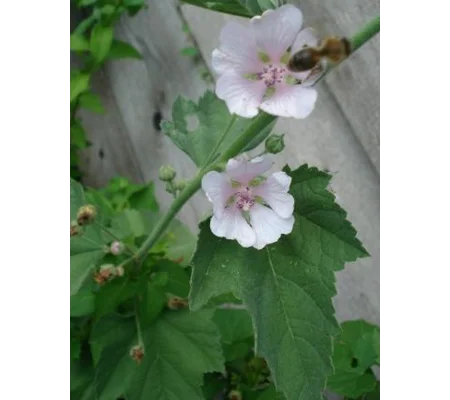
Althaea officinalis, 50 seedsAlthaea officinalis is a native of Europe, Western Asia and Northern Africa. It has been collected from the wild and grown in gardens as food and medicine for thousand of years. A perennial of dry sunny places. As a medicinal plant it reduces the irritation of mucous membranes. As a food plant it has been used as a survival food when cultivated crops failed, a gourmet food in Ancient Rome, confection (marshmallow) has been made from it since the days of Ancient Egypt and in modern vegan-cooking the water from boiling any part of the plant can be used as an egg-white substitute. Flower buds can be pickled, leaves make a decent spinach, roots are edible. Also a good ornamental plant for gardens with poor and/or soil and sunny locations.
Medicinal and Herb plants
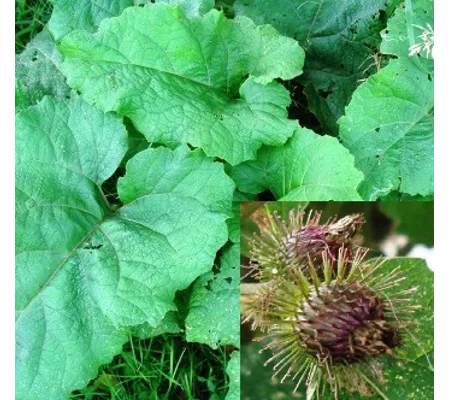
Arctium minusArctium minus is a biennial native to Europe, and invasive on other continents. The way how its flowerheads attach to hair or fabric by its bracts inspired the invention of the hook&loop fastener. Its medicinal qualities include detoxifying, calming, antimicrobial and antifungal properties. The root, petioles and flower stem are edible and dietary as the contain inulin instead of starch. Best sourced from first-year plants. Grows on nutrient rich moist-ish soils. ž Source of genetic material: Ljubljana, Slovenia
CP seeds
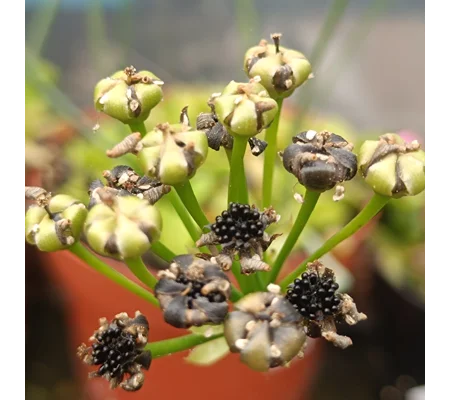
Dionaea muscipula, open pollinated seedsThe Venus flytrap (Dionaea muscipula) is a carnivorous plant native to the temperate and subtropical wetlands of North Carolina and South Carolina. I currently (2026) grow around 150 cultivars, from a hardware store rescue to variegated and pompoms. The seeds offered here are open pollinated and are like a lucky dip: most will be nothing special, some will be interesting, a few will be wow and if you're extremely lucky you might grow the one that will make you rich.
CP seeds
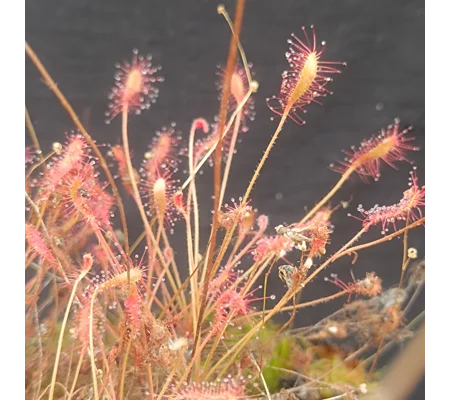
Drosera affinis, 30 seedsDrosera affinis is a subtropical sundew from South Africa. Drosera affinis is a very easy sundew to grow, requiring very little attention and is adaptable to a broad temperature range. Drosera affinis forms a unique, slender stem as it matures. The leaves are narrow and long, carried on thin petioles. Drosera affinis can be given the same conditions as D. capensis.
CP seeds
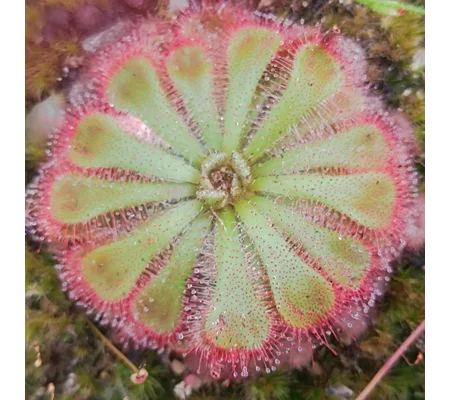
Drosera aliciae Silvermine, SA, 30 seedsDrosera aliciae, the Alice sundew, is native to the Cape Provinces of South Africa. She's a beautiful rosette-forming subtropical sundew that is very easy to grow. Drosera aliciae Silvermine is a distinct large locality plant form the Silvermine Nature Reserve in the Western Cape of South Africa.
CP seeds
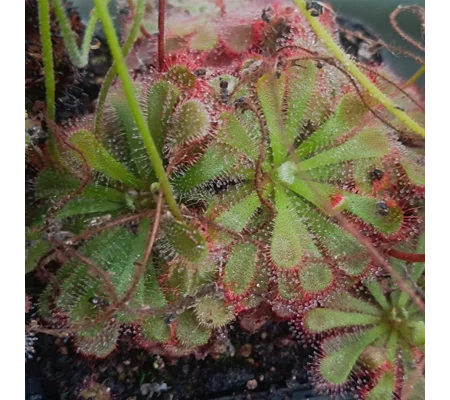
Drosera aliciae, 30 seedsDrosera aliciae, the Alice sundew, is native to the Cape Province of South Africa. She's a beautiful rosette-forming subtropical sundew that is very easy to grow.This Drosera aliciae is the typical clone of the species in cultivation.
CP seeds
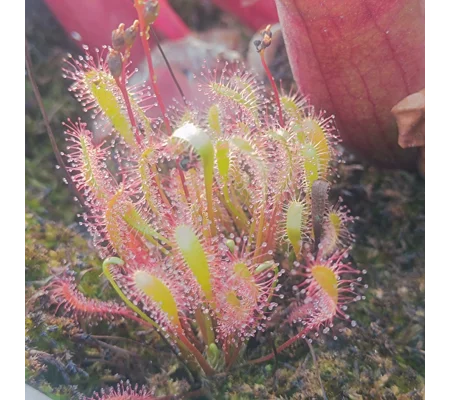
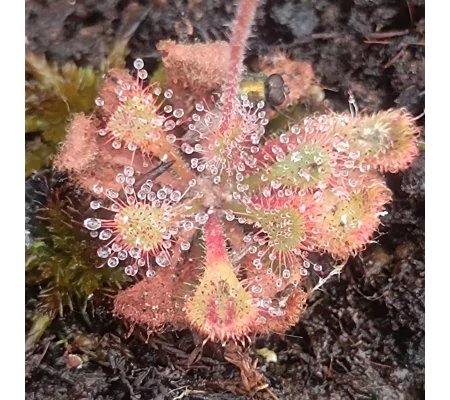
Drosera anglica Hotedrščica, Slovenia, 30 seedsDrosera anglica, commonly known as the English sundew or great sundew. It is sometimes reffered too with a synonim: Drosera longifolia. Drosera anglica is a temperate species with a circumboreal range. Drosera anglica from locality near Hotedrščica in Slovenia is a location plant that, to my knowlwdge, has not yet been offered.
CP seeds
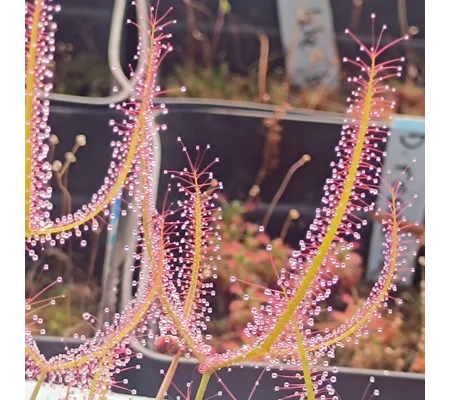
Drosera becqaerti, South Of Kalemba, Democratic Republic Of the Congo, 30 seedsDrosera bequaertii is a subshrub and grows primarily in the seasonally dry tropical biome from S. DR Congo to NE. Angola. Drosera becqaertii is still a very rare plant and I'm pleased I can offer it at a competitive price.
CP seeds
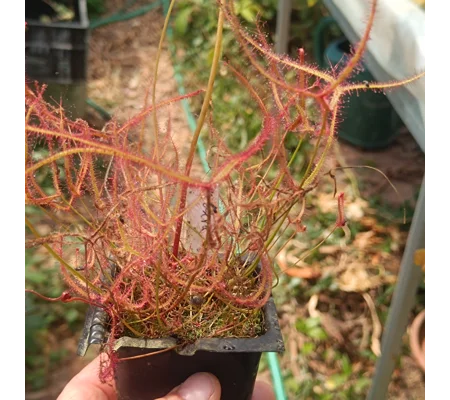
Drosera binata Mix, 50 seedsDrosera binata is a native of Australia, primarily in coastal areas from Fraser Island in Queensland, southwards down through New South Wales and Victoria to Tasmania and the south-east corner of South Australia. The range extends to New Zealand where it is common below an elevation of 1000 metres, on both North and South Island, Stewart Island/Rakiura and on the Chathams. Some populations go dormant in the winter and may survive down to USDA zone 6, while others are truly tropical. There are three forms described based on how much the leaves are divided: the T-form, multifida and extrema. Drosera binata f. multifida has more leaf divisions than the T-form, bifurcating several times to produce anywhere from eight to 16 or even 30 terminal leaf points. Some clones are self fertile, some must be pollinated by genetically different plants. This mix contains open pollinated F1 seeds, collected from my whole collection. This means there may not be any red or light green/yellow plants, bu...
CP seeds
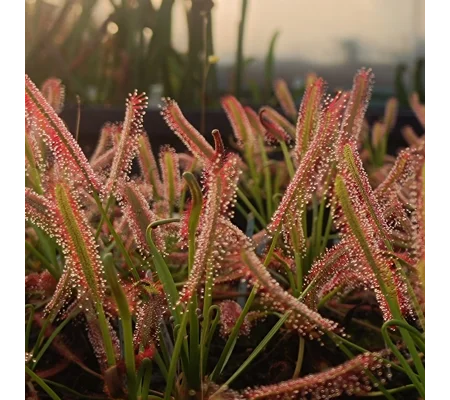
Drosera binata var. multifida, 30 seedsDrosera binata is a native of Australia, primarily in coastal areas from Fraser Island in Queensland, southwards down through New South Wales and Victoria to Tasmania and the south-east corner of South Australia. This Drosera binata var. multifida is fully self-fertile and self-seeds without a problem.
CP seeds
Drosera capensis MIX, 50 seedsDrosera capensis is a sub-tropical sundew endemic to the southwestern Cape where it can be found in marshes, along streams, permanent seeps and damp areas of fynbos. A very easy sundew to grow, suitable for begginers. The Cape sundew is fast growing and single plants can live for many years with young suckers forming at the base. Pink flowers, red sticky hairs. It is a free-flowering and fascinating house plant. Self-fertile, will self-seed. One adult plant per portion, very often with flowers, usually with small seedlings around it. This sundew is a prooven mosquito and fruit fly catcher. We offer fresh seeds, a new suply is collected every Autumn. Seeds are open pollinated, so there will be typical, alba, all red, hairy and giant seedlings sprouting - and, who knows, maybe something completely new!