
 Slovenščina

New Products

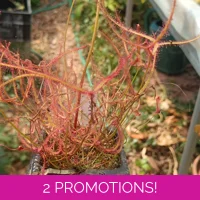
Terrestrial Utricularia

35 product(s) found for "Terrestrial Utricularia"

Utricularia microcalyx
Utricularia microcalyx is a small to medium-sized carnivorous plant that belongs to the genus Utricularia. It is native to tropical Africa, where it can be found in the Democratic Republic of the Congo and Zambia. U. microcalyx grows as a terrestrial plant in damp, sandy or peaty soils in grasslands...
9,00 €

Utricularia nephrophylla x g..
Utricularia nephrophylla x geminiloba has very cute leaves shaped like hearts. It grows great in rainforest terrariums. Genes of Utricularia nephrophylla, give the leaves the potential to grow longer petioles if humidity is higher. It can also easily be grown in a pot on a windowsill. It doesn't need...
9,00 €
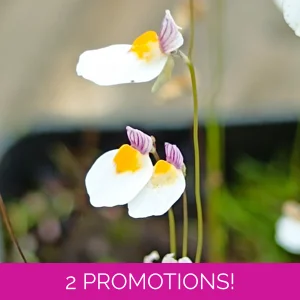
Utricularia parthenopipes
Utricularia parthenopipes is a small easy-to-grow bladderwort with gorgeous flowers. It is endemic to the Brazilian state of Bahia. In nature it grows as a terrestrial plant in damp, sandy soils over sandstone rocks at altitudes from 500 m to 1,500 m and flowers between January and June. In cultivation,...
7,00 €
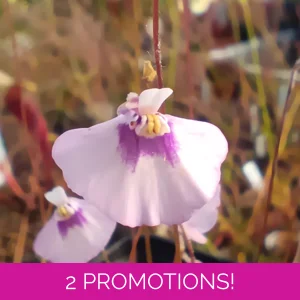
Utricularia uniflora L-form,..
Utricularia uniflora L-form, Lismere, Australia, is a terrestrial Utricularia. It has big mauve flowers that resemble butterflies. In nature it can be found from Tasmania to southeastern Australia from extreme southeastern Victoria through New South Wales to southern Queensland. You can find cultivation...
8,00 €
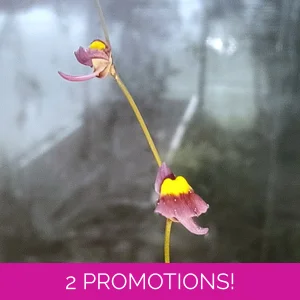
Utricularia welwitchii
Utricularia welwitschii is a small to medium-sized, probably perennial, carnivorous plant that belongs to the genus Utricularia. It is endemic to tropical Africa, where it can be found in the Democratic Republic of the Congo, Madagascar, Malawi, South Africa, Tanzania, Zambia, and Zimbabwe. U. welwitschii...
11,00 €
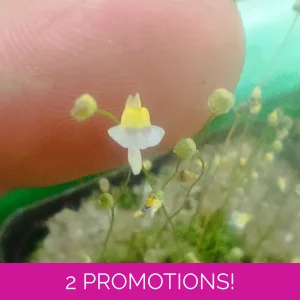
Utricularia bisquamata Bains..
Utricularia bisquamata is a small carnivorous plant that belongs to the genus Utricularia. The flowering stems grow to a height of about 12 cm. It has a rosette of narrow leaves and wiry stems supporting racemes of flowers with two lips, white, pale violet or occasionally yellow. The upper lip is small...
7,00 €
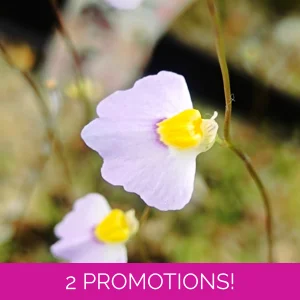
Utricularia bisquamata Betty..
Utricularia bisquamata is a small carnivorous plant that belongs to the genus Utricularia. The flowering stems grow to a height of about 12 cm. It has a rosette of narrow leaves and wiry stems supporting racemes of flowers with two lips, white, pale violet or occasionally yellow. The upper lip is small...
8,00 €
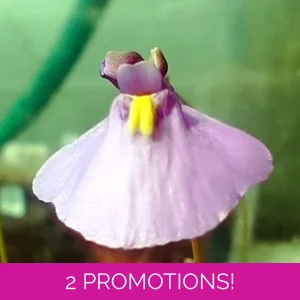
Utricularia dichotoma subsp...
Utricularia dichotoma subsp. dichotoma, commonly known as fairy aprons, is a variable, perennial species of terrestrial bladderwort. It grows in moist and wet locations. It has numerous underground trailing stems with bladders 1.5 2 mm (0.06 0.08 in) in diameter. It has absent or a few oval, spoon-shaped...
8,00 €
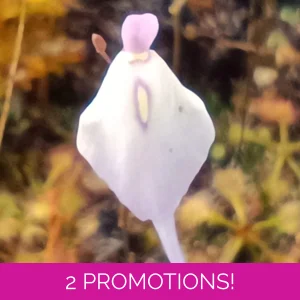
Utricularia pubescens
Utricularia pubescens is a terrestrial or lithophytic Utricularia. It grows in boggy grasslands in damp peaty soils at altitudes from sea level to 1,900 m. This species possesses small peltate leaves. That means the leaves are round and the leaf stalk (petiole) attaches at centre of the lower surface...
8,00 €

Utricularia sp. Hermanus
Utricularia s. Hermanus a potentially undescribed species or a form of Utricularia found in the Hermanus region of South Africa, possibly related to Utricularia welwitschii. It is a small, delicate carnivorous plant known for its flowers and the ability to grow in moist, nutrient-poor habitats like seepages.YouTube...
8,00 €
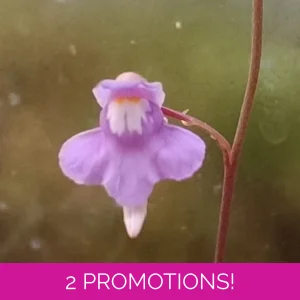
Utricularia tridentata
Utricularia tridentata is a small terrestrial carnivorous plant that belongs to the genus Utricularia. U. tridentata is endemic to South America, where it is found in Argentina, Brazil, and Uruguay.You can find cultivation tips and more on our YouTube channel https://www.youtube.com/@RanchOfPlants
8,00 €
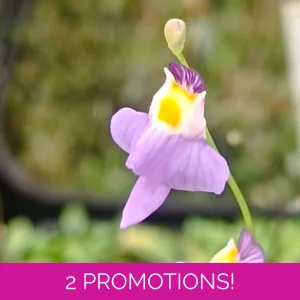
Utricularia warburgii
Utricularia warburgii is a species of terrestrial bladderwort found in South East China, where it grows in sunny wet meadows at an altitude of 900 m. It is fairly hardy, able to survive mild winters or be kept in a cold greenhouse. It belongs to the section Nigrescentes and is closely related to U. caerulea.In...
8,00 €