
Filters
Category
- Pygmy Drosera63
- Stickers & Fridge magnets45
- Mexican Pinguicula44
- CP seeds40
- Terrestrial Utricularia34
- Earrings25
- Sarracenia - species24
- Sarracenia - hybrids22
- Subtropical Drosera22
- Slovenian wildflowers17
- Dionaea (Venus Flytrap)14
- Substrate10
- Dreamcatchers9
- Keychains8
- Bracelets7
- Epiphytic Utricularia7
- Temperate Drosera6
- Medicinal and Herb plants5
- Exotic plants4
- Other Pinguicula4
- Pots & stuff4
- Edible plants3
- Cephalotus (Albany Pitcher Plant)1
- Choice shrubs & perennials1
- Darlingtonia (Cobra Lily)1
- Predator Packs1
- Stylidium (Trigger plant)1
- Wire wrapping1
Size
- Medium118
- Large117
- Small117
- 5 cm pot15
- 2 cm x 2 cm plug14
- 2 cm x 2 cm portion9
- 5 cm round pot8
- XL3
- 1 gabbietta (1=11
- 1 gabbietta (1=1,25eur)1
- 1 plant1
- 1 pot (1=01
- 1 pot (1=0,75eur)1
- 1 pot (1=11
- 1 pot (1=1,65 eur)1
- 10 gabbietta (1=1.10eur)1
- 10 pots (1=01
- 10 pots (1=0,60eur)1
- 10 pots (1=1.50 eur)1
- 10 seeds1
- 100 seeds1
- 2 plants1
- 25eur)1
- 3 plants1
- 5 gabbietta (1=1.20eur)1
- 5 pots (1=01
- 5 pots (1=0,70eur)1
- 5 pots (1=11
- 5 pots (1=1,60 eur)1
- 50 seeds1
- 60 eur)1
- 60eur)1
- 65 eur)1
- 70eur)1
- 75eur)1
- Extra Large1
- Hanging basket1
- Medium - 1 medium size plant1
- Pack of 3 rooted cuttings1
- Small - 1 pack of 3 plugs1
What you see is what you get
Availability
Offers
All Products
Pygmy Drosera
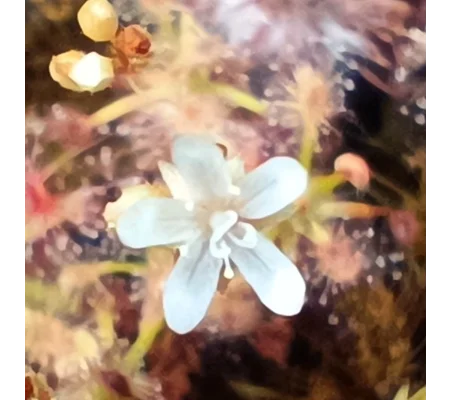
Drosera enodes, 10+ gemmaeThe epithet enodes is derived from the Greek word meaning perfumed, in reference to the sweetly scented flowers of this species.Drosera enodes is known from the extreme southwestern corner of Western Australia, with records from Scott River and Windy Harbour.It grows in black peaty sand on the margins of swamps.You can find cultivation tips and more on our YouTube channel https://www.youtube.com/@RanchOfPlants
Subtropical Drosera
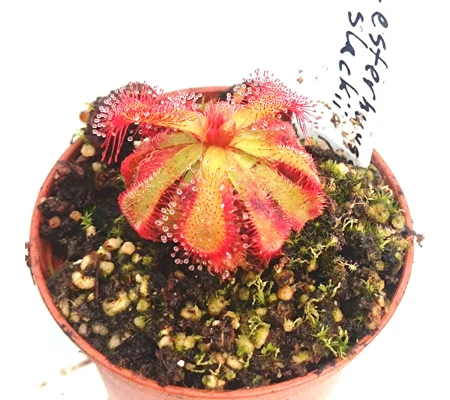
Drosera esterhuyseniae x slackiiDrosera esterhuyseniae x slackii is a hybrid between two South African sundews, of which neither is particularly beginner friendly. This hybrid, however, is extremely forgiving and is also a very beautiful plant. It grows as a compact rosette, about 4 cm in diameter and several layers of leaves deep. You can find cultivation tips and more on our YouTube channel https://www.youtube.com/@RanchOfPlants
Temperate Drosera
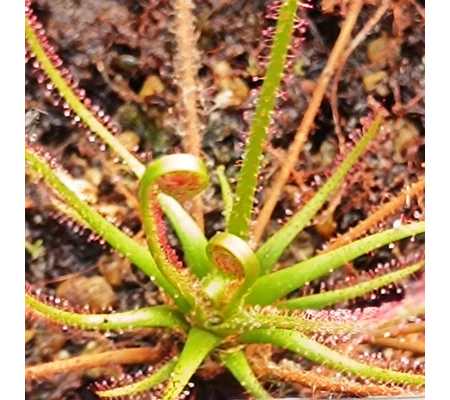
Drosera filiformisDrosera filiformis is a winter hardy plant. It can easily be grown in sphagnum moss on a garden bog or a big trough outside. In those conditions it will self seed profusely. Drosera filiformis and Drosera tracyi are two closely related North American species. So closely infact, that sometimes they are considered just subspecies. Drosera filiformis is found on the Atlantic coast from North Carolina to Nova Scotia along with a few populations in the Florida panhandle. The Florida plants are generally smaller and redder than the Atlantic coast plants and were given the name Drosera filiformis var. floridana. Drosera tracyi is found along the gulf coast from Louisiana to the Florida panhandle and southern Georgia. Both species form hibernacula in the winter although Drosera tracyi and Drosera filiformis var floridana are found in an area generally considered warm temperate and may not survive a real winter. You can find cultivation tips and more on our YouTube channel https://www.youtub...
CP seeds
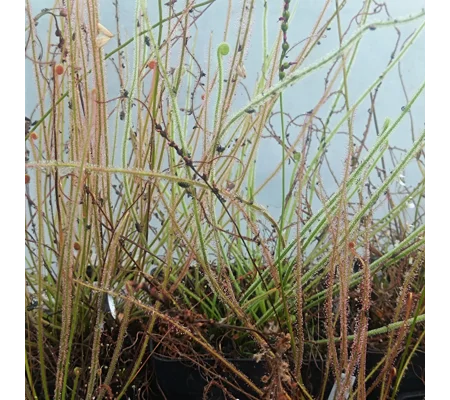
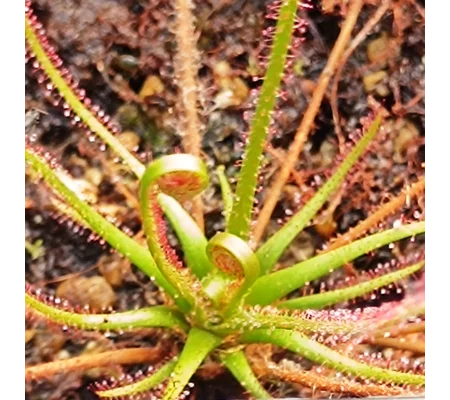
Drosera filiformis MIX, 50 seedsDrosera filiformis, commonly known as the thread-leaved sundew, is a rather large sundew. It is unusual within its genus in that the long, erect, filiform (thread-like) leaves of this plant unroll in spirals, similar to what is seen in ferns.
CP seeds
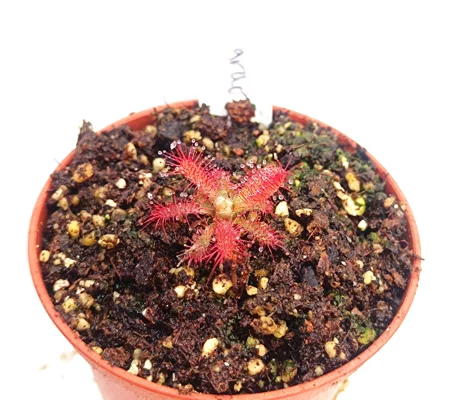
Drosera filiformis, 30 seedsDrosera filiformis, commonly known as the thread-leaved sundew, is a rather large sundew. It is unusual within its genus in that the long, erect, filiform (thread-like) leaves of this plant unroll in spirals, similar to what is seen in ferns.
Subtropical Drosera
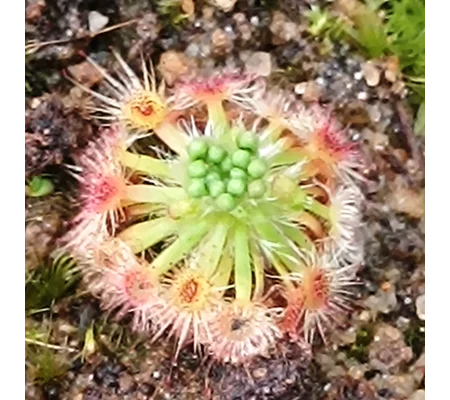
Drosera graomogolensis Minas Gerais, BrazilDrosera graomogolensis is the easiest South American sundew to grow. Summer heat doesn't bother it, as long as the nights cool off to 20C or below. Drosera graomogolensis is named for the type locale, Grão-Mogol. It is endemic to the State Minas Gerais in Brazil. It grows in the campos rupestres habitat. Drosera graomogolensis eventually grows to be a big plant, it reaches up to 34 cm tall. Leaves are wine-red, forming a basal rosette, up to 3.5 cm long and 6.5 cm broad. The plant produces 1 or 2 flowering stalks, each with 10 16 large pinkish-violet flowers. You can find cultivation tips and more on our YouTube channel https://www.youtube.com/@RanchOfPlants
Pygmy Drosera
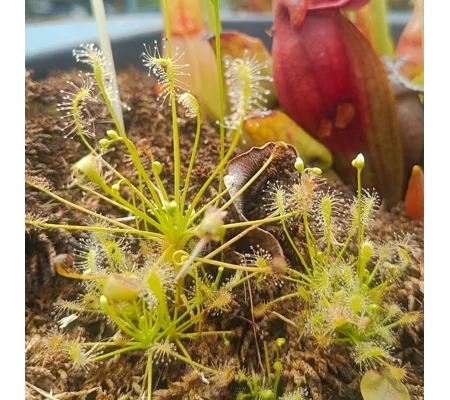
Drosera helodes Bullsbrook, 10+ gemmaeDrosera helodes is named from the Greek helodes (marsh), a reference to this species preference for seasonally wet, marshy habitats. Drosera helodes is known from Western Australia, with records from Bullsbrook, Byford, Muchea and Gingin. It grows in grey, white-grained sandy soils sometimes mixed with a little laterite in winter-wet depressions, as well as in black, but still white-grained, humic sandy soils on the margins of seasonal swampland systems. You can find cultivation tips and more on our YouTube channel https://www.youtube.com/@RanchOfPlants
CP seeds
Drosera intermedia ALL GREEN North Carolina - 50 seedsDrosera intermedia ALL GREEN, North Carolina is an anthocyanin free (all green) form of the species from North America. Drosera intermedia is one of the most widely distributed sundews. It is one of only three Drosera species native to Europe (the others are D. rotundifolia and D. anglica). It is also found in eastern North America, Cuba, and northern South America. The European and North American forms are winterhardy and form a hibernaculum to survive the winter. Drosera intermedia grows in sunny wet habitats such as bogs, fens, wet sandy shorelines and wet meadows. You recieve a package of 50 fresh seeds.
Temperate Drosera
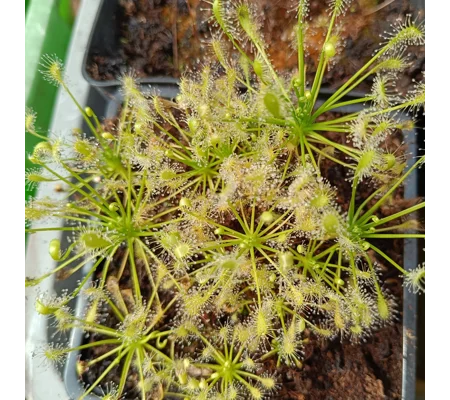
Drosera intermedia Antho free, North Carolina, USADrosera intermedia is one of the most widely distributed species in the genus. It is a temperate or tropical species native to Europe, eastern North America, Cuba, and northern South America. The Cuban and South American forms are tropical and do not form hibernacula in the winter. Drosera intermedia is one of only three Drosera species native to Europe (the others are D. rotundifolia and D. anglica). You can find cultivation tips and more on our YouTube channel https://www.youtube.com/@RanchOfPlants
CP seeds
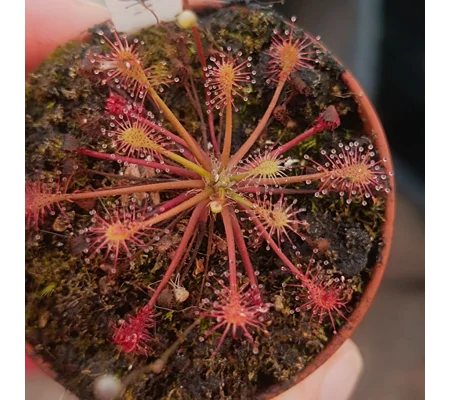
Drosera intermedia Kuba, 30 seedsDrosera intermedia is one of the most widely distributed sundews. It is one of only three Drosera species native to Europe (the others are D. rotundifolia and D. anglica). It is also found in eastern North America, Cuba, and northern South America and islands of Kuba and Hispaniola. When growing this plant, one must take into consideration that different populations of D. intermedia may be adapted to either cooler or warmer temperate, tropical or alpine tropical zones. Only the European and North American forms are winterhardy and form a hibernaculum to survive the winter. Drosera intermedia grows in sunny wet habitats such as bogs, fens, wet sandy shorelines and wet meadows.
Temperate Drosera
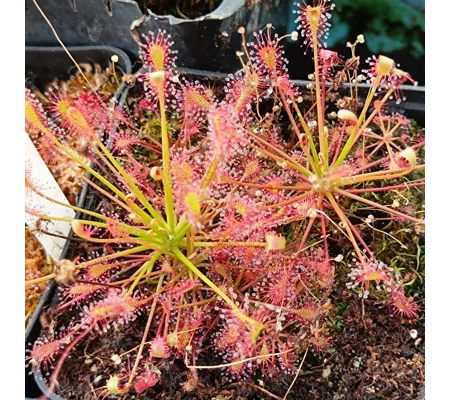
Drosera intermedia RedDrosera intermedia is one of the most widely distributed species in the genus. It is a temperate or tropical species native to Europe, eastern North America, Cuba, and northern South America. The Cuban and South American forms are tropical and do not form hibernacula in the winter. Drosera intermedia is one of only three Drosera species native to Europe (the others are D. rotundifolia and D. anglica). You can find cultivation tips and more on our YouTube channel https://www.youtube.com/@RanchOfPlants
CP seeds
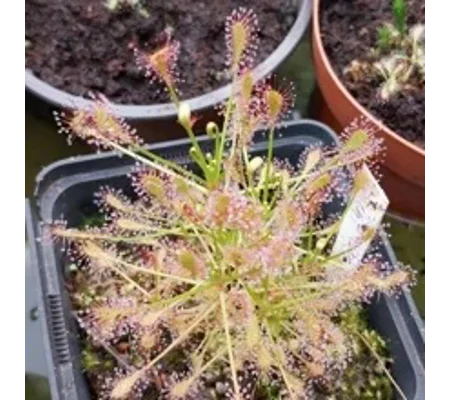
Drosera intermedia Trzin, Slo, 30 seedsDrosera intermedia from Trzin, Slovenia, is a temperate plant, that forms a hibernaculum in autumn and overwinters in this dormant state. The plants from this locality are vigorous, quite large and forms a stalk. Drosera intermedia is one of the most widely distributed sundews. It is one of only three Drosera species native to Europe (the others are D. rotundifolia and D. anglica). It is also found in eastern North America, Cuba, and northern South America and islands of Kuba and Hispaniola. When growing this plant, one must take into consideration that different populations of D. intermedia may be adapted to either cooler or warmer temperate, tropical or alpine tropical zones. Only the European and North American forms are winterhardy and form a hibernaculum to survive the winter. Drosera intermedia grows in sunny wet habitats such as bogs, fens, wet sandy shorelines and wet meadows.