Drosera filiformis MIX, 50 seeds
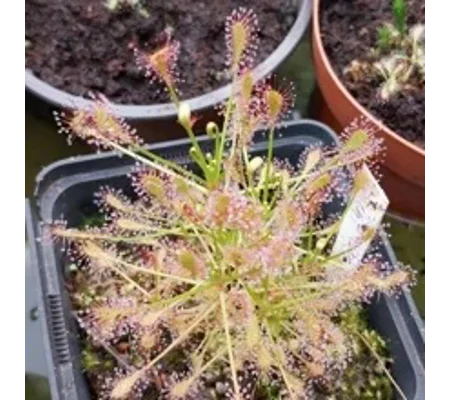
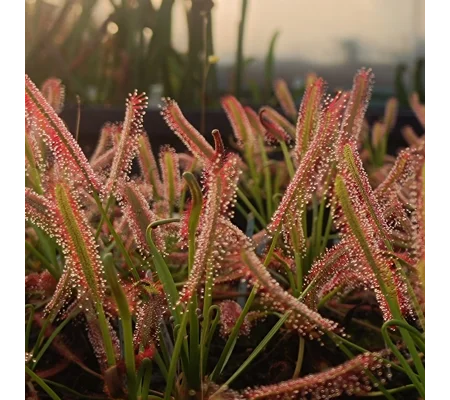
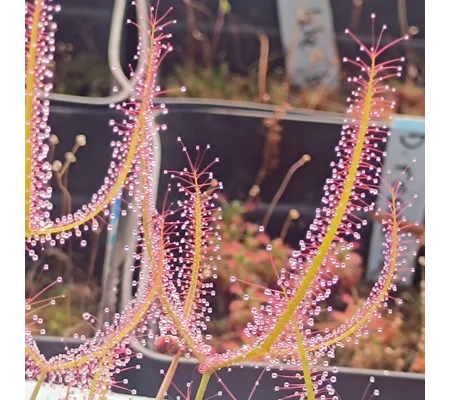
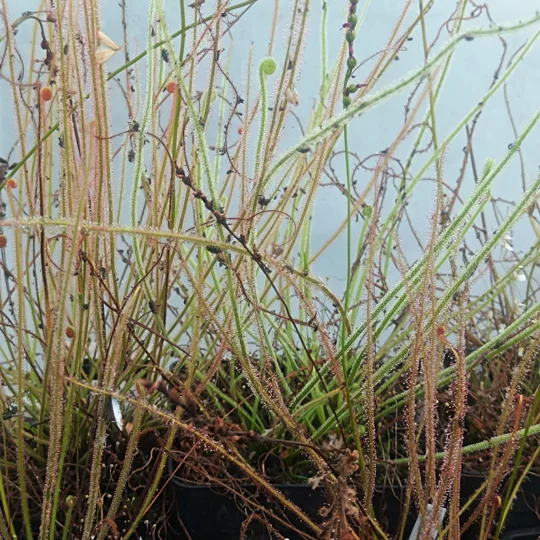
Drosera filiformis, commonly known as the thread-leaved sundew, is a rather large sundew. It is unusual within its genus in that the long, erect, filiform (thread-like) leaves of this plant unroll in spirals, similar to what is seen in ferns.
Drosera filiformis, commonly known as the thread-leaved sundew, is a rather large sundew. It is unusual within its genus in that the long, erect, filiform (thread-like) leaves of this plant unroll in spirals, similar to what is seen in ferns.
Drosera filiformis occurs naturally in both Canada and the United States. Its natural range extends down the eastern seaboard of North America from south western Nova Scotia in the North, down through New England to the Florida panhandle in the south. Its disjunct distribution on the Atlantic Coast reflects the prehistoric land connection between Nova Scotia and Cape Cod, Massachusetts, which formed an ancient extension of the Atlantic Plain region that likely persisted well into the current interglacial period as an island chain.
In fact when talking about Drosera filiformis we are actually talking about a cpecies complex. Drosera tracyi has been established as a species for some time, and Drosera floridana has been raised to species rank just in mid-2026. It has been formerely known as D. filiformis var. floridana or ''Florida red''. It is endemic to Florida.
Drosera filiformis is frequently cultivated, there are a few registered cultivars, a few location plants and even a few natural and man-made hybrids in circulation. All of these taxons are grown with similar conditions as most other Drosera species. Most of Drosera filiformis taxons form a hibernaculum, even though the ones originating from Florida do not require a winter dormancy.
Drosera tracyi, formerely Drosera filiformis subsp. tracyi is found along the gulf coast from Louisiana to the Florida panhandle and southern Georgia. Drosera tracyi forms a hibernaculum in winter although it is found in an area generally considered warm temperate and does not survive a zone 7 winter. Fyi: Most of Central Europe falls roughly under zone 7, the areas up to around 800 m asl and the Eastern part are about zone 6, the mid-Atlantic coast about zone 8 and the Medditeranean region is zone 9.
Drosera filiformis and Drosera tracyi do not generally bloom at the same time. If they do, then hybrids are easy to make partly because Drosera tracyi flowers tend not to self pollinate very well. Hybrids between Drosera filiformis and Drosera tracyi may be referred to as Drosera x californica.The hybrids tend to be much easier to maintain in cultivation than either of the parents and it is quite possible that many "Drosera tracyi" plants in cultivation have some parentage from Drosera filiformis.
Seeds in my Drosera filiformis mix are mainly open pollinated and any hand pollinated ones that were surplus or lost their label. You're really getting a mix that should have some varied genetics inside.
| Title | Drosera filiformis MIX, 50 seeds |
|---|---|
| Category | CP seeds |
| SKU | DroFilMix50s |
| Condition | new |