
Subtropical Drosera

Subtropical Drosera
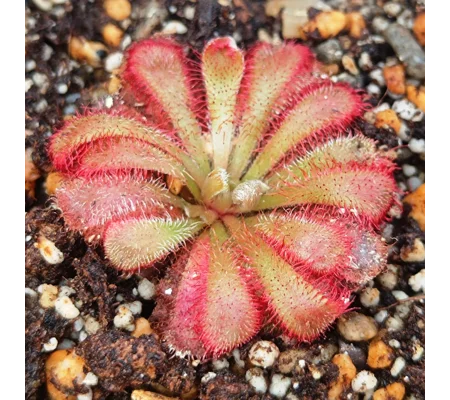
Drosera aliciaeSub-tropical, easy to grow. Flowers are hot pink and open very briefly for a few hours with good sunlight. They can be pollinated by insects but are usually self-pollinated. Drosera aliciae is one of the 23 sendew species endemic to South Africa. It is a common species in the Western Cape, its distribution extending into the Eastern Cape. It occurs at altitudes from 30 to 2000 m. The species was first named and published in the Journal de Botanique in 1905 by Raymond-Hamet (1890-1972) who was 15 years old at the time. He named it in honour of Dr. Alice Rasse who encouraged him to study the sundew family. One plant per pot, semiadult or adult.
Subtropical Drosera
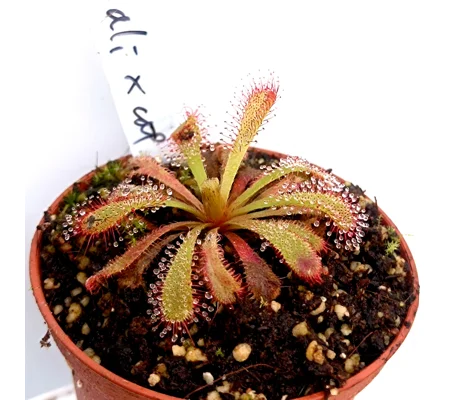
Drosera aliciae Giant rosette x capensis Large form, Dr. Eberhard Koenig cl.2Drosera aliciae Giant rosette x capensis Large form, Dr. Eberhard König, cl. 2 is a rare hybrid of two rare-ish clones of common plants. Both parents of this hybrid are very large plants, compared to the typical sizes of their respective species. This means Drosera aliciae x capensis grow into an unusually large plant as well. It is a curious plant, somehow familiar and yet somehow ''off''. And the best part? It's very easy to grow! You can find cultivation tips and more on our YouTube channel https://www.youtube.com/@RanchOfPlants
Subtropical Drosera
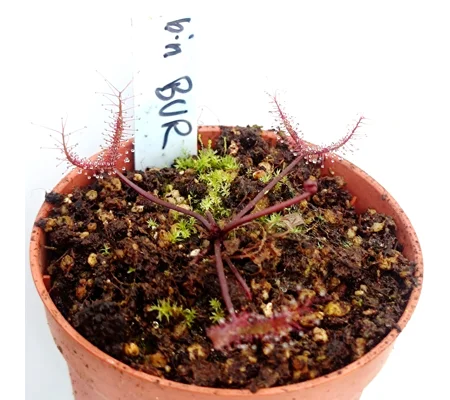
Drosera binata BURGUNDYDrosera binata Burgundy is a completely deep purple colored plant. Drosera binata is a native of Australia, primarily in coastal areas from Fraser Island in Queensland, southwards down through New South Wales and Victoria to Tasmania and the south-east corner of South Australia. The range extends to New Zealand where it is common below an elevation of 1000 metres, on both North and South Island, Stewart Island/Rakiura and on the Chathams. Some populations go dormant in the winter and may survive down to USDA zone 6, while others are truly tropical. There are three forms described based on how much the leaves are divided: the T-form, multifida and extrema. Drosera binata f. multifida has more leaf divisions than the T-form, bifurcating several times to produce anywhere from eight to 16 or even 30 terminal leaf points. You can find cultivation tips and more on our YouTube channel https://www.youtube.com/@RanchOfPlants
Subtropical Drosera
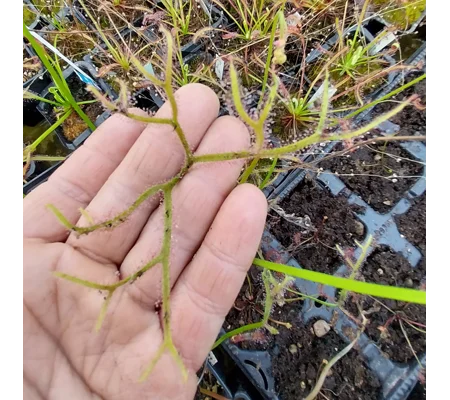
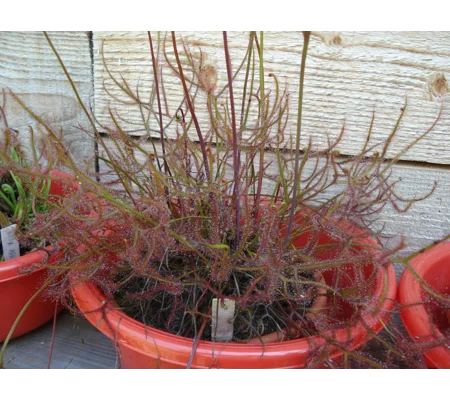
Drosera binata f. extremaDrosera binata f. extrema has the most leaf divisions of any binata form, branching many times to produce anywhere up to 40 leaf points. Will turn very red in good light in summer. Drosera binata is a native of Australia, primarily in coastal areas from Fraser Island in Queensland, southwards down through New South Wales and Victoria to Tasmania and the south-east corner of South Australia. The range extends to New Zealand where it is common below an elevation of 1000 metres, on both North and South Island, Stewart Island/Rakiura and on the Chathams. Some populations go dormant in the winter and may survive down to USDA zone 6, while others are truly tropical. There are three forms described based on how much the leaves are divided: the T-form, multifida and extrema.
Subtropical Drosera
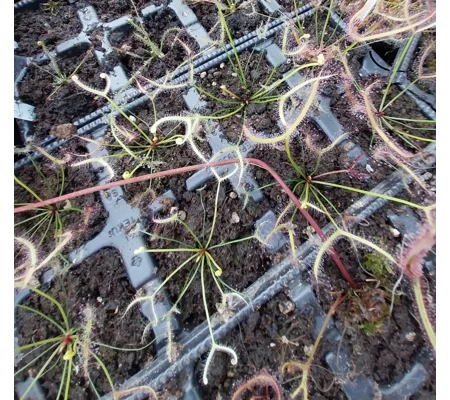
Drosera binata f. multifidaDrosera binata is a native of Australia, primarily in coastal areas from Fraser Island in Queensland, southwards down through New South Wales and Victoria to Tasmania and the south-east corner of South Australia. The range extends to New Zealand where it is common below an elevation of 1000 metres, on both North and South Island, Stewart Island/Rakiura and on the Chathams. Some populations go dormant in the winter and may survive down to USDA zone 6, while others are truly tropical. There are three forms described based on how much the leaves are divided: the T-form, multifida and extrema. Drosera binata f. multifida has more leaf divisions than the T-form, bifurcating several times to produce anywhere from eight to 16 or even 30 terminal leaf points. One plant per pot, flowering size. Sub-tropical, dormant in winter, may go dormant in summer if too hot.
Subtropical Drosera
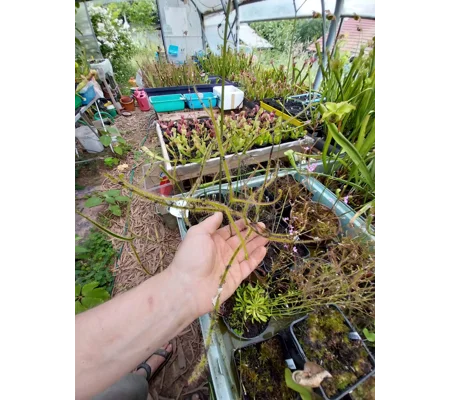
Drosera binata 'GHOST'Drosera binata 'GHOST' has pale or yellow leaves. It can get burned in strong sunlight, so keep it out ot the midday sun. Drosera binata is a native of Australia, primarily in coastal areas from Queensland to Fraser Island/K'Gari, southwards down through New South Wales and Victoria to Tasmania and the south-east corner of South Australia.
Subtropical Drosera
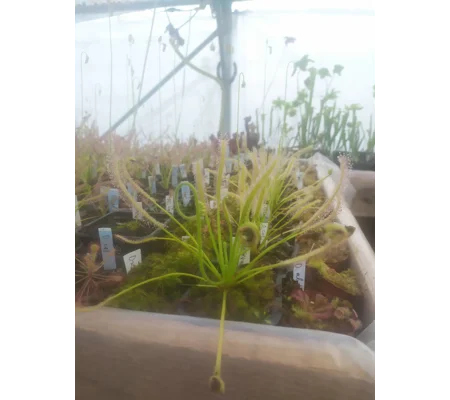
Drosera binata var. dichotoma GIANTDrosera binata var. dichotoma GIANT is one of the largest sundews in the world. It is ginormous, the leaves, flower stalks and flowers are like other binata but three times the size. The leaves are forked once or twice, producing 2 or 4 leaf tips. Plant will turn very red in good light in summer. Drosera binata is a native of Australia, primarily in coastal areas from Fraser Island in Queensland, southwards down through New South Wales and Victoria to Tasmania and the south-east corner of South Australia. The range extends to New Zealand where it is common below an elevation of 1000 metres, on both North and South Island, Stewart Island/Rakiura and on the Chathams. Some populations go dormant in the winter and may survive down to USDA zone 6, while others are truly tropical.
Subtropical Drosera
Drosera capensis 'ALBA'Drosera capensis is a sub-tropical sundew endemic to the southwestern Cape of South Africa where it can be found in marshes, along streams, permanent seeps and damp areas of fynbos. Alba differs from type capensis in having white flowers and white to pinkish hairs on the leaves. Price is per one adult plant, often flowering.
Subtropical Drosera
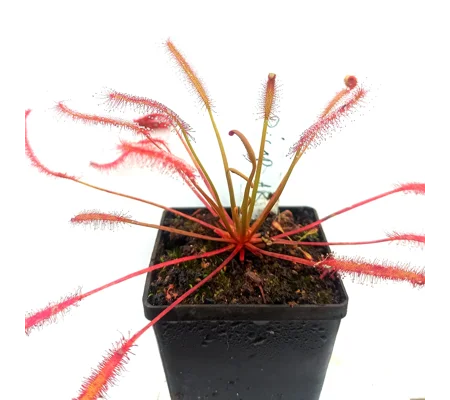
Drosera capensis 'ALL RED'Drosera capensis is one of the easiest sundews to grow. A sub-tropical sundew endemic to the southwestern Cape of South Africa, where it can be found in marshes, along streams, permanent seeps and damp areas of fynbos. All Red is a completly red coloured form of cape sundew. We offer adult plants, one plant per pot.
Subtropical Drosera
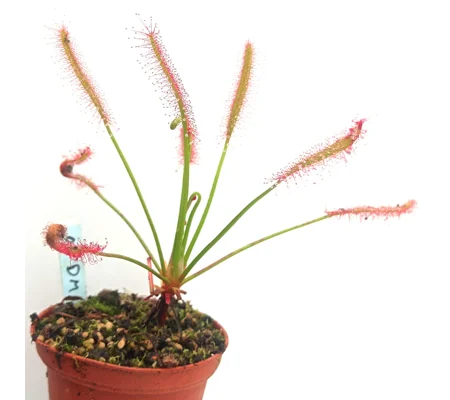
Drosera capensis Dark MaroonDrosera capensis Dark maroon turns brownish red in good light. Drosera capensis is a sub-tropical sundew endemic to the southwestern Cape where it can be found in marshes, along streams, permanent seeps and damp areas of fynbos. A very easy sundew to grow, suitable for begginers. The Cape sundew is fast growing and single plants can live for many years with young suckers forming at the base. Pink flowers, red sticky hairs. It is a free-flowering and fascinating house plant. Self-fertile, will self-seed. You can find cultivation tips and more on our YouTube channel https://www.youtube.com/@RanchOfPlants
Subtropical Drosera
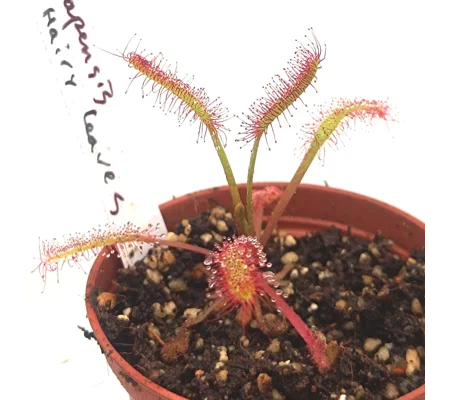
Drosera capensis Hairy LeavesDrosera capensis Hairy leaves is a bit squatter than the typical and it indeed has leaves covered with short hairs. Drosera capensis is a sub-tropical sundew endemic to the southwestern Cape where it can be found in marshes, along streams, permanent seeps and damp areas of fynbos. A very easy sundew to grow, suitable for begginers. The Cape sundew is fast growing and single plants can live for many years with young suckers forming at the base. Pink flowers, red sticky hairs. It is a free-flowering and fascinating house plant. Self-fertile, will self-seed. You can find cultivation tips and more on our YouTube channel https://www.youtube.com/@RanchOfPlants
Subtropical Drosera
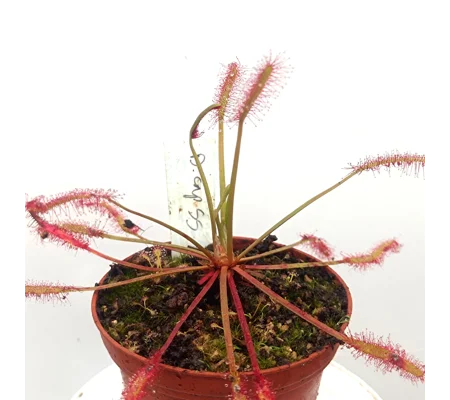
Drosera capensis Spider SeedDrosera capensis Spider Seed is my own selection. It has particularly long and thin petioles. Young leaves are orangey in summer and bright green in winter. Older leaves are completely bright red in summer and red in the top half with the lamina in winter. Drosera capensis is a sub-tropical sundew endemic to the southwestern Cape where it can be found in marshes, along streams, permanent seeps and damp areas of fynbos. A very easy sundew to grow, suitable for begginers. The Cape sundew is fast growing and single plants can live for many years with young suckers forming at the base. Pink flowers, red sticky hairs. It is a free-flowering and fascinating house plant. Self-fertile, will self-seed. You can find cultivation tips and more on our YouTube channel https://www.youtube.com/@RanchOfPlants


