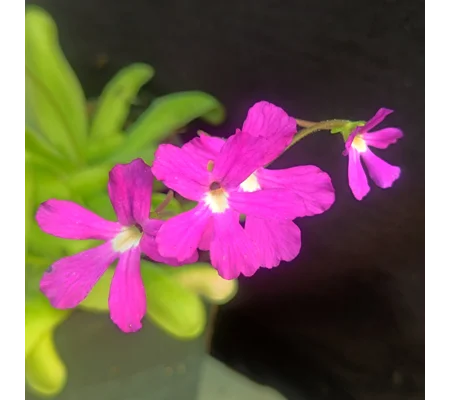
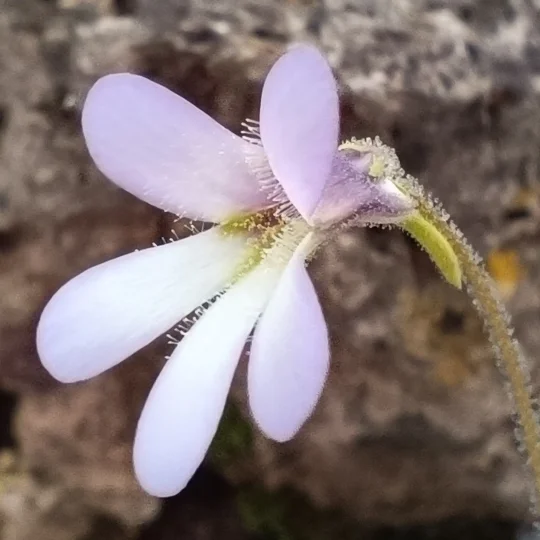
Pinguicula medusina, Laguna Encantada, Oaxaca
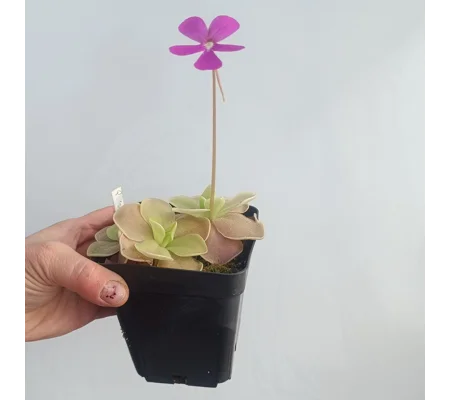
Named after the mythical Medusa, Pinguicula medusina is one of the most fascinating and interactive plants in the carnivorous world. This remarkable species produces long, narrow, upright leaves that gracefully arch outward like a crown of serpents.The real magic happens at the leaf tips: when they touch the ground, they automatically sprout brand-new baby plantlets! The ability of Pinguicula medusina to make tiny clones of itself is called vivipary.
Named after the mythical Medusa, Pinguicula medusina is one of the most fascinating and interactive plants in the carnivorous world. This remarkable species produces long, narrow, upright leaves that gracefully arch outward like a crown of serpents.The real magic happens at the leaf tips: when they touch the ground, they automatically sprout brand-new baby plantlets! The ability of Pinguicula medusina to make tiny clones of itself is called vivipary.
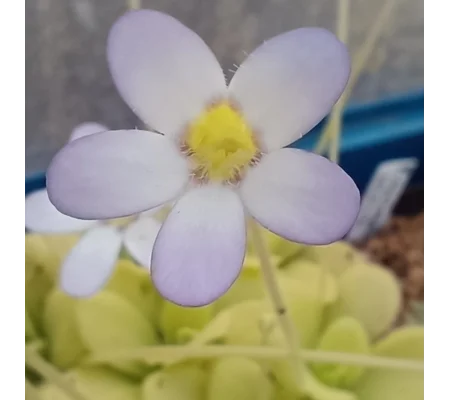
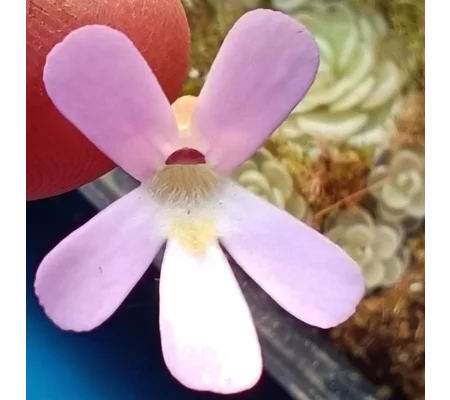
This unique trait allows P. medusina to naturally walk across its substrate, creating beautiful cascading colonies over time. Coated in shimmering digestive dew and producing gorgeous, large purple flowers, it offers a fascinating growing experience unlike any other butterwort.
Pinguicula medusina is currently known only from gypsum hills at Laguna Encantata, about 3km north from Santiago Juxtlahuaca in the state of Oaxaca.
It was discovered by Alfred Lau in 1977 while he was looking for cactus on a new hill of gypsum. Alfred Lau collected a few plants and sent it to various European botanical gardens. Only the pnts sent to Linz in Austria survived. They were multiplied and distributed under the name Pinguicula ‘alfredae’ without giving them a precise taxonomic rank. The 'alfredae' bit coming from the name of the discoverer, Alfred Lau.
Van Marm and Lampard (1992) considered it was time to resolve the problem of whether P. alfredae was a form of Pinguicula heterophylla or not. However, they didn’t have enough genetically different plants to conclude and felt that it will be important to perform further studies of wild populations and in the greenhouse. Between 1998 and 1999, there were various expeditions to the state of Oaxaca to find wild populations of these plants with the aim of collecting new clones for study to try to answer the question. In the same period, in the botanical garden of Liberec in the Czech Republic, M. Studnicka obtained the proof that P. heterophylla and P. ‘alfredae’ were different species through studies of live material which could be distinguished by their flower morphology, their phenology and their ecology. S.Z. Ruiz and M. Studnicka published the description of P. medusina in 2000.
· Fascinating Viviparous Trait: Grows new baby plants directly from the tips of its mature leaves, making propagation effortless.
· Unique Serpent-Like Shape: Long, elegant, upward-reaching foliage gives it a striking, dynamic profile.
· Dynamic Colony Creator: Quickly expands across pots or rock faces to form an impressive, multi-generational cluster.
🐾 Grow Beautiful Plants, Save Precious Lives
Your purchase makes a real-world impact. Proceeds from this sale fund urgent veterinary care, food, and shelter for local stray animals
📦 Quick Care Guide
· Light: Bright, indirect light or strong artificial light.
· Water: Keep damp during summer with pure water. Provide a distinct dry winter rest once it transitions into a succulent bulb.
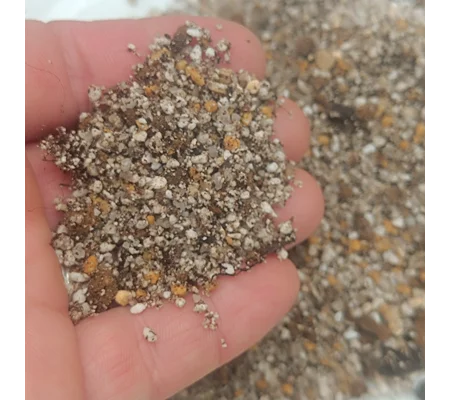
· Substrate: Requires a gritty, well-draining mineral mix (pumice, perlite, sand).
| Title | Pinguicula medusina, Laguna Encantada, Oaxaca |
|---|---|
| Category | Mexican Pinguicula |
| SKU | PinMed |
| Condition | new |
| Size | Small, Medium, Large |