
Filters
Category
- Pygmy Drosera63
- Stickers & Fridge magnets45
- Mexican Pinguicula44
- CP seeds40
- Terrestrial Utricularia34
- Earrings25
- Sarracenia - species24
- Sarracenia - hybrids22
- Subtropical Drosera22
- Slovenian wildflowers17
- Dionaea (Venus Flytrap)14
- Substrate10
- Dreamcatchers9
- Keychains8
- Bracelets7
- Epiphytic Utricularia7
- Temperate Drosera6
- Medicinal and Herb plants5
- Exotic plants4
- Other Pinguicula4
- Pots & stuff4
- Edible plants3
- Cephalotus (Albany Pitcher Plant)1
- Choice shrubs & perennials1
- Darlingtonia (Cobra Lily)1
- Predator Packs1
- Stylidium (Trigger plant)1
- Wire wrapping1
Size
- Medium118
- Large117
- Small117
- 5 cm pot15
- 2 cm x 2 cm plug14
- 2 cm x 2 cm portion9
- 5 cm round pot8
- XL3
- 1 gabbietta (1=11
- 1 gabbietta (1=1,25eur)1
- 1 plant1
- 1 pot (1=01
- 1 pot (1=0,75eur)1
- 1 pot (1=11
- 1 pot (1=1,65 eur)1
- 10 gabbietta (1=1.10eur)1
- 10 pots (1=01
- 10 pots (1=0,60eur)1
- 10 pots (1=1.50 eur)1
- 10 seeds1
- 100 seeds1
- 2 plants1
- 25eur)1
- 3 plants1
- 5 gabbietta (1=1.20eur)1
- 5 pots (1=01
- 5 pots (1=0,70eur)1
- 5 pots (1=11
- 5 pots (1=1,60 eur)1
- 50 seeds1
- 60 eur)1
- 60eur)1
- 65 eur)1
- 70eur)1
- 75eur)1
- Extra Large1
- Hanging basket1
- Medium - 1 medium size plant1
- Pack of 3 rooted cuttings1
- Small - 1 pack of 3 plugs1
What you see is what you get
Availability
Offers
All Products
CP seeds
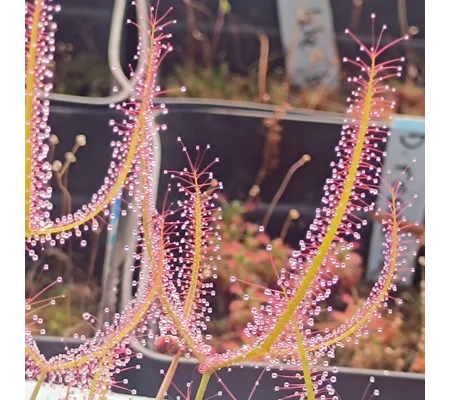
Drosera binata Mix, 50 seedsDrosera binata is a native of Australia, primarily in coastal areas from Fraser Island in Queensland, southwards down through New South Wales and Victoria to Tasmania and the south-east corner of South Australia. The range extends to New Zealand where it is common below an elevation of 1000 metres, on both North and South Island, Stewart Island/Rakiura and on the Chathams. Some populations go dormant in the winter and may survive down to USDA zone 6, while others are truly tropical. There are three forms described based on how much the leaves are divided: the T-form, multifida and extrema. Drosera binata f. multifida has more leaf divisions than the T-form, bifurcating several times to produce anywhere from eight to 16 or even 30 terminal leaf points. Some clones are self fertile, some must be pollinated by genetically different plants. This mix contains open pollinated F1 seeds, collected from my whole collection. This means there may not be any red or light green/yellow plants, bu...
Subtropical Drosera
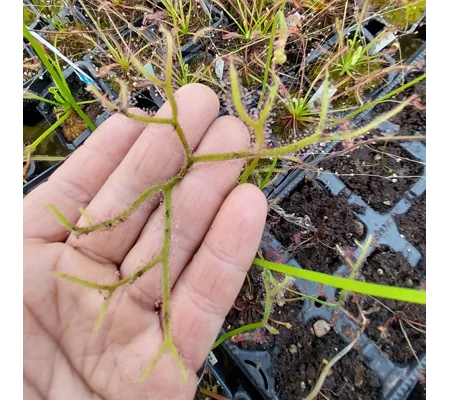
Drosera binata f. extremaDrosera binata f. extrema has the most leaf divisions of any binata form, branching many times to produce anywhere up to 40 leaf points. Will turn very red in good light in summer. Drosera binata is a native of Australia, primarily in coastal areas from Fraser Island in Queensland, southwards down through New South Wales and Victoria to Tasmania and the south-east corner of South Australia. The range extends to New Zealand where it is common below an elevation of 1000 metres, on both North and South Island, Stewart Island/Rakiura and on the Chathams. Some populations go dormant in the winter and may survive down to USDA zone 6, while others are truly tropical. There are three forms described based on how much the leaves are divided: the T-form, multifida and extrema.
Subtropical Drosera
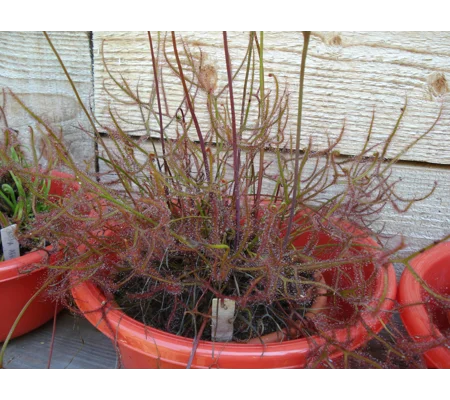
Drosera binata f. multifidaDrosera binata is a native of Australia, primarily in coastal areas from Fraser Island in Queensland, southwards down through New South Wales and Victoria to Tasmania and the south-east corner of South Australia. The range extends to New Zealand where it is common below an elevation of 1000 metres, on both North and South Island, Stewart Island/Rakiura and on the Chathams. Some populations go dormant in the winter and may survive down to USDA zone 6, while others are truly tropical. There are three forms described based on how much the leaves are divided: the T-form, multifida and extrema. Drosera binata f. multifida has more leaf divisions than the T-form, bifurcating several times to produce anywhere from eight to 16 or even 30 terminal leaf points. One plant per pot, flowering size. Sub-tropical, dormant in winter, may go dormant in summer if too hot.
Subtropical Drosera
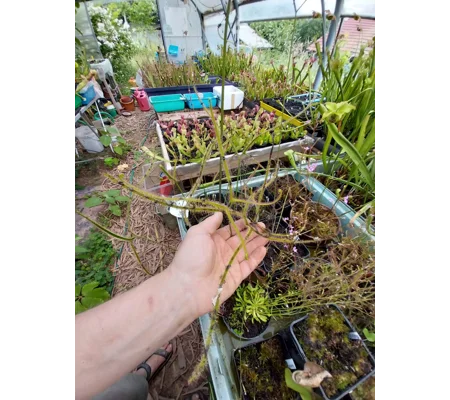
Drosera binata var. dichotoma GIANTDrosera binata var. dichotoma GIANT is one of the largest sundews in the world. It is ginormous, the leaves, flower stalks and flowers are like other binata but three times the size. The leaves are forked once or twice, producing 2 or 4 leaf tips. Plant will turn very red in good light in summer. Drosera binata is a native of Australia, primarily in coastal areas from Fraser Island in Queensland, southwards down through New South Wales and Victoria to Tasmania and the south-east corner of South Australia. The range extends to New Zealand where it is common below an elevation of 1000 metres, on both North and South Island, Stewart Island/Rakiura and on the Chathams. Some populations go dormant in the winter and may survive down to USDA zone 6, while others are truly tropical.
CP seeds
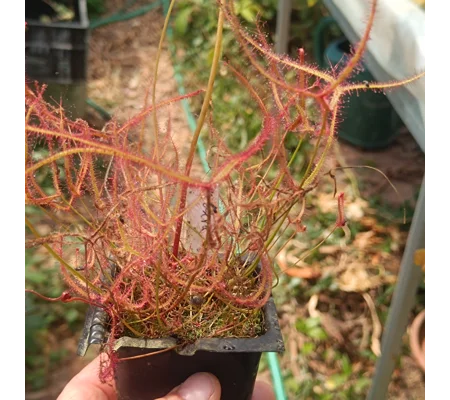
Drosera binata var. multifida, 30 seedsDrosera binata is a native of Australia, primarily in coastal areas from Fraser Island in Queensland, southwards down through New South Wales and Victoria to Tasmania and the south-east corner of South Australia. This Drosera binata var. multifida is fully self-fertile and self-seeds without a problem.
Pygmy Drosera
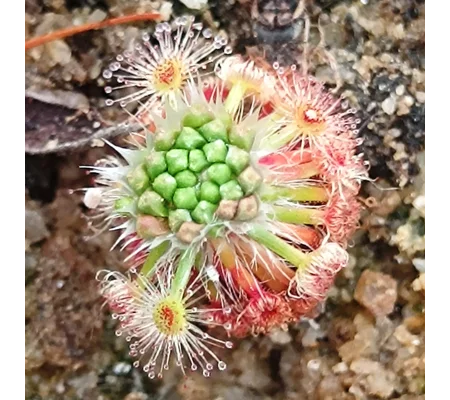
Drosera bindoon, 10+ gemmaeThe epithet bindoon is derived from an indigenous Australian name meaning place where yams grow . This species was first encountered in an area generally referred to as the Bindoon region. Drosera bindoon has a restricted range in Western Australia. It has only been found between Muchea and Wannamal over a distance of 40 km. It grows in heavy laterite soils. You can find cultivation tips and more on our YouTube channel https://www.youtube.com/@RanchOfPlants
Pygmy Drosera
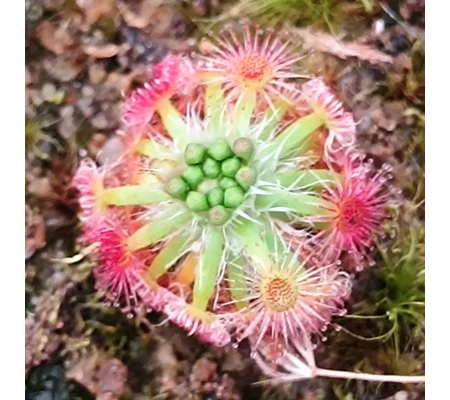
Drosera callistos x lasiantha Dork's Pink, 10+ gemmaeDrosera callistos x lasiantha Dork's pink is the first man-made hybrid pygmy sundew and the first registered variety of pygmy sundew. because of this, it is an extremely important plant in the history of cultivation of this group of plants. On a practical note Dork's pink gave botanists the first conformation that some of the naturally occurring pygmy drosera taxons were actually hybrids and not species. You can find cultivation tips and more on our YouTube channel https://www.youtube.com/@RanchOfPlants
Pygmy Drosera
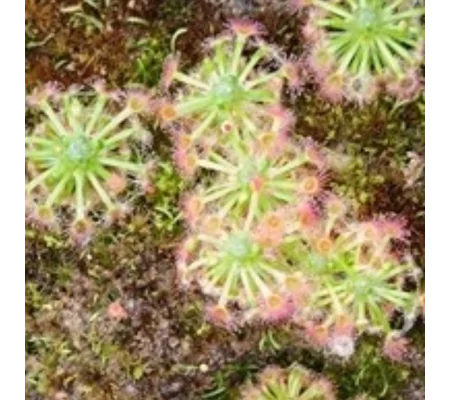
Drosera callistos, 10+ gemmaeThe epithet callistos is derived from the Greek callistos (beautiful), a reference to the pretty overall form of the plant.Drosera callistos is known from Western Australia where it is recorded around Gidgegannup and the lakes and state forest along the Brookton Highway.It grows in heavy, laterite-covered sandy soils, as well as in patches of pure sand surrounded by laterite derived soils.You can find cultivation tips and more on our YouTube channel https://www.youtube.com/@RanchOfPlants
Subtropical Drosera
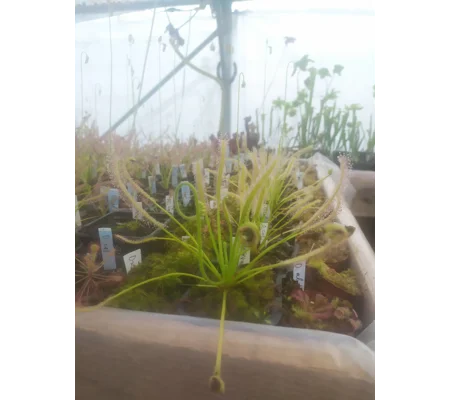
Drosera capensis 'ALBA'Drosera capensis is a sub-tropical sundew endemic to the southwestern Cape of South Africa where it can be found in marshes, along streams, permanent seeps and damp areas of fynbos. Alba differs from type capensis in having white flowers and white to pinkish hairs on the leaves. Price is per one adult plant, often flowering.
Subtropical Drosera
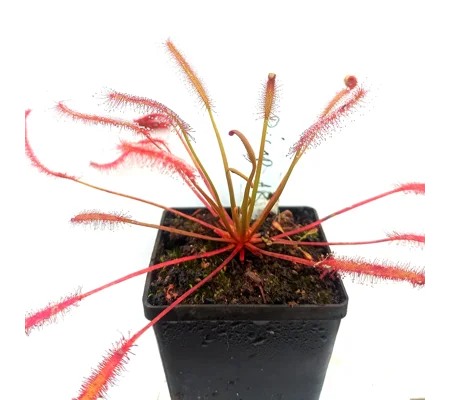
Drosera capensis 'ALL RED'Drosera capensis is one of the easiest sundews to grow. A sub-tropical sundew endemic to the southwestern Cape of South Africa, where it can be found in marshes, along streams, permanent seeps and damp areas of fynbos. All Red is a completly red coloured form of cape sundew. We offer adult plants, one plant per pot.
Subtropical Drosera
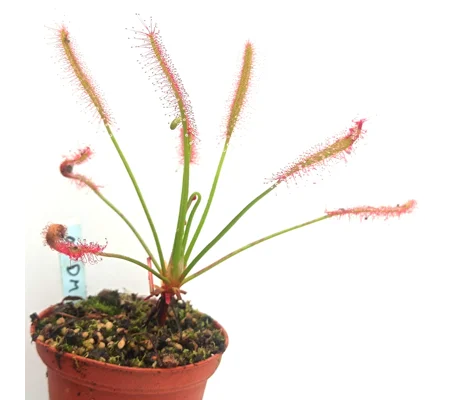
Drosera capensis Dark MaroonDrosera capensis Dark maroon turns brownish red in good light. Drosera capensis is a sub-tropical sundew endemic to the southwestern Cape where it can be found in marshes, along streams, permanent seeps and damp areas of fynbos. A very easy sundew to grow, suitable for begginers. The Cape sundew is fast growing and single plants can live for many years with young suckers forming at the base. Pink flowers, red sticky hairs. It is a free-flowering and fascinating house plant. Self-fertile, will self-seed. You can find cultivation tips and more on our YouTube channel https://www.youtube.com/@RanchOfPlants
Subtropical Drosera
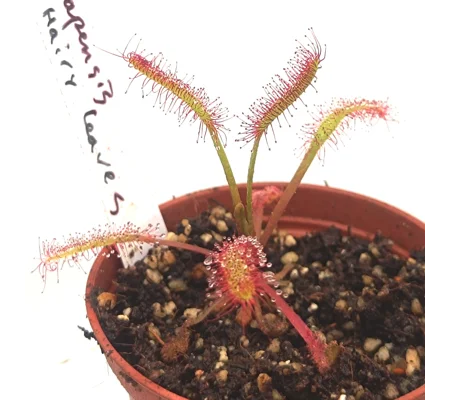
Drosera capensis Hairy LeavesDrosera capensis Hairy leaves is a bit squatter than the typical and it indeed has leaves covered with short hairs. Drosera capensis is a sub-tropical sundew endemic to the southwestern Cape where it can be found in marshes, along streams, permanent seeps and damp areas of fynbos. A very easy sundew to grow, suitable for begginers. The Cape sundew is fast growing and single plants can live for many years with young suckers forming at the base. Pink flowers, red sticky hairs. It is a free-flowering and fascinating house plant. Self-fertile, will self-seed. You can find cultivation tips and more on our YouTube channel https://www.youtube.com/@RanchOfPlants