
Filters
Category
- Pygmy Drosera63
- Stickers & Fridge magnets45
- Mexican Pinguicula44
- CP seeds40
- Terrestrial Utricularia34
- Earrings25
- Sarracenia - species24
- Sarracenia - hybrids22
- Subtropical Drosera22
- Slovenian wildflowers17
- Dionaea (Venus Flytrap)14
- Substrate10
- Dreamcatchers9
- Keychains8
- Bracelets7
- Epiphytic Utricularia7
- Temperate Drosera6
- Medicinal and Herb plants5
- Exotic plants4
- Other Pinguicula4
- Pots & stuff4
- Edible plants3
- Cephalotus (Albany Pitcher Plant)1
- Choice shrubs & perennials1
- Darlingtonia (Cobra Lily)1
- Predator Packs1
- Stylidium (Trigger plant)1
- Wire wrapping1
Size
- Medium118
- Large117
- Small117
- 5 cm pot15
- 2 cm x 2 cm plug14
- 2 cm x 2 cm portion9
- 5 cm round pot8
- XL3
- 1 gabbietta (1=11
- 1 gabbietta (1=1,25eur)1
- 1 plant1
- 1 pot (1=01
- 1 pot (1=0,75eur)1
- 1 pot (1=11
- 1 pot (1=1,65 eur)1
- 10 gabbietta (1=1.10eur)1
- 10 pots (1=01
- 10 pots (1=0,60eur)1
- 10 pots (1=1.50 eur)1
- 10 seeds1
- 100 seeds1
- 2 plants1
- 25eur)1
- 3 plants1
- 5 gabbietta (1=1.20eur)1
- 5 pots (1=01
- 5 pots (1=0,70eur)1
- 5 pots (1=11
- 5 pots (1=1,60 eur)1
- 50 seeds1
- 60 eur)1
- 60eur)1
- 65 eur)1
- 70eur)1
- 75eur)1
- Extra Large1
- Hanging basket1
- Medium - 1 medium size plant1
- Pack of 3 rooted cuttings1
- Small - 1 pack of 3 plugs1
What you see is what you get
Availability
Offers
All Products
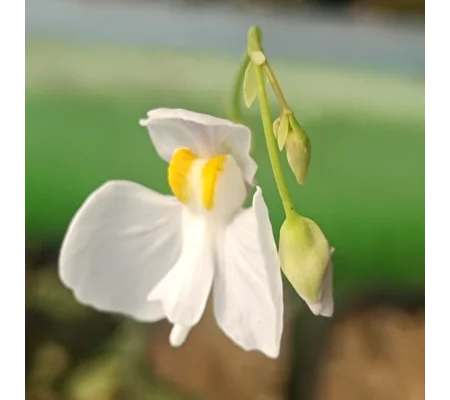
Terrestrial Utricularia
Utricularia nephrophylla x geminilobaUtricularia nephrophylla x geminiloba has very cute leaves shaped like hearts. It grows great in rainforest terrariums. Genes of Utricularia nephrophylla, give the leaves the potential to grow longer petioles if humidity is higher. It can also easily be grown in a pot on a windowsill. It doesn't need strong light. It does need to stand in water at all times. Utricularia nephrophylla x geminiloba is a hybrid of two terrestrial/litophyte species of Utricularia subg. Utricularia sect. Orchidioides endemic to Brazil.You can find cultivation tips and more on our YouTube channel https://www.youtube.com/@RanchOfPlants
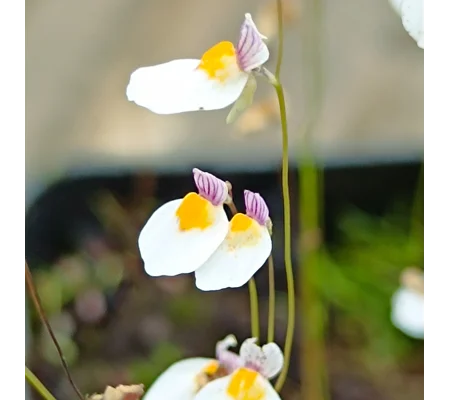
Terrestrial Utricularia
Utricularia parthenopipesUtricularia parthenopipes is a small easy-to-grow bladderwort with gorgeous flowers. It is endemic to the Brazilian state of Bahia. In nature it grows as a terrestrial plant in damp, sandy soils over sandstone rocks at altitudes from 500 m to 1,500 m and flowers between January and June. In cultivation, we see it flower between November and February. It was originally described and published by Peter Taylor in 1986. It is really easy to grow, to the point of being weedy. It's one of those that will squat in all your CPs given the opportunity.Price per 2 cm x 2 cm portion.You can find cultivation tips and more on our YouTube channel https://www.youtube.com/@RanchOfPlants
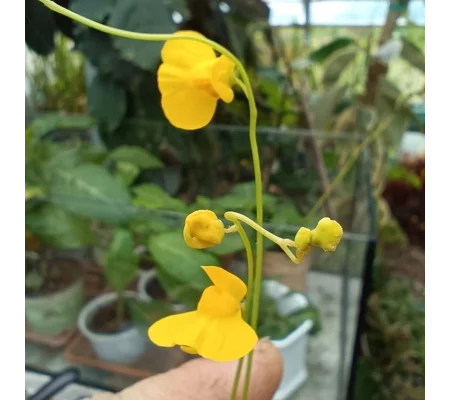
Terrestrial Utricularia
Utricularia praelongaUtricularia praelonga is a medium-sized to large perennial carnivorous plant that belongs to the genus Utricularia. U. praelonga is a terrestrial species endemic to South America, where it is found in northern Argentina, southern Brazil, and Paraguay.Utriculara praelonga has largish yellow flowers on very long stems. But it's oddest feature are the leaves. It grows two very distinct types of leaves at the same time. One set are small, obovate and the other tall and strap-like resembling grass.YouTube channel https://www.youtube.com/@RanchOfPlants
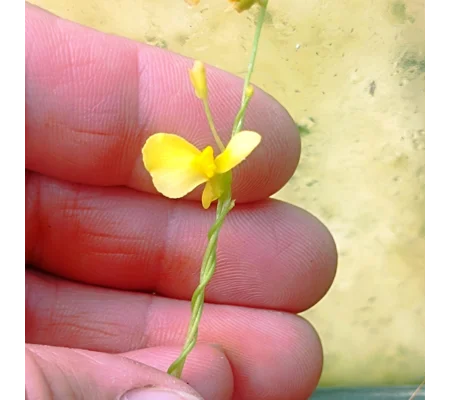
Terrestrial Utricularia
Utricularia prehensilisUtricularia prehensilis is named for its twining or climbing flower stalks. It is native to tropical and southern Africa, from Angola, the Central African Republic, the Democratic Republic of the Congo, Ethiopia, Kenya, Madagascar, South Africa, Eswatini, Tanzania, Zambia, and Zimbabwe. Utricularia prehensilis is a terrestrial bladderwort. It was originally described by Ernst Heinrich Friedrich Meyer in 1837. You can find cultivation tips and more on our YouTube channel https://www.youtube.com/@RanchOfPlants
Terrestrial Utricularia
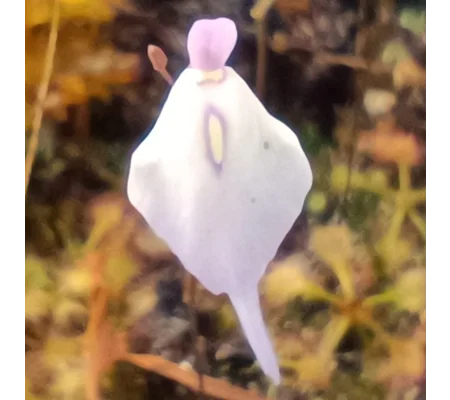
Utricularia pubescensUtricularia pubescens is a terrestrial or lithophytic Utricularia. It grows in boggy grasslands in damp peaty soils at altitudes from sea level to 1,900 m. This species possesses small peltate leaves. That means the leaves are round and the leaf stalk (petiole) attaches at centre of the lower surface of the leaf blade. The flowers with the 'O' are unmistakeable and very cute.It is the only member of Utricularia sect. Lloydia. U. pubescens is native to India, tropical Africa, and Central and South America. It was originally published and described by James Edward Smith in 1819. You can find cultivation tips and more on our YouTube channel https://www.youtube.com/@RanchOfPlants
Epiphytic Utricularia
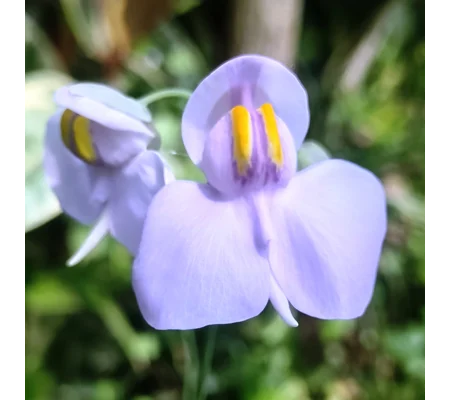
Utricularia reniformisUtricularia reniformis is a large perennial carnivorous plant that belongs to sect. Orchidoides. And is endemic to Brazil. It was originally published and described by Augustin Saint-Hilaire in 1830. It usually grows as a terrestrial plant in wet grasslands and only sometimes as an epiphyte in the water-filled leaf axils of some bromeliad species. Grow it in pure live Sphagnum. It is typically found between altitudes of 750 m and 1,900 m in its southern range and up to 2,500 m in its northern range. The foliage leaves are kidney-shaped and about 7 cm wide. The trap leaves grow out of the succulent white rhizome and remain below the surface of the substrate. It flowers between October and March and each flower stem flowers for months.The two to five zygomorphic flowers are on an upright raceme and have two vertical gold stripes edged with purple on the upper half of the corolla. You can find cultivation tips and more on our YouTube channel https://www.youtube.com/@RanchOfPlants
Terrestrial Utricularia
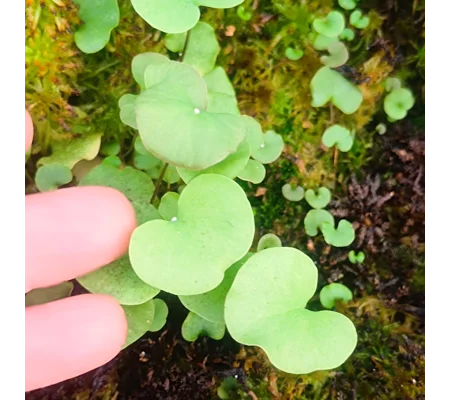
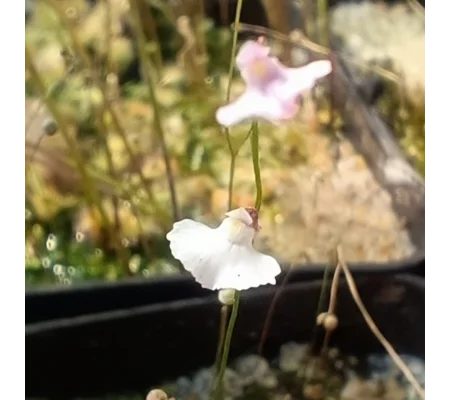
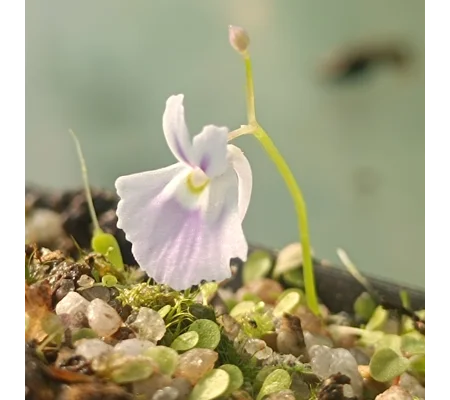
Utricularia rostrata Chapada Diamantina, Bahia, BrazilUtricularia rostrata is a small carnivorous plant that belongs to the genus Utricularia. Utricularia rostrata is endemic to the Chapada Diamantina highlands of Bahia, Brazil. It grows as a terrestrial plant in damp sandy soils near streams and waterfalls in semi-shaded areas at altitudes from 550 to 1,570 metres. It was originally described and published by Andreas Fleischmann and Fernando Rivadavia in 2009, though specimens of this species had been discovered as early as 1992. Fleischmann and Rivadavia note that the species is common throughout the Chapada Diamantina highlands and its distribution includes Chapada Diamantina National Park, thus justifying its ranking as a species of Least Concern under the IUCN. Flowers of U. rostrata are white, mauve, or violet and the lower corolla lip has a yellow area on it. It has been placed in section Aranella and appears to be most closely related to U. costata, though it differs from all members of section Aranella in its rostrate upper ca...
Terrestrial Utricularia
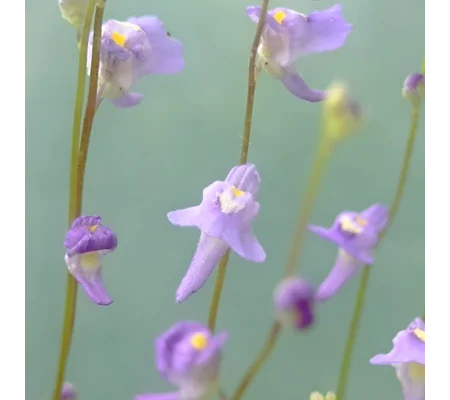
Utricularia sandersonii TypicalUtricularia sandersonii was described and by Daniel Oliver in 1865, It is endemic to northern KwaZulu-Natal and Transkei in South Africa.In nature it grows as a lithophyte on wet, often vertical rocky surfaces at altitudes from 210 m to 1,200 m. It can survive town to 1 C, but no freezing. Utricularia sandersonii is famous for its flowers that look like they have bunny ears. You can find cultivation tips and more on our YouTube channel https://www.youtube.com/@RanchOfPlants
Terrestrial Utricularia
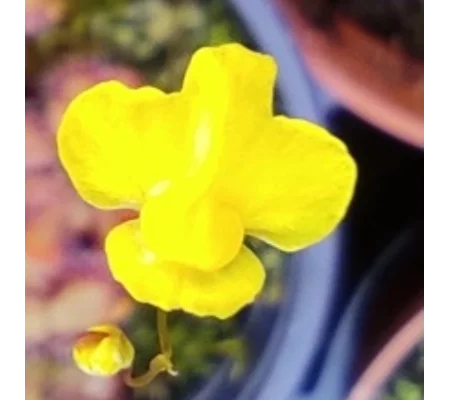
Utricularia sp. HermanusUtricularia s. Hermanus a potentially undescribed species or a form of Utricularia found in the Hermanus region of South Africa, possibly related to Utricularia welwitschii. It is a small, delicate carnivorous plant known for its flowers and the ability to grow in moist, nutrient-poor habitats like seepages.YouTube channel https://www.youtube.com/@RanchOfPlants
Terrestrial Utricularia
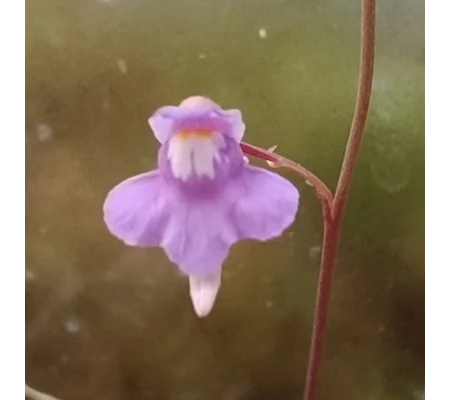
Utricularia subulataUtricularia subulata, the zigzag bladderwort, 1 is a small annual, terrestrial carnivorous plant that belongs to the genus Utricularia (family Lentibulariaceae). It is the most widely distributed species in the genus, being almost pantropical. It is native to the Americas, Africa, and Australia.You can find cultivation tips and more on our YouTube channel https://www.youtube.com/@RanchOfPlants
Terrestrial Utricularia
Utricularia tridentataUtricularia tridentata is a small terrestrial carnivorous plant that belongs to the genus Utricularia. U. tridentata is endemic to South America, where it is found in Argentina, Brazil, and Uruguay.You can find cultivation tips and more on our YouTube channel https://www.youtube.com/@RanchOfPlants