
Filters
Category
- Pygmy Drosera63
- Stickers & Fridge magnets45
- Mexican Pinguicula44
- CP seeds40
- Terrestrial Utricularia34
- Earrings25
- Sarracenia - species24
- Sarracenia - hybrids22
- Subtropical Drosera22
- Slovenian wildflowers17
- Dionaea (Venus Flytrap)14
- Substrate10
- Dreamcatchers9
- Keychains8
- Bracelets7
- Epiphytic Utricularia7
- Temperate Drosera6
- Medicinal and Herb plants5
- Exotic plants4
- Other Pinguicula4
- Pots & stuff4
- Edible plants3
- Cephalotus (Albany Pitcher Plant)1
- Choice shrubs & perennials1
- Darlingtonia (Cobra Lily)1
- Predator Packs1
- Stylidium (Trigger plant)1
- Wire wrapping1
Size
- Medium118
- Large117
- Small117
- 5 cm pot15
- 2 cm x 2 cm plug14
- 2 cm x 2 cm portion9
- 5 cm round pot8
- XL3
- 1 gabbietta (1=11
- 1 gabbietta (1=1,25eur)1
- 1 plant1
- 1 pot (1=01
- 1 pot (1=0,75eur)1
- 1 pot (1=11
- 1 pot (1=1,65 eur)1
- 10 gabbietta (1=1.10eur)1
- 10 pots (1=01
- 10 pots (1=0,60eur)1
- 10 pots (1=1.50 eur)1
- 10 seeds1
- 100 seeds1
- 2 plants1
- 25eur)1
- 3 plants1
- 5 gabbietta (1=1.20eur)1
- 5 pots (1=01
- 5 pots (1=0,70eur)1
- 5 pots (1=11
- 5 pots (1=1,60 eur)1
- 50 seeds1
- 60 eur)1
- 60eur)1
- 65 eur)1
- 70eur)1
- 75eur)1
- Extra Large1
- Hanging basket1
- Medium - 1 medium size plant1
- Pack of 3 rooted cuttings1
- Small - 1 pack of 3 plugs1
What you see is what you get
Availability
Offers
All Products
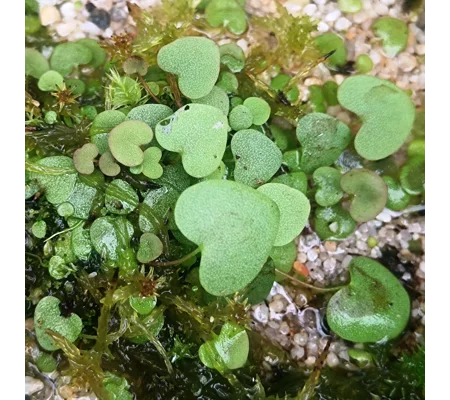
Terrestrial Utricularia
Utricularia gemnilobaUtricularia geminiloba is a medium-sized perennial lithophyte or terrestrial carnivorous plant that belongs to the genus Utricularia. U. geminiloba is endemic to Brazil. It was originally published and described by Ludwig Benjamin in 1847. The species epithet refers to the two pronounced anterior corolla lobes ("Gemini lobes"). You can find cultivation tips and more on our YouTube channel https://www.youtube.com/@RanchOfPlants
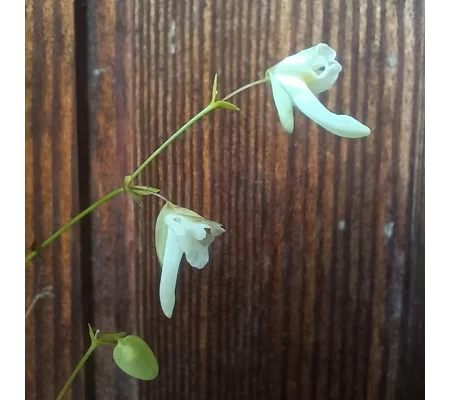
Epiphytic Utricularia
Utricularia jamesoniana Represa El Penol, Antioquia, Colombia, 1900 m aslUtricularia jamesoniana is a small perennial epiphyte carnivorous plant in the family Lentibulariaceae, section Orchidoides. It is native to Central America, the Antilles, and northern and western South America. Specifically, it can be found in Bolivia, Brazil, Colombia, Costa Rica, Ecuador, French Guiana, Guatemala, Guyana, Nicaragua, Panama, Peru, Suriname, and Venezuela and on the islands of Guadeloupe, Hispaniola, Dominica, and Martinique. The species was originally published and described by Daniel Oliver in 1860. Its habitat is reported as being mossy tree trunks in montane cloud forests or lowland rain forests at altitudes from sea level to 2,500 m. It flowers year-round.You can find cultivation tips and more on our YouTube channel https://www.youtube.com/@RanchOfPlants
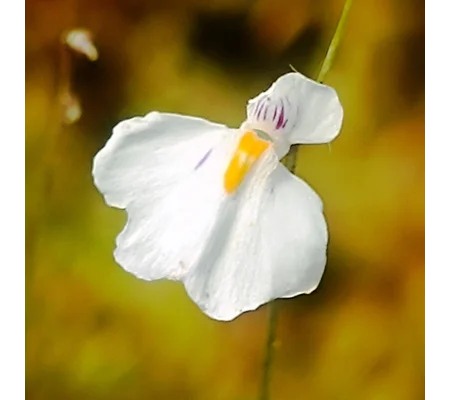
Terrestrial Utricularia
Utricularia laciniata Chapada dos Veiaderos, Goias, BrazilUtricularia laciniata is a small, carnivorous plant that belongs to the genus Utricularia. U. laciniata is endemic to Brazil, where it is only known from Goiás and Minas Gerais. It grows as a terrestrial plant in damp, sandy or gravelly soils at elevations from 1,000 m to 1,300 m.. It flowers between January and May in its native range. U. laciniata was originally described and published by Augustin Saint-Hilaire and Frédéric de Girard in 1838. You can find cultivation tips and more on our YouTube channel https://www.youtube.com/@RanchOfPlants
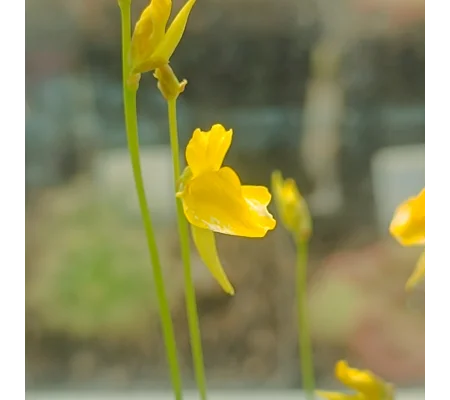
Terrestrial Utricularia
Utricularia laxaUtricularia laxa is a small to medium-sized annual carnivorous plant that belongs to the genus Utricularia. It is endemic to South America and is found in Argentina, Brazil, Paraguay and Uruguay. The Utricularia laxa grows as a terrestrial plant in wet grasslands and at the margins of pools, usually at elevations from near sea level to 1,100 m.. It was originally described and published by Augustin Saint-Hilaire and Frédéric de Girard in 1838. You can find cultivation tips and more on our YouTube channel https://www.youtube.com/@RanchOfPlants
Terrestrial Utricularia
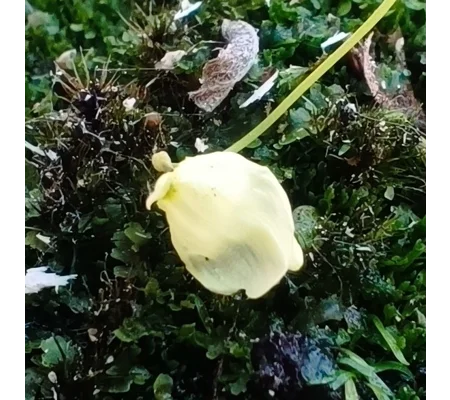
Utricularia livida Lemon flowerUtricularia livida Lemon flower is an unusual form of the species due to its pale yellow flowers. It blooms almost constantly. It can be easily grow as a houseplant on a windowsill or in a terrarium. The Latin specific epithet livida means "pale" or "lead-coloured", referring to the normal colour of the flowers. It was originally described and published by Ernst Heinrich Friedrich Meyer in 1837. It occurs in nature in Angola, the Democratic Republic of the Congo, Ethiopia, Kenya, Lesotho, Madagascar, Malawi, Mozambique, Rwanda, Somalia, South Africa, Sudan, Eswatini, Tanzania, Uganda, Zambia, and Zimbabwe. It also has a widespread native range in Mexico. It grows as a terrestrial plant in boggy areas or shallow soils over rock at altitudes from near sea level to 2,830 m. Utricularia livida Lemon flower is an easy species to grow, but slightly more picky than the Typical form. You can find cultivation tips and more on our YouTube channel https://www.youtube.com/@RanchOfPlants
Terrestrial Utricularia
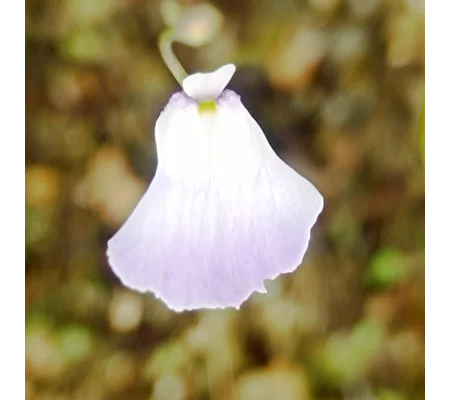
Utricularia livida MexicoUtricularia livida Mexico is very easy to grow and is valued for its pretty pale-violet flowers. It blooms almost constantly. It can be easily grow as a houseplant on a windowsill or in a terrarium. The Latin specific epithet livida means "pale" or "lead-coloured", referring to the colour of the flowers. It was originally described and published by Ernst Heinrich Friedrich Meyer in 1837. It occurs in nature in Angola, the Democratic Republic of the Congo, Ethiopia, Kenya, Lesotho, Madagascar, Malawi, Mozambique, Rwanda, Somalia, South Africa, Sudan, Eswatini, Tanzania, Uganda, Zambia, and Zimbabwe. It also has a widespread native range in Mexico. It grows as a terrestrial plant in boggy areas or shallow soils over rock at altitudes from near sea level to 2,830 m. Utricularia livida Mexico is an easily growing African form.You can find cultivation tips and more on our YouTube channel https://www.youtube.com/@RanchOfPlants
Terrestrial Utricularia
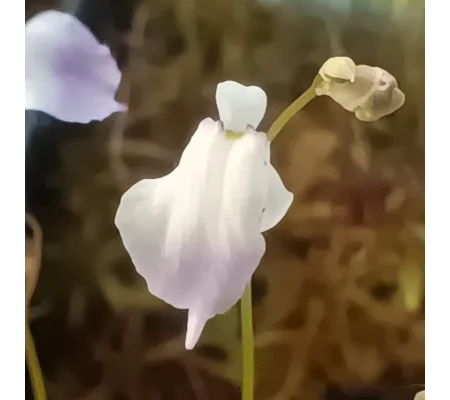
Utricularia livida TypicalUtricularia livida Typical is very easy to grow and is valued for its pretty pale-violet flowers. It blooms almost constantly. It can be easily grow as a houseplant on a windowsill or in a terrarium. The Latin specific epithet livida means "pale" or "lead-coloured", referring to the colour of the flowers. It was originally described and published by Ernst Heinrich Friedrich Meyer in 1837. It occurs in nature in Angola, the Democratic Republic of the Congo, Ethiopia, Kenya, Lesotho, Madagascar, Malawi, Mozambique, Rwanda, Somalia, South Africa, Sudan, Eswatini, Tanzania, Uganda, Zambia, and Zimbabwe. It also has a widespread native range in Mexico. It grows as a terrestrial plant in boggy areas or shallow soils over rock at altitudes from near sea level to 2,830 m. It also has a widespread native range in Mexico. Utricularia livida Typical is an easily growing African form.You can find cultivation tips and more on our YouTube channel https://www.youtube.com/@RanchOfPlants
Terrestrial Utricularia
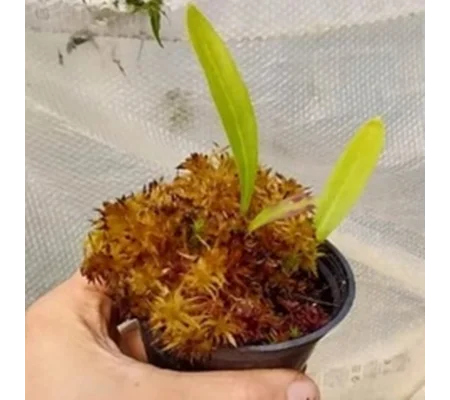
Utricularia longifoliaUtricularia longifolia is an easy to grow perennial bladderwort. It is one of the largest species of bladderwort.It is native and endemic to Brazil. It is a terrestrial or lithopythe species in nature.Grows best in peat moss. It can stand direct sunlight, but will grow well in lower light conditions as well.You can find cultivation tips and more on our YouTube channelhttps://www.youtube.com/@RanchOfPlants
Terrestrial Utricularia
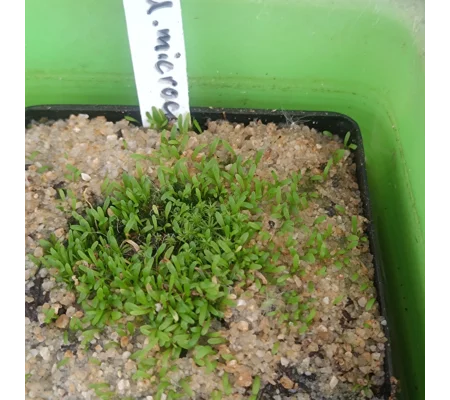
Utricularia microcalyxUtricularia microcalyx is a small to medium-sized carnivorous plant that belongs to the genus Utricularia. It is native to tropical Africa, where it can be found in the Democratic Republic of the Congo and Zambia. U. microcalyx grows as a terrestrial plant in damp, sandy or peaty soils in grasslands at altitudes from 1,200 m to 1,650 m. It typically flowers between February and July. It was originally described and published by Peter Taylor in 1964 as a variety of U. welwitschii. Taylor elevated this variety to the species level in 1971. You can find cultivation tips and more on our YouTube channel https://www.youtube.com/@RanchOfPlants
Epiphytic Utricularia
Utricularia nelumbifoliaUtricularia nelumbifolia is a perennial aquatic carnivorous plant that belongs to the genus Utricularia. U. nelumbifolia is endemic to Brazil. It was originally published and described by George Gardner in 1842. Its habitat is reported as being restricted to the water-filled leaf axils of bromeliads in the genus Vriesea in arid volcanic locations at altitudes from 800 m to 2,200 m. U. nelumbifolia will produce aerial stolons that descend into nearby leaf axils in order to colonize new territory, similar to the habit of U. humboldtii. It typically flowers from May to August. Beside the whole, round, peltate leaves above water, there are submerged, divided leaves bearing insect traps.. You can find cultivation tips and more on our YouTube channel https://www.youtube.com/@RanchOfPlants
Terrestrial Utricularia
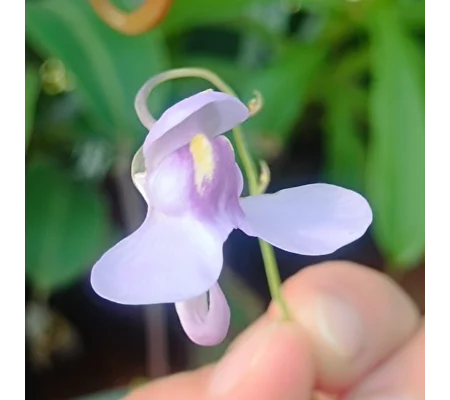
Utricularia nephrophylla Pink flowerUtricularia prehensilis is named for its twining or climbing flower stalks. It is native to tropical and southern Africa, from Angola, the Central African Republic, the Democratic Republic of the Congo, Ethiopia, Kenya, Madagascar, South Africa, Eswatini, Tanzania, Zambia, and Zimbabwe. Utricularia prehensilis is a terrestrial bladderwort. It was originally described by Ernst Heinrich Friedrich Meyer in 1837. You can find cultivation tips and more on our YouTube channel https://www.youtube.com/@RanchOfPlants
Terrestrial Utricularia
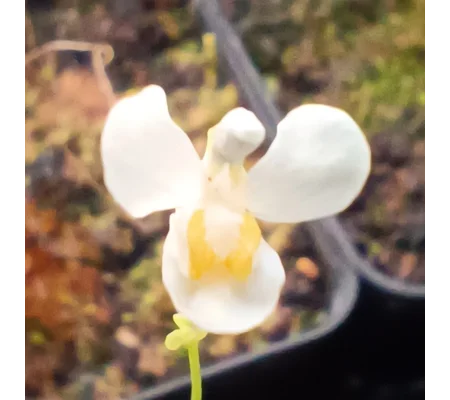
Utricularia nephrophylla White flowerUtricularia nephrophylla White flower is a small to medium-sized lithophyte. it is endemic to Brazil. Its habitat is reported as being wet, mostly vertical rocks in montane forests at altitudes from 600 m to 1,200 m. It was originally published and described by Ludwig Benjamin in 1847. You can find cultivation tips and more on our YouTube channel https://www.youtube.com/@RanchOfPlants