
Filters
Category
- Pygmy Drosera63
- Stickers & Fridge magnets45
- Mexican Pinguicula44
- CP seeds40
- Terrestrial Utricularia34
- Earrings25
- Sarracenia - species24
- Sarracenia - hybrids22
- Subtropical Drosera22
- Slovenian wildflowers17
- Dionaea (Venus Flytrap)14
- Substrate10
- Dreamcatchers9
- Keychains8
- Bracelets7
- Epiphytic Utricularia7
- Temperate Drosera6
- Medicinal and Herb plants5
- Exotic plants4
- Other Pinguicula4
- Pots & stuff4
- Edible plants3
- Cephalotus (Albany Pitcher Plant)1
- Choice shrubs & perennials1
- Darlingtonia (Cobra Lily)1
- Predator Packs1
- Stylidium (Trigger plant)1
- Wire wrapping1
Size
- Medium118
- Large117
- Small117
- 5 cm pot15
- 2 cm x 2 cm plug14
- 2 cm x 2 cm portion9
- 5 cm round pot8
- XL3
- 1 gabbietta (1=11
- 1 gabbietta (1=1,25eur)1
- 1 plant1
- 1 pot (1=01
- 1 pot (1=0,75eur)1
- 1 pot (1=11
- 1 pot (1=1,65 eur)1
- 10 gabbietta (1=1.10eur)1
- 10 pots (1=01
- 10 pots (1=0,60eur)1
- 10 pots (1=1.50 eur)1
- 10 seeds1
- 100 seeds1
- 2 plants1
- 25eur)1
- 3 plants1
- 5 gabbietta (1=1.20eur)1
- 5 pots (1=01
- 5 pots (1=0,70eur)1
- 5 pots (1=11
- 5 pots (1=1,60 eur)1
- 50 seeds1
- 60 eur)1
- 60eur)1
- 65 eur)1
- 70eur)1
- 75eur)1
- Extra Large1
- Hanging basket1
- Medium - 1 medium size plant1
- Pack of 3 rooted cuttings1
- Small - 1 pack of 3 plugs1
What you see is what you get
Availability
Offers
All Products
Terrestrial Utricularia
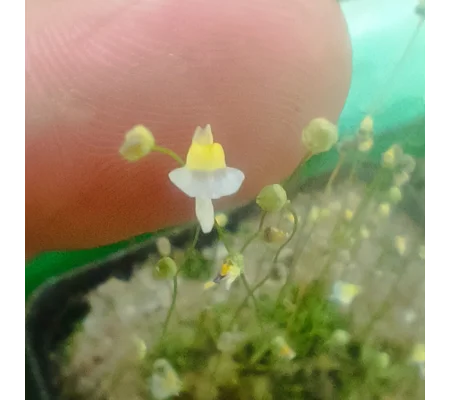
Utricularia bisquamata Bains KloofUtricularia bisquamata is a small carnivorous plant that belongs to the genus Utricularia. The flowering stems grow to a height of about 12 cm. It has a rosette of narrow leaves and wiry stems supporting racemes of flowers with two lips, white, pale violet or occasionally yellow. The upper lip is small with two or three lobes and the lower lip has two short lobes at the side and acentral lobe. The base of the lower lip has a patch of yellow which is variable in size. It is native to southern Africa, where it can be found in Angola, Lesotho, Madagascar, Namibia, Eswatini and South Africa. It is part of the fynbos community, where it grows as a terrestrial plant in damp, sandy or peaty soils among mosses by streams or wet depressions at altitudes from near sea level to 1,200 m in South Africa and up to 2,250 m in Angola. It was originally described and published by Franz von Paula Schrank in 1824. Since it is quite widespread, there are several different forms of the species in cultiv...
Terrestrial Utricularia
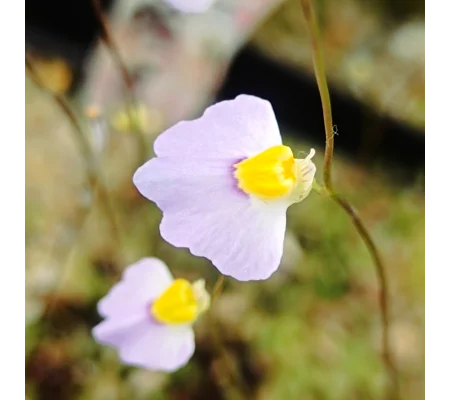
Utricularia bisquamata Betty's BayUtricularia bisquamata is a small carnivorous plant that belongs to the genus Utricularia. The flowering stems grow to a height of about 12 cm. It has a rosette of narrow leaves and wiry stems supporting racemes of flowers with two lips, white, pale violet or occasionally yellow. The upper lip is small with two or three lobes and the lower lip has two short lobes at the side and acentral lobe. The base of the lower lip has a patch of yellow which is variable in size. It is native to southern Africa, where it can be found in Angola, Lesotho, Madagascar, Namibia, Eswatini and South Africa. It is part of the fynbos community, where it grows as a terrestrial plant in damp, sandy or peaty soils among mosses by streams or wet depressions at altitudes from near sea level to 1,200 m in South Africa and up to 2,250 m in Angola. It was originally described and published by Franz von Paula Schrank in 1824. Since it is quite widespread, there are several different forms of the species in cultiv...
Terrestrial Utricularia
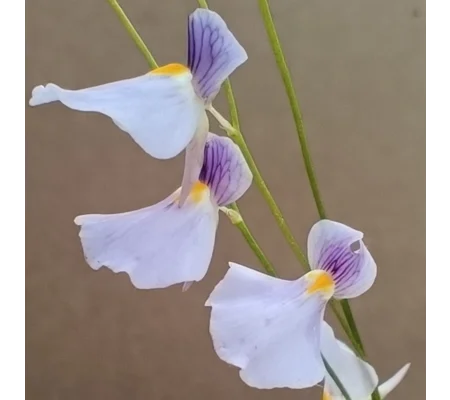
Utricularia blanchetiiUtricularia blanchetii is endemic to central Bahia state in Brazil. It grows as a terrestrial or lithophytic plant in damp, sandy soils among rocks or by streams at altitudes from 850 m to 1,750 m. The environment is typically acidic, nutrient-poor, and receives frequent mist or rain. Utricularia blanchetii is very easy to grow in a pot on a windowsill or in a greenhouse or even in a terrarium. It's flowers are like tiny little orchid flowers. There's multiple flowers per stalk.Utricularia blanchetii was originally described and published by Alphonse Pyrame de Candolle in 1844. You can find cultivation tips and more on our YouTube channel https://www.youtube.com/@RanchOfPlants
Terrestrial Utricularia
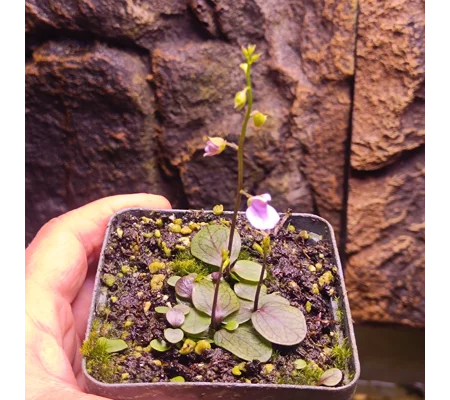
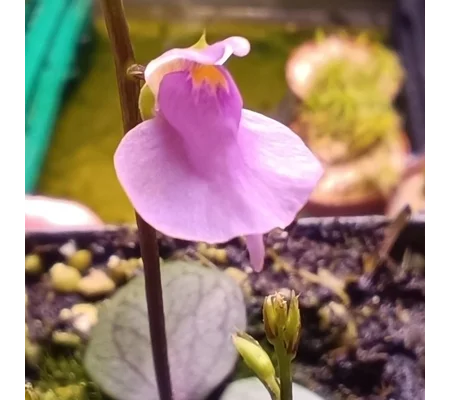
Utricularia calycifida Asenath WaiteUtricularia calycifida is a medium-sized terrestrial perennial. U. calycifida is endemic to northern South America and can be found in Brazil, Guyana, Suriname, and Venezuela. Utricularia calycifida is a popular species due to its large leaves and variations in flower color and size. It used to be quite rare but by now a few location clones and several cultivars have been established. Many cultivars' names are based upon characters in the novels and short stories of H. P. Lovecraft.
Terrestrial Utricularia
Utricularia calycifida Giant Gran SabanaUtricularia calycifida is a medium-sized terrestrial perennial. U. calycifida is endemic to northern South America and can be found in Brazil, Guyana, Suriname, and Venezuela. Utricularia calycifida is a popular species due to its large leaves and variations in flower color and size. It used to be quite rare but by now a few location clones and several cultivars have been established. Many cultivars' names are based upon characters in the novels and short stories of H. P. Lovecraft.
Epiphytic Utricularia
Utricularia cornigera Pedra do Sino, BrasilUtricularia cornigera is a large perennial carnivorous plant that belongs to the genus Utricularia. U. cornigera was described in 2009 by Miloslav Studnička based on his study of the variation in cultivated plants labeled Utricularia reniformis and apparent different geographic ranges. U. cornigera is found on Serra dos Órgãos in south-eastern Brazil and as of the new species' description, was not found in the presence of U. reniformis. Utricularia cornigera has been grown in cultivation under the name U. reniformis and with the cultivar name 'Big Sister'. It differs from U. reniformis by having 6-8 primordial leaves emerging from the seed during germination with a float and whorl of leaves. Utricularia cornigera also produces two distinct types of bladder traps that are dimorphic and it generally has larger leaves. You can find cultivation tips and more on our YouTube channel https://www.youtube.com/@RanchOfPlants
Terrestrial Utricularia
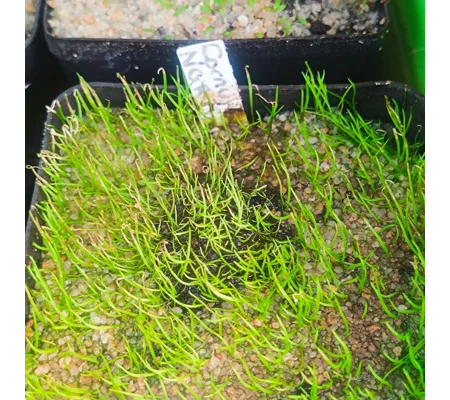
Utricularia cornutaUtricularia cornuta, the horned bladderwort, is small to medium-sized. It is endemic to North America and can be found in the Bahamas, Cuba, Canada, and the United States. Utricularia cornuta grows as a terrestrial or subaquatic plant in marshes, swamps, and pools in shallow waters, mostly at lower altitudes. It was originally described and published by André Michaux in 1803. As the species is widespread plants from different localities have different cold tolerance. You can find cultivation tips and more on our YouTube channel https://www.youtube.com/@RanchOfPlants
Terrestrial Utricularia
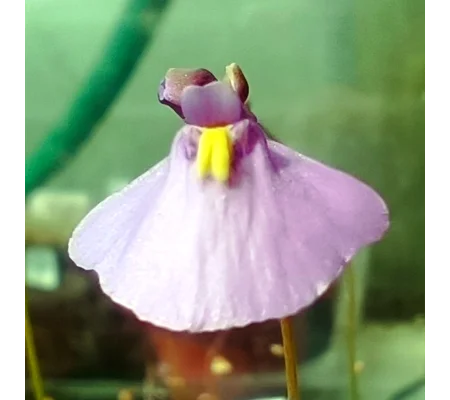
Utricularia cornuta NorthUtricularia cornuta, the horned bladderwort, is small to medium-sized. It is endemic to North America and can be found in the Bahamas, Cuba, Canada, and the United States. Utricularia cornuta grows as a terrestrial or subaquatic plant in marshes, swamps, and pools in shallow waters, mostly at lower altitudes. It was originally described and published by André Michaux in 1803. As the species is widespread, plants from different localities have different cold tolerance. This clone is winterhardy. You can find cultivation tips and more on our YouTube channel https://www.youtube.com/@RanchOfPlants
Terrestrial Utricularia
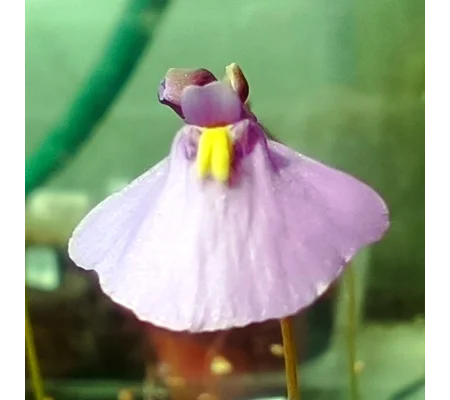
Utricularia dichotoma subsp. dichotomaUtricularia dichotoma subsp. dichotoma, commonly known as fairy aprons, is a variable, perennial species of terrestrial bladderwort. It grows in moist and wet locations. It has numerous underground trailing stems with bladders 1.5 2 mm (0.06 0.08 in) in diameter. It has absent or a few oval, spoon-shaped to narrow-lanceolate leaves 2 4 mm (0.08 0.16 in) long and up to 40 mm (1.6 in) long. The former is more typical of plants growing in wet soil, the latter of plants growing fully submerged. The flowers are borne on a slender, wiry stem 5 50 cm (2.0 19.7 in) long; they are solitary, paired or in whorls of three or four in clusters near the end of the stem. They are mauve or purple and have a small upper petal and a broader, semicircular lower lip 1 2 cm (0.4 0.8 in) wide with two or three prominent white or yellow markings, and the corolla is 12 22 mm (0.5 0.9 in) long. Flowering occurs from August to April and the fruit is a globular capsule up to 4 mm (0.16 in) wide. Utricularia di...
CP seeds
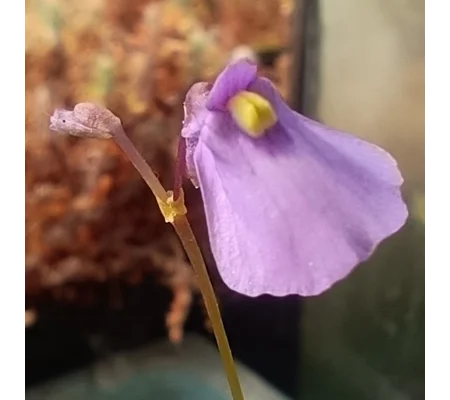
Utricularia dichotoma subsp. dichotoma, 20 seedsUtricularia dichotoma subsp. dichotoma, commonly known as fairy aprons, is a variable, perennial species of terrestrial bladderwort. It grows in moist and wet locations. It has numerous underground trailing stems with bladders 1.5 2 mm (0.06 0.08 in) in diameter. It has absent or a few oval, spoon-shaped to narrow-lanceolate leaves 2 4 mm (0.08 0.16 in) long and up to 40 mm (1.6 in) long.
Terrestrial Utricularia
Utricularia dichotoma subsp. novae-zelandiaeUtricularia dichotoma subsp. novae-zelandiae commonly known as fairy aprons, is a variable, perennial species of terrestrial bladderwort. It grows in moist and wet locations. It has numerous underground trailing stems with bladders 1.5 2 mm (0.06 0.08 in) in diameter. It has absent or a few oval, spoon-shaped to narrow-lanceolate leaves 2 4 mm (0.08 0.16 in) long and up to 40 mm (1.6 in) long. The former is more typical of plants growing in wet soil, the latter of plants growing fully submerged. The flowers are borne on a slender, wiry stem 5 50 cm (2.0 19.7 in) long; they are solitary, paired or in whorls of three or four in clusters near the end of the stem. They are mauve or purple and have a small upper petal and a broader, semicircular lower lip 1 2 cm (0.4 0.8 in) wide with two or three prominent white or yellow markings, and the corolla is 12 22 mm (0.5 0.9 in) long. Flowering occurs from August to April and the fruit is a globular capsule up to 4 mm (0.16 in) wide. Utricular...
Terrestrial Utricularia
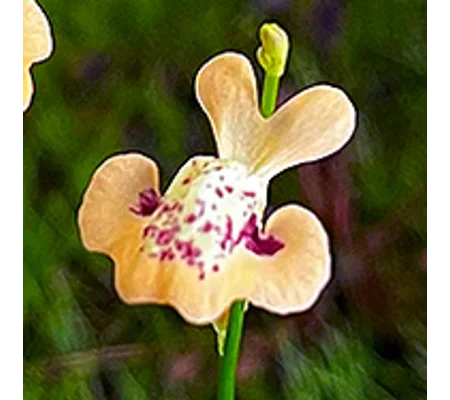
Utricularia fulvaUtricularia fulva is a small to medium-sized annual carnivorous plant that belongs to the genus Utricularia. U. fulva is endemic to Australia, where it appears to be largely restricted to the Northern Territory, specifically the Arnhem Land sandstone escarpment. It grows as a terrestrial or subaquatic plant in or near sandy stream beds. It was originally described and published by Ferdinand von Mueller in 1858. You can find cultivation tips and more on our YouTube channel https://www.youtube.com/@RanchOfPlants