
Filters
Category
- Pygmy Drosera63
- Stickers & Fridge magnets45
- Mexican Pinguicula44
- CP seeds40
- Terrestrial Utricularia34
- Earrings25
- Sarracenia - species24
- Sarracenia - hybrids22
- Subtropical Drosera22
- Slovenian wildflowers17
- Dionaea (Venus Flytrap)14
- Substrate10
- Dreamcatchers9
- Keychains8
- Bracelets7
- Epiphytic Utricularia7
- Temperate Drosera6
- Medicinal and Herb plants5
- Exotic plants4
- Other Pinguicula4
- Pots & stuff4
- Edible plants3
- Cephalotus (Albany Pitcher Plant)1
- Choice shrubs & perennials1
- Darlingtonia (Cobra Lily)1
- Predator Packs1
- Stylidium (Trigger plant)1
- Wire wrapping1
Size
- Medium118
- Large117
- Small117
- 5 cm pot15
- 2 cm x 2 cm plug14
- 2 cm x 2 cm portion9
- 5 cm round pot8
- XL3
- 1 gabbietta (1=11
- 1 gabbietta (1=1,25eur)1
- 1 plant1
- 1 pot (1=01
- 1 pot (1=0,75eur)1
- 1 pot (1=11
- 1 pot (1=1,65 eur)1
- 10 gabbietta (1=1.10eur)1
- 10 pots (1=01
- 10 pots (1=0,60eur)1
- 10 pots (1=1.50 eur)1
- 10 seeds1
- 100 seeds1
- 2 plants1
- 25eur)1
- 3 plants1
- 5 gabbietta (1=1.20eur)1
- 5 pots (1=01
- 5 pots (1=0,70eur)1
- 5 pots (1=11
- 5 pots (1=1,60 eur)1
- 50 seeds1
- 60 eur)1
- 60eur)1
- 65 eur)1
- 70eur)1
- 75eur)1
- Extra Large1
- Hanging basket1
- Medium - 1 medium size plant1
- Pack of 3 rooted cuttings1
- Small - 1 pack of 3 plugs1
What you see is what you get
Availability
Offers
All Products
Sarracenia - species
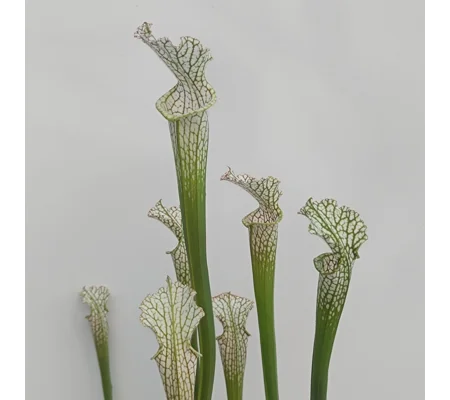
Sarracenia leucophylla L22D MS, Santa Rosa Co., near Yellow River, FLSarracennia leucophylla L22D MS is the first leuco in our collection. A classic plant we have grown for many years. Very frost hardy and an extremely effective fly catcher. Pitchers slender, about 80 cm tall.You receive an adult plant.You can find cultivation tips on our YouTube channel https://www.youtube.com/@RanchOfPlants
Sarracenia - species
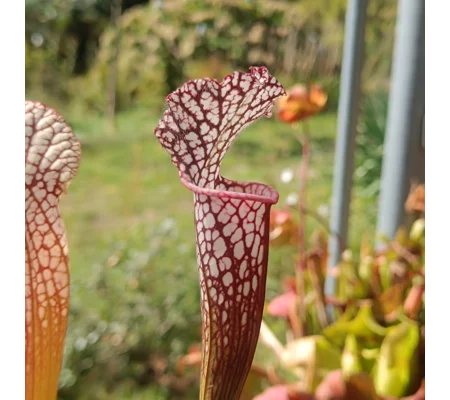
Sarracenia leucophylla L23 MK, red/whiteSarracenia leucophylla L23 MK is a clone with an intense red & white coloration of the upper third of the pitchers. The bottom part is a highly contrasting bright green. Like all sarracenias, leucophylla is native to North America. The species is endemic to the Southeastern United States. Sarracenia leucophylla is naturally highly variable. In size the clones can vary between 30 cm to over 1 m. Plants can be red+white or white with green veins or just white. Both of the latter may be antho-free or not. Venation may be more or less pronounced and fenestrations bigger or smaller. Clones with pinkish or reddish tops are showing introgression of S. rubra or even S. alata genes and plants with a dark throat patch may have S. flava genes. In the hobby leuco clones are very popular as parent plants for producing innumerable hybrids. Leucophylla is classified as Vulnerable n the IUCN List of Threatened species. You can find cultivation tips and more on our YouTube channel https://www.youtub...
Sarracenia - species
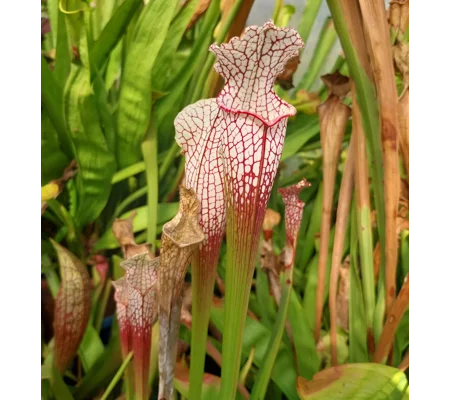
Sarracenia leucophylla L4 MS, ''Red tube'', Splinter Hill, Alabama, ex. Peter ToufarSarracenia leucophylla L4 MS, ''Red tube'', Splinter Hill, Alabama ex. Peter Toufar. This clone has a very fine mesh. It is a short clone, which makes it just more interesting as most leucos are big or huge. L4 MS must not be confused with L4 MK 'Schnell's Gost'. L4 MS is a different clone and can usually be found labeled as Red Tube. You can find cultivation tips on our YouTube channel https://www.youtube.com/@RanchOfPlants
Sarracenia - species
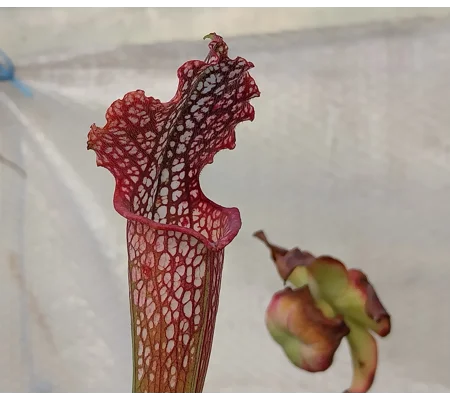
Sarracenia leucophylla L48A MK, Hot Pink Selections 1, BotaniqueSarracennia leucophylla L48A MK, Hot Pink Selections 1,Botanique, is well known for having the entire upper part of the pitcher flaming hot pink. But beware: only the summer pitchers are amazing hot pink. The spring pitchers are a bit more red than the typical leuco, but nothing outstanding. Like all sarracenias, leuco is native to North America. The species is endemic to the Southeastern United States. Sarracenia leucophylla is naturally highly variable. In size the clones can vary between 30 cm to over 1 m. Clones can be red+white or white with green veins or just white. Both of the latter may be antho-free or not. Venation may be more or less pronounced and fenestrations bigger or smaller. Clones with pinkish or reddish tops are showing introgression of S. rubra genes and plants like Leah Wilkerson being hybrids with S. flava.You can find cultivation tips on our YouTube channel https://www.youtube.com/@RanchOfPlants
Sarracenia - species
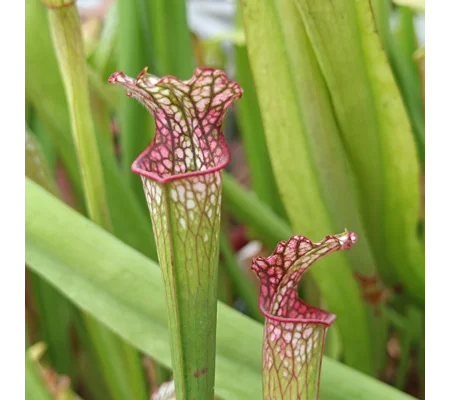
Sarracenia leucophylla L53 MK, pink throatSarracenia leucophylla L53 MK is an excellent pink throat clone. Like all sarracenias, leucophylla is native to North America. The species is endemic to the Southeastern United States. Sarracenia leucophylla is naturally highly variable. In size the clones can vary between 30 cm to over 1 m. Plants can be red+white or white with green veins or just white. Both of the latter may be antho-free or not. Venation may be more or less pronounced and fenestrations bigger or smaller. Clones with pinkish or reddish tops are showing introgression of S. rubra or even S. alata genes and plants with a dark throat patch may have S. flava genes. In the hobby leuco clones are very popular as parent plants for producing innumerable hybrids. Leucophylla is classified as Vulnerable n the IUCN List of Threatened species. You can find cultivation tips and more on our YouTube channel https://www.youtube.com/@RanchOfPlants
Sarracenia - species
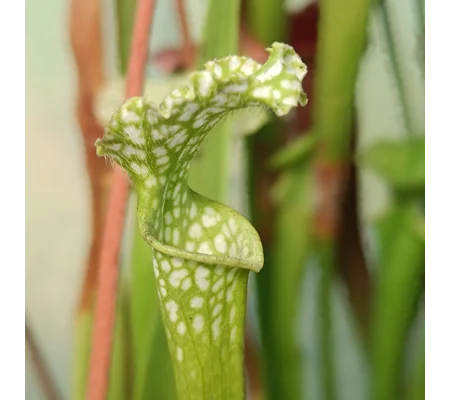
Sarracenia leucophylla f. viridescens L46C MK, Perdido, AL, antho freeSarracenia leucophylla f. viridescens L46C MK, is an antho free clone, collected originally in Perdido, Alabama. It is a true antho free, not just an alba form. It does not produce red pigment at all, not even on the rhizome or wounds. Even its flower is yellow, instead of red. It's a vigorous and quite tall clone. It's used extensively in hybridizing with other antho free plants. For us the L46C MK has proved a very fecund male and female parent in many crosses, including with rubra and purpurea with seedlings having an excellent germination and growth rates. You can find cultivation tips and more on our YouTube channel https://www.youtube.com/@RanchOfPlants
Sarracenia - species
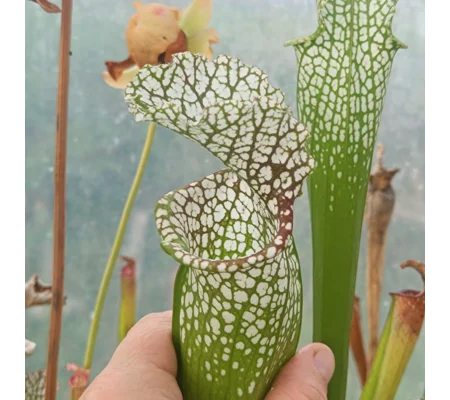
Sarracenia leucophylla, introgressed with rubraThis Sarracenia leucophylla has huge pitchers and is likely introgressed with rubra, as it has the vigour and branching habit of a rubra. Like all sarracenias, leucophylla is native to North America. The species is endemic to the Southeastern United States. Sarracenia leucophylla is naturally highly variable. In size the clones can vary between 30 cm to over 1 m. Plants can be red+white or white with green veins or just white. Both of the latter may be antho-free or not. Venation may be more or less pronounced and fenestrations bigger or smaller. Sarracenia leucophylla is classified as Vulnerable n the IUCN List of Threatened species. You can find cultivation tips and more on our YouTube channel https://www.youtube.com/@RanchOfPlants
Sarracenia - species
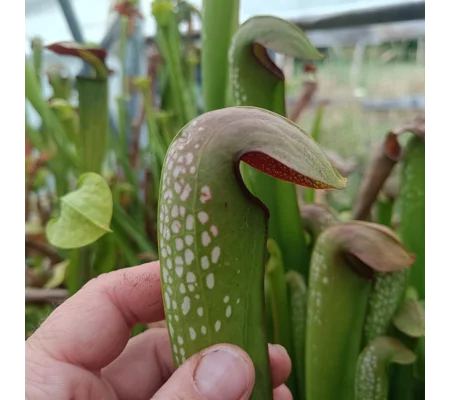
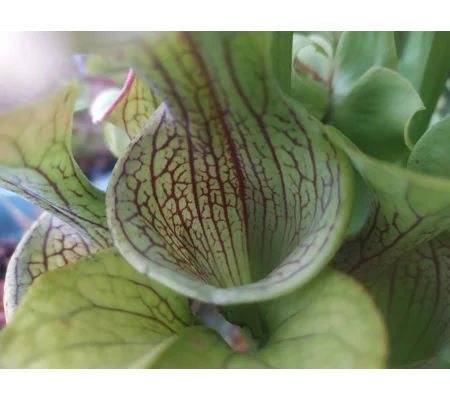
Sarracenia minor var. okefenokeensis, Ware co., GeorgiaSarracenia minor var. okefenokeensis, Ware Co, Georgia grows impressively tall. At more than 90 cm this particular clone towers over the typical form of the species. Okefenokensis variety is primarily found in the Okefenokee National Wildlife Refuge. The plants were originally registered by Peter D Amato under the name Okee Giant before being formally described as S. minor var. okefenokeensis by Dr. Don Schnell. Medium size plants with one growing point. The typical form of minor is up to 30 cm tall, thus the name minor = small. Sarracenia minor s. lato. inhabits swamps of northen Florida, Georgia and North and South Carolina. Its populations around Lake Okeechobee are the Southernmost of any Sarracenia.You receive an adult plant.You can find cultivation tips on our YouTube channel https://www.youtube.com/@RanchOfPlants
Sarracenia - species
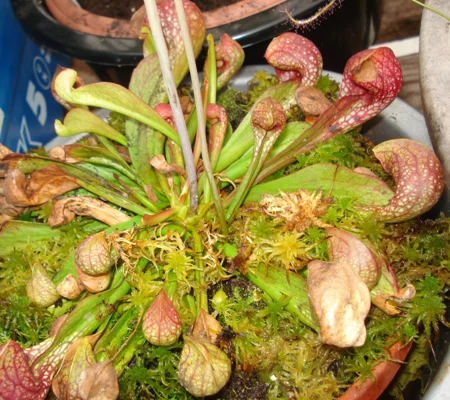
Sarracenia oreophylla var. ornata, de Kalb co., Alabama, R-S8aSarracenia oreophylla var. ornata, de Kalb co., Alabama, R-S8a has nice red-veined pitchers. Sarracenia oreophylla is a unique plant. It sprints thru the growing season: simultaneously flowers and pitchers early in the spring growing season. This means that it eats its pollinators, and is one of the very few carnivorous plants doing so. By about mid-summer, it already goes into phyllodia production. Phyllodia are a secondary type of flat leaf-like organ that allows the plant to photosynthesize. Phyllodia are characteristically small and sicle-shaped. For oreophylla this is an adaptation to naturally drier summer months in its native habitat. Basically it eats its flying insects in spring and goes vegan by late summer. The pictures you see in the gallery are all from one plant, from different seasons. You can see how strikingly different the plant looks during winter and late spring.You can find cultivation tips on our YouTube channel https://www.youtube.com/@RanchOfPlants
Sarracenia - species
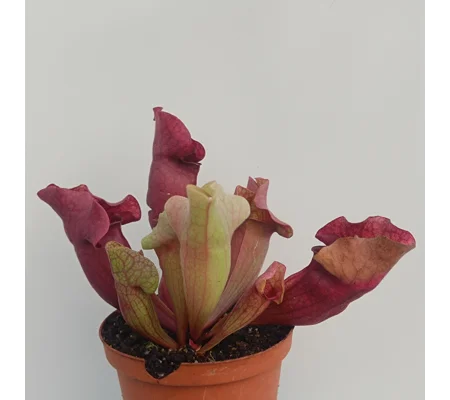
Sarracenia psittacina subsp. psittacinaThe psittacina - the parrot pitcher plant. The only Sarracenia whose pitchers grow horizontally. The bulbous hood of the pitchers has only one round entrance, that looks and works like a mouse trap: insects are lured in, but they can't find the way out. It catches ants, I also found a small slug in there. Generally psittacina is not such a voracious hunter and grows slow. You can find cultivation tips on our YouTube channel https://www.youtube.com/@RanchOfPlants
Sarracenia - species
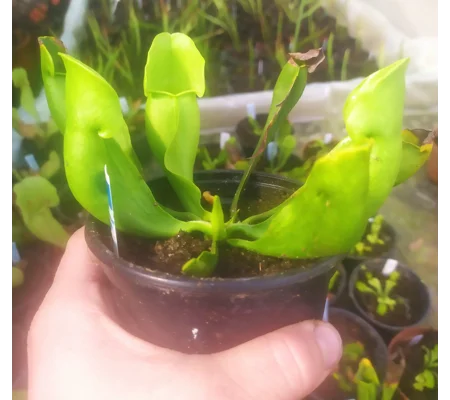
Sarracenia purpurea 'EVELINA', liplessSarracenia x purpurea 'EVELINA' looks like a large rose flower. Large pitcher lids are ruffled, the many pitchers are short. Gentle greens, reds and pinks mix on and among the pitchers. Pitchers persist long into the winter. Truly a very decorative plant. EVELINA is a purpurea hybrid and a mutant, whose exact ancestry is uncertain but can be guessed. The size, color and shape of the pitchers suggests a purpurea x rubra cross, likely backcrossed with purpurea. And what part of it is a mutant? Zoom in on the pictures and take a look at the lip - there isn't any. The edges of the lid just join together at the middle. This gives the plant that extra ruffled flowery appearance. And this is why this particular mutation is called lipless.We offer L size plantsYou can find cultivation tips on our YouTube channel https://www.youtube.com/@RanchOfPlants
Sarracenia - species
Sarracenia purpurea subsp. purpurea f. heterophyllaSarracenia purpurea subsp. purpurea f. heterophylla is a rare antho-free version of the hardiest Sarracenia. It can survive winters to -50C and is therefore best grown as an outdoor plant. Its range includes the Eastern seaboard, the Great Lakes region, Canada except Nunavut and Yukon, Washington state, and Alaska. That makes it the most common and broadly distributed pitcher plant, as well as the only member of the genus that inhabits cold temperate climates.You can find cultivation tips on our YouTube channel https://www.youtube.com/@RanchOfPlants