
Filters
Category
- Pygmy Drosera63
- Stickers & Fridge magnets45
- Mexican Pinguicula44
- CP seeds40
- Terrestrial Utricularia34
- Earrings25
- Sarracenia - species24
- Sarracenia - hybrids22
- Subtropical Drosera22
- Slovenian wildflowers17
- Dionaea (Venus Flytrap)14
- Substrate10
- Dreamcatchers9
- Keychains8
- Bracelets7
- Epiphytic Utricularia7
- Temperate Drosera6
- Medicinal and Herb plants5
- Exotic plants4
- Other Pinguicula4
- Pots & stuff4
- Edible plants3
- Cephalotus (Albany Pitcher Plant)1
- Choice shrubs & perennials1
- Darlingtonia (Cobra Lily)1
- Predator Packs1
- Stylidium (Trigger plant)1
- Wire wrapping1
Size
- Medium118
- Large117
- Small117
- 5 cm pot15
- 2 cm x 2 cm plug14
- 2 cm x 2 cm portion9
- 5 cm round pot8
- XL3
- 1 gabbietta (1=11
- 1 gabbietta (1=1,25eur)1
- 1 plant1
- 1 pot (1=01
- 1 pot (1=0,75eur)1
- 1 pot (1=11
- 1 pot (1=1,65 eur)1
- 10 gabbietta (1=1.10eur)1
- 10 pots (1=01
- 10 pots (1=0,60eur)1
- 10 pots (1=1.50 eur)1
- 10 seeds1
- 100 seeds1
- 2 plants1
- 25eur)1
- 3 plants1
- 5 gabbietta (1=1.20eur)1
- 5 pots (1=01
- 5 pots (1=0,70eur)1
- 5 pots (1=11
- 5 pots (1=1,60 eur)1
- 50 seeds1
- 60 eur)1
- 60eur)1
- 65 eur)1
- 70eur)1
- 75eur)1
- Extra Large1
- Hanging basket1
- Medium - 1 medium size plant1
- Pack of 3 rooted cuttings1
- Small - 1 pack of 3 plugs1
What you see is what you get
Availability
Offers
All Products
Pygmy Drosera
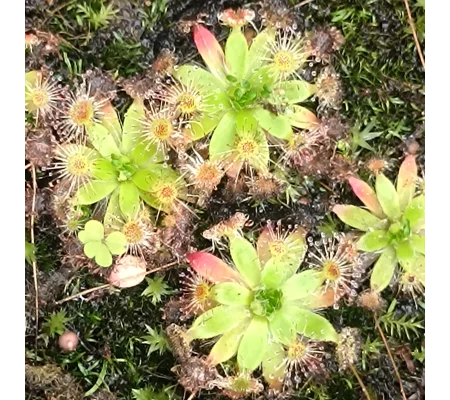
Drosera pulchella Salmon flower, 10+ gemmaeDrosera pulchella is named from the Latin pulchellus (beautiful and small), in reference to its pretty, diminutive form. Drosera pulchella is known from Western Australia, with records from Perth, Augusta, Albany and Esperance. It grows in sand, peaty sand, peat, laterite and loam soils on the margins of lakes, swamps and streams. You can find cultivation tips and more on our YouTube channel https://www.youtube.com/@RanchOfPlants
Pygmy Drosera
Drosera pulchella Scott river, 10+ gemmaeDrosera pulchella is named from the Latin pulchellus (beautiful and small), in reference to its pretty, diminutive form. Drosera pulchella is known from Western Australia, with records from Perth, Augusta, Albany and Esperance. It grows in sand, peaty sand, peat, laterite and loam soils on the margins of lakes, swamps and streams. You can find cultivation tips and more on our YouTube channel https://www.youtube.com/@RanchOfPlants
Pygmy Drosera
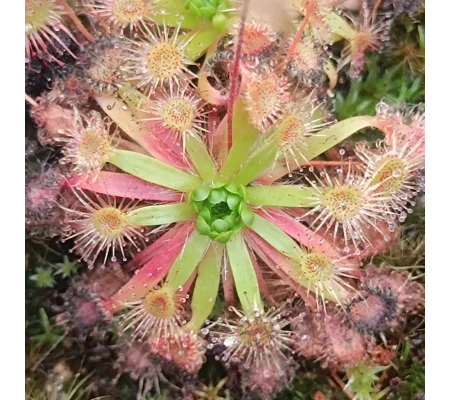
Drosera pulchella x omissa, 10+ gemmaeDrosera pulchella x omissa is a cute and easy to grow pygmy sundew. You can find cultivation tips and more on our YouTube channel https://www.youtube.com/@RanchOfPlants
Pygmy Drosera
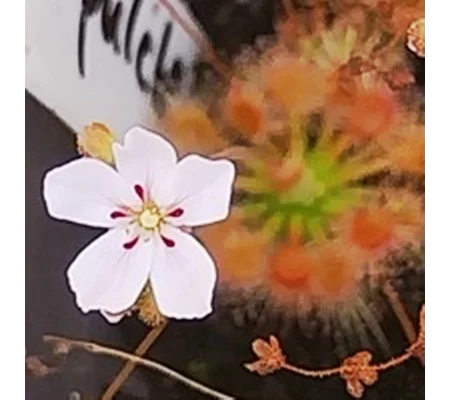
Drosera pulchella, 10+ gemmaeDrosera pulchella is known from Western Australia, with records from Perth, Augusta, Albany and Esperance.Drosera pulchella is named from the Latin pulchellus (beautiful and small), in reference to its pretty, diminutive form.It grows in sand, peaty sand, peat, laterite and loam soils on the margins of lakes, swamps and streams.You can find cultivation tips and more on our YouTube channel https://www.youtube.com/@RanchOfPlants
Pygmy Drosera
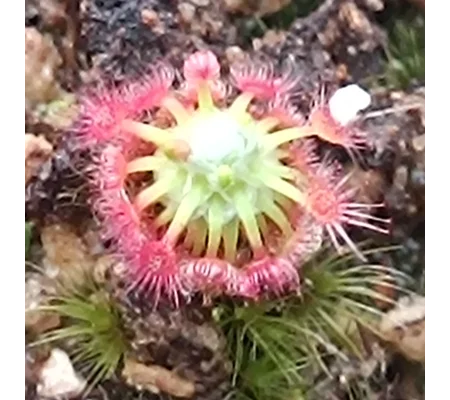
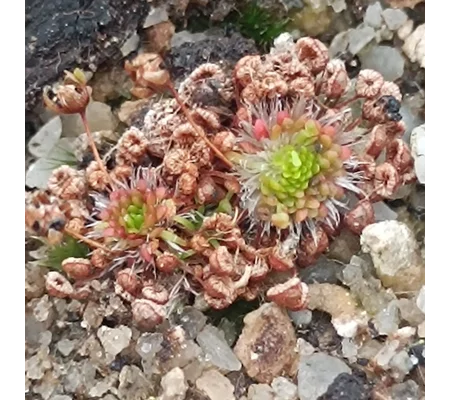
Drosera pycnoblasta, 10+ gemmaeThe epithet pycnoblasta is from the Greek pycnos (densely packed) and blastos (bud), in reference to the tightly packed stipular bud at the centre of the leafy rosette. Drosera pycnoblasta is known from Western Australia, with records from Pingelly, Tammin, Goomalling, west of Hatter Hill, and east and south of Lake King. It grows in clayey, white sand soils over laterite gravels; in white silica sands, sometimes with a little laterite gravel intrusion; and in deep yellow sand soils. All habitats are in low, open heath. You can find cultivation tips and more on our YouTube channel https://www.youtube.com/@RanchOfPlants
Pygmy Drosera
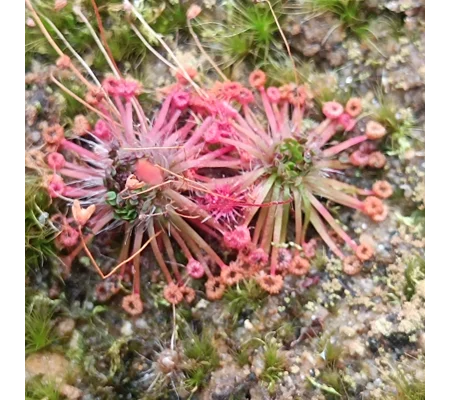
Drosera pygmaea All green, 10+ gemmaeThe epithet pygmaea is derived from the Latin pygmaeus (dwarf ), in reference to the small form of this species. Drosera pygmaea is widespread in southeastern Australia, as well as near Albany and Karridale in Western Australia. It is also found in New Zealand (North Island: far north, central volcanic plateau; and South Island: northwestern and southern tips). It is the only pygmy Drosera to be found outside of Western Australia. It grows a wide range of nutrient poor soils and conditions. On the margins of lakes and swamps it can be submerged for weeks at a time. In alpine areas it can be covered by snow for months and, in heath near Sydney, it occurs on laterite soils that are baked dry for weeks each year. In New Zealand, it can be found in sub-alpine ash deposits on the volcanic plateau and in mossy loam in the South Island. You can find cultivation tips and more on our YouTube channel https://www.youtube.com/@RanchOfPlants
Pygmy Drosera
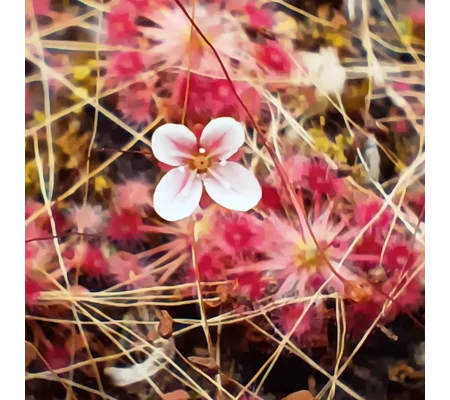
Drosera pygmaea Broadwater, 10+ gemmaeThe epithet pygmaea is derived from the Latin pygmaeus (dwarf ), in reference to the small form of this species. Drosera pygmaea is widespread in southeastern Australia, as well as near Albany and Karridale in Western Australia. It is also found in New Zealand (North Island: far north, central volcanic plateau; and South Island: northwestern and southern tips). It is the only pygmy Drosera to be found outside of Western Australia. It grows a wide range of nutrient poor soils and conditions. On the margins of lakes and swamps it can be submerged for weeks at a time. In alpine areas it can be covered by snow for months and, in heath near Sydney, it occurs on laterite soils that are baked dry for weeks each year. In New Zealand, it can be found in sub-alpine ash deposits on the volcanic plateau and in mossy loam in the South Island. You can find cultivation tips and more on our YouTube channel https://www.youtube.com/@RanchOfPlants
Pygmy Drosera
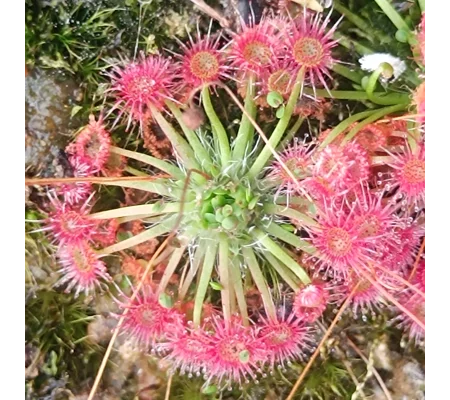
Drosera pygmaea East of AU, 10+ gemmaeDrosera pygmaea is widespread in southeastern Australia, as well as near Albany and Karridale in Western Australia. It is also found in New Zealand (North Island: far north, central volcanic plateau; and South Island: northwestern and southern tips). It is the only pygmy Drosera to be found outside of Western Australia.The epithet pygmaea is derived from the Latin pygmaeus (dwarf ), in reference to the small form of this species.It grows a wide range of nutrient poor soils and conditions. On the margins of lakes and swamps it can be submerged for weeks at a time. In alpine areas it can be covered by snow for months and, in heath near Sydney, it occurs on laterite soils that are baked dry for weeks each year. In New Zealand, it can be found in sub-alpine ash deposits on the volcanic plateau and in mossy loam in the South Island.You can find cultivation tips and more on our YouTube channel https://www.youtube.com/@RanchOfPlants
Pygmy Drosera
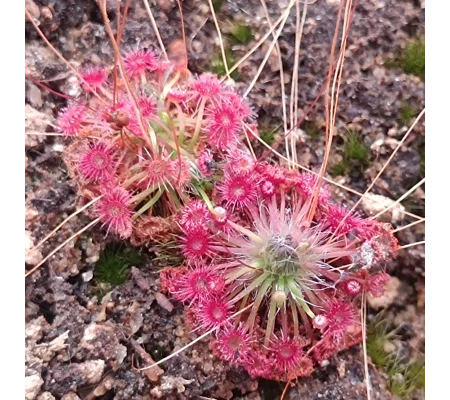
Drosera pygmaea Kangaroo island, 10+ gemmaeThe epithet pygmaea is derived from the Latin pygmaeus (dwarf ), in reference to the small form of this species. Drosera pygmaea is widespread in southeastern Australia, as well as near Albany and Karridale in Western Australia. It is also found in New Zealand (North Island: far north, central volcanic plateau; and South Island: northwestern and southern tips). It is the only pygmy Drosera to be found outside of Western Australia. It grows a wide range of nutrient poor soils and conditions. On the margins of lakes and swamps it can be submerged for weeks at a time. In alpine areas it can be covered by snow for months and, in heath near Sydney, it occurs on laterite soils that are baked dry for weeks each year. In New Zealand, it can be found in sub-alpine ash deposits on the volcanic plateau and in mossy loam in the South Island. You can find cultivation tips and more on our YouTube channel https://www.youtube.com/@RanchOfPlants
Pygmy Drosera
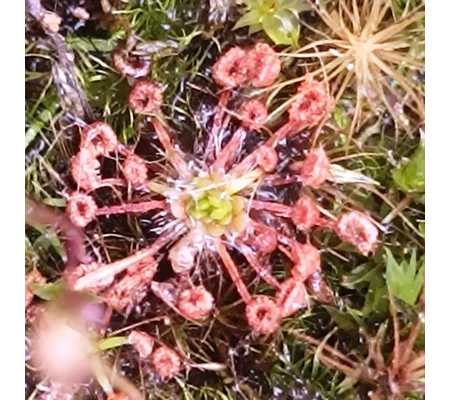
Drosera pygmaea Mt. Lofty, 10+ gemmaeThe epithet pygmaea is derived from the Latin pygmaeus (dwarf ), in reference to the small form of this species. Drosera pygmaea is widespread in southeastern Australia, as well as near Albany and Karridale in Western Australia. It is also found in New Zealand (North Island: far north, central volcanic plateau; and South Island: northwestern and southern tips). It is the only pygmy Drosera to be found outside of Western Australia. It grows a wide range of nutrient poor soils and conditions. On the margins of lakes and swamps it can be submerged for weeks at a time. In alpine areas it can be covered by snow for months and, in heath near Sydney, it occurs on laterite soils that are baked dry for weeks each year. In New Zealand, it can be found in sub-alpine ash deposits on the volcanic plateau and in mossy loam in the South Island. You can find cultivation tips and more on our YouTube channel https://www.youtube.com/@RanchOfPlants
Pygmy Drosera
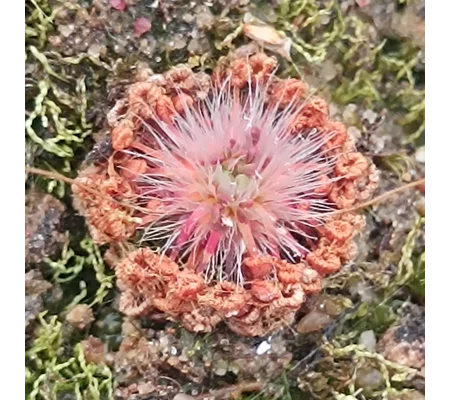
Drosera pygmaea New Zealand, 10+ gemmaeThe epithet pygmaea is derived from the Latin pygmaeus (dwarf ), in reference to the small form of this species. Drosera pygmaea is widespread in southeastern Australia, as well as near Albany and Karridale in Western Australia. It is also found in New Zealand (North Island: far north, central volcanic plateau; and South Island: northwestern and southern tips). It is the only pygmy Drosera to be found outside of Western Australia. It grows a wide range of nutrient poor soils and conditions. On the margins of lakes and swamps it can be submerged for weeks at a time. In alpine areas it can be covered by snow for months and, in heath near Sydney, it occurs on laterite soils that are baked dry for weeks each year. In New Zealand, it can be found in sub-alpine ash deposits on the volcanic plateau and in mossy loam in the South Island. You can find cultivation tips and more on our YouTube channel https://www.youtube.com/@RanchOfPlants
Pygmy Drosera
Drosera pygmaea Sydney, 10+ gemmaeThe epithet pygmaea is derived from the Latin pygmaeus (dwarf ), in reference to the small form of this species. Drosera pygmaea is widespread in southeastern Australia, as well as near Albany and Karridale in Western Australia. It is also found in New Zealand (North Island: far north, central volcanic plateau; and South Island: northwestern and southern tips). It is the only pygmy Drosera to be found outside of Western Australia. It grows a wide range of nutrient poor soils and conditions. On the margins of lakes and swamps it can be submerged for weeks at a time. In alpine areas it can be covered by snow for months and, in heath near Sydney, it occurs on laterite soils that are baked dry for weeks each year. In New Zealand, it can be found in sub-alpine ash deposits on the volcanic plateau and in mossy loam in the South Island. You can find cultivation tips and more on our YouTube channel https://www.youtube.com/@RanchOfPlants