All Products
Epiphytic Utricularia
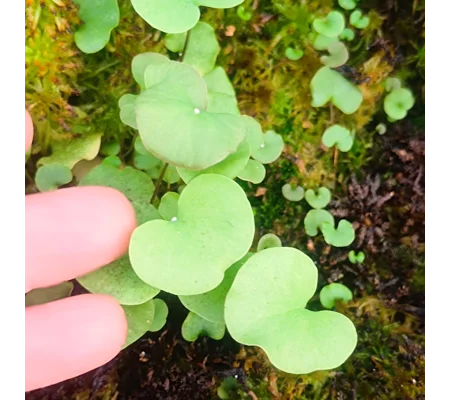
Utricularia cornigera Pedra do Sino, BrasilUtricularia cornigera is a large perennial carnivorous plant that belongs to the genus Utricularia. U. cornigera was described in 2009 by Miloslav Studnička based on his study of the variation in cultivated plants labeled Utricularia reniformis and apparent different geographic ranges. U. cornigera is found on Serra dos Órgãos in south-eastern Brazil and as of the new species' description, was not found in the presence of U. reniformis. Utricularia cornigera has been grown in cultivation under the name U. reniformis and with the cultivar name 'Big Sister'. It differs from U. reniformis by having 6-8 primordial leaves emerging from the seed during germination with a float and whorl of leaves. Utricularia cornigera also produces two distinct types of bladder traps that are dimorphic and it generally has larger leaves. You can find cultivation tips and more on our YouTube channel https://www.youtube.com/@RanchOfPlants
Epiphytic Utricularia
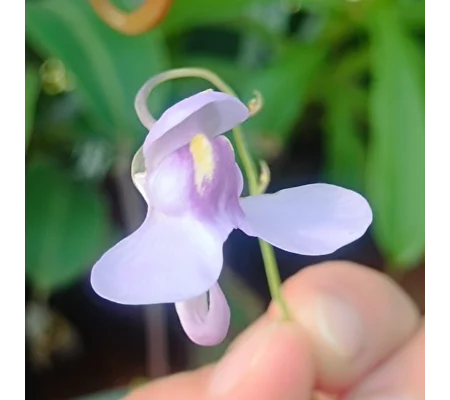
Utricularia nelumbifoliaUtricularia nelumbifolia is a perennial aquatic carnivorous plant that belongs to the genus Utricularia. U. nelumbifolia is endemic to Brazil. It was originally published and described by George Gardner in 1842. Its habitat is reported as being restricted to the water-filled leaf axils of bromeliads in the genus Vriesea in arid volcanic locations at altitudes from 800 m to 2,200 m. U. nelumbifolia will produce aerial stolons that descend into nearby leaf axils in order to colonize new territory, similar to the habit of U. humboldtii. It typically flowers from May to August. Beside the whole, round, peltate leaves above water, there are submerged, divided leaves bearing insect traps.. You can find cultivation tips and more on our YouTube channel https://www.youtube.com/@RanchOfPlants
Epiphytic Utricularia
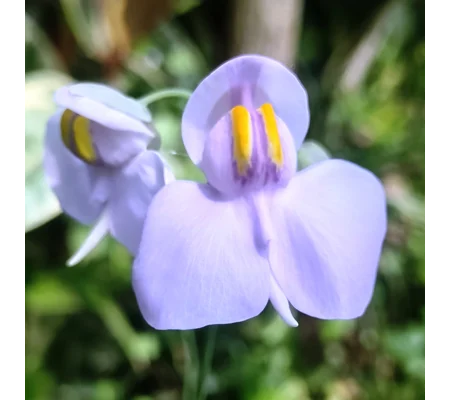
Utricularia reniformisUtricularia reniformis is a large perennial carnivorous plant that belongs to sect. Orchidoides. And is endemic to Brazil. It was originally published and described by Augustin Saint-Hilaire in 1830. It usually grows as a terrestrial plant in wet grasslands and only sometimes as an epiphyte in the water-filled leaf axils of some bromeliad species. Grow it in pure live Sphagnum. It is typically found between altitudes of 750 m and 1,900 m in its southern range and up to 2,500 m in its northern range. The foliage leaves are kidney-shaped and about 7 cm wide. The trap leaves grow out of the succulent white rhizome and remain below the surface of the substrate. It flowers between October and March and each flower stem flowers for months.The two to five zygomorphic flowers are on an upright raceme and have two vertical gold stripes edged with purple on the upper half of the corolla. You can find cultivation tips and more on our YouTube channel https://www.youtube.com/@RanchOfPlants