
All Products
Subtropical Drosera
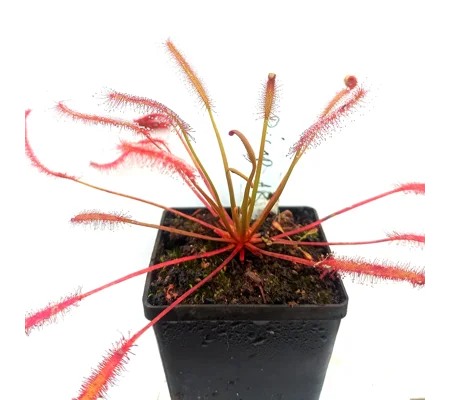
Drosera capensis 'ALL RED'Drosera capensis is one of the easiest sundews to grow. A sub-tropical sundew endemic to the southwestern Cape of South Africa, where it can be found in marshes, along streams, permanent seeps and damp areas of fynbos. All Red is a completly red coloured form of cape sundew. We offer adult plants, one plant per pot.
Subtropical Drosera
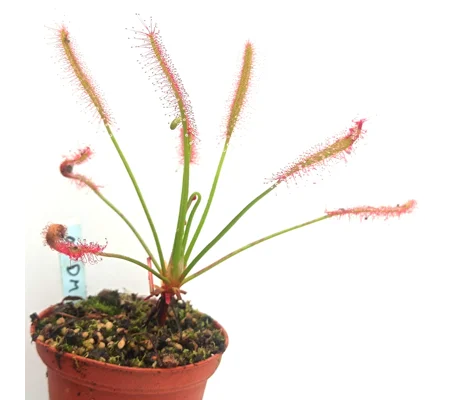
Drosera capensis Dark MaroonDrosera capensis Dark maroon turns brownish red in good light. Drosera capensis is a sub-tropical sundew endemic to the southwestern Cape where it can be found in marshes, along streams, permanent seeps and damp areas of fynbos. A very easy sundew to grow, suitable for begginers. The Cape sundew is fast growing and single plants can live for many years with young suckers forming at the base. Pink flowers, red sticky hairs. It is a free-flowering and fascinating house plant. Self-fertile, will self-seed. You can find cultivation tips and more on our YouTube channel https://www.youtube.com/@RanchOfPlants
Subtropical Drosera
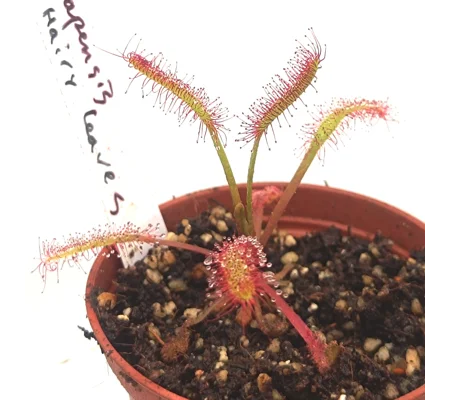
Drosera capensis Hairy LeavesDrosera capensis Hairy leaves is a bit squatter than the typical and it indeed has leaves covered with short hairs. Drosera capensis is a sub-tropical sundew endemic to the southwestern Cape where it can be found in marshes, along streams, permanent seeps and damp areas of fynbos. A very easy sundew to grow, suitable for begginers. The Cape sundew is fast growing and single plants can live for many years with young suckers forming at the base. Pink flowers, red sticky hairs. It is a free-flowering and fascinating house plant. Self-fertile, will self-seed. You can find cultivation tips and more on our YouTube channel https://www.youtube.com/@RanchOfPlants
Subtropical Drosera
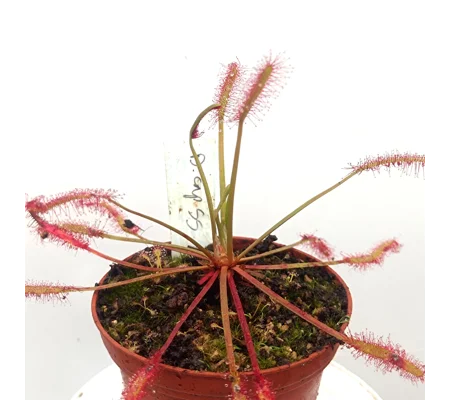
Drosera capensis Spider SeedDrosera capensis Spider Seed is my own selection. It has particularly long and thin petioles. Young leaves are orangey in summer and bright green in winter. Older leaves are completely bright red in summer and red in the top half with the lamina in winter. Drosera capensis is a sub-tropical sundew endemic to the southwestern Cape where it can be found in marshes, along streams, permanent seeps and damp areas of fynbos. A very easy sundew to grow, suitable for begginers. The Cape sundew is fast growing and single plants can live for many years with young suckers forming at the base. Pink flowers, red sticky hairs. It is a free-flowering and fascinating house plant. Self-fertile, will self-seed. You can find cultivation tips and more on our YouTube channel https://www.youtube.com/@RanchOfPlants
Subtropical Drosera
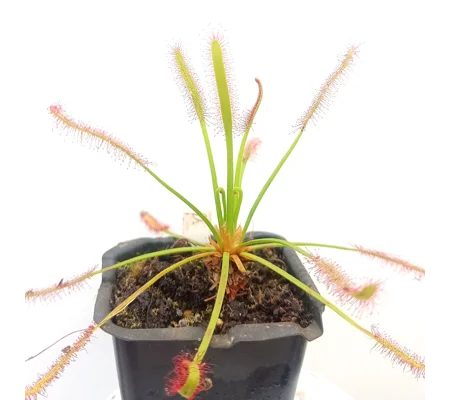
Drosera capensis TYPICALDrosera capensis is a sub-tropical sundew endemic to the southwestern Cape where it can be found in marshes, along streams, permanent seeps and damp areas of fynbos. A very easy sundew to grow, suitable for begginers. The Cape sundew is fast growing and single plants can live for many years with young suckers forming at the base. It is a free-flowering and fascinating house plant.Self-fertile, will self-seed. One adult plant per portion, very often with flowers.You can find cultivation tips and more on our YouTube channel https://www.youtube.com/@RanchOfPlants
Subtropical Drosera
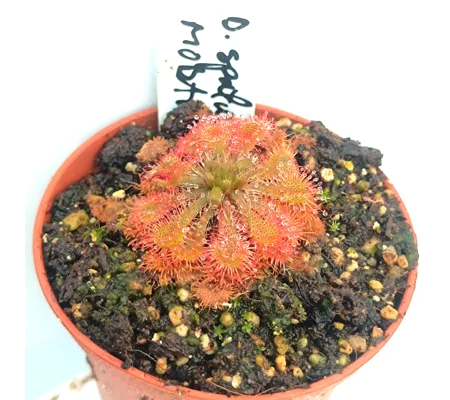
Drosera spatulata Mobara town, JapanDrosera spatulata Mobata town is a locality plant. Drosera spatulata is a variable, rosette-forming sundew. The specific epithet is Latin for spatula or spoon shaped refers to the shape of the leaves. This sundew has a huge range throughout Southeast Asia, southern China and Japan, Micronesia, Papua New Guinea, eastern Australia, Tasmania and New Zealand. Variants are often known by the localities in which they are found. Plants from different areas can look very different. Also the further North or South they originate from the equator the more cold tolerant they are. Drosera spatulata does not form hibernacula in winter, does not need a winter rest and is therefore easily grown under the same conditions as Drosera capensis. You can find cultivation tips and more on our YouTube channel https://www.youtube.com/@RanchOfPlants
Subtropical Drosera
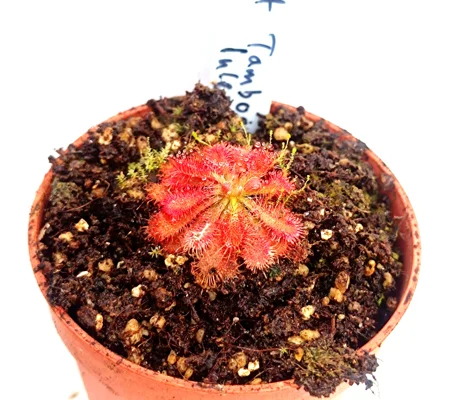
Drosera spatulata Tamboon inlet, AustraliaDrosera spatulata Tamboon inlet is a locality plant from Australia. Drosera spatulata is a variable, rosette-forming sundew. The specific epithet is Latin for spatula or spoon shaped refers to the shape of the leaves. This sundew has a huge range throughout Southeast Asia, southern China and Japan, Micronesia, Papua New Guinea, eastern Australia, Tasmania and New Zealand. Variants are often known by the localities in which they are found. Plants from different areas can look very different. Also the further North or South they originate from the equator the more cold tolerant they are. Drosera spatulata does not form hibernacula in winter, does not need a winter rest and is therefore easily grown under the same conditions as Drosera capensis. You can find cultivation tips and more on our YouTube channel https://www.youtube.com/@RanchOfPlants
Subtropical Drosera
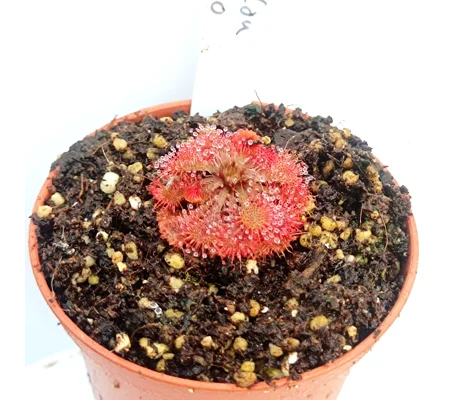
Drosera spatulata var. loureloi MacaoDrosera spatulata var. loureloi Macao is a locality plant. Drosera spatulata is a variable, rosette-forming sundew. The specific epithet is Latin for spatula or spoon shaped refers to the shape of the leaves. This sundew has a huge range throughout Southeast Asia, southern China and Japan, Micronesia, Papua New Guinea, eastern Australia, Tasmania and New Zealand. Variants are often known by the localities in which they are found. Plants from different areas can look very different. Also the further North or South they originate from the equator the more cold tolerant they are. Drosera spatulata does not form hibernacula in winter, does not need a winter rest and is therefore easily grown under the same conditions as Drosera capensis. You can find cultivation tips and more on our YouTube channel https://www.youtube.com/@RanchOfPlants
Subtropical Drosera
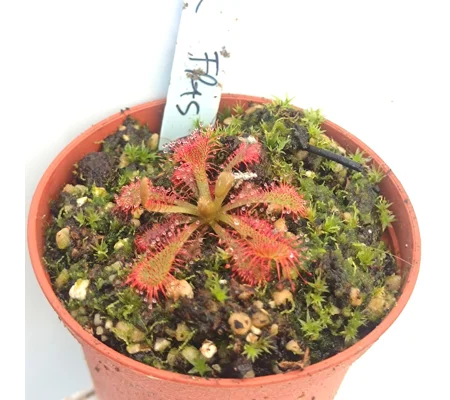
Drosera spatulata var. lovellae Fraser Island, AustraliaDrosera spatulata var. lovellae Fraser Island is a locality plant from the island off the Southern coast of Australia. Fraser island has been renamed back to its Aboriginal name K'gari. Drosera spatulata is a variable, rosette-forming sundew. The specific epithet is Latin for spatula or spoon shaped refers to the shape of the leaves. This sundew has a huge range throughout Southeast Asia, southern China and Japan, Micronesia, Papua New Guinea, eastern Australia, Tasmania and New Zealand. Variants are often known by the localities in which they are found. Plants from different areas can look very different. Also the further North or South they originate from the equator the more cold tolerant they are. Drosera spatulata does not form hibernacula in winter, does not need a winter rest and is therefore easily grown under the same conditions as Drosera capensis. You can find cultivation tips and more on our YouTube channel https://www.youtube.com/@RanchOfPlants
Subtropical Drosera
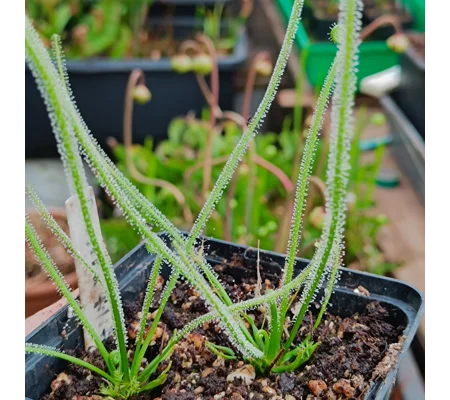
Drosera tracyiDrosera tracyi is the largest North American species of sundew.. Drosera filiformis and Drosera tracyi are two closely related North American species. So closely infact, that sometimes they are considered just subspecies. Drosera filiformis is found on the Atlantic coast from North Carolina to Nova Scotia along with a few populations in the Florida panhandle. The Florida plants are generally smaller and redder than the Atlantic coast plants and were given the name Drosera filiformis var. floridana. Drosera tracyi is found along the gulf coast from Louisiana to the Florida panhandle and southern Georgia. Both species form hibernacula in the winter although Drosera tracyi and Drosera filiformis var floridana are found in an area generally considered warm temperate and may not survive a real winter. You can find cultivation tips and more on our YouTube channel https://www.youtube.com/@RanchOfPlants
Temperate Drosera
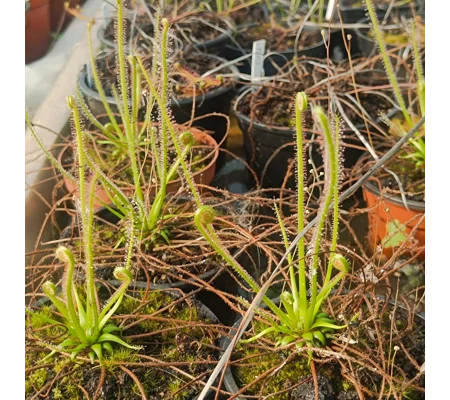
Drosera x californica (subsp. filiformis x subsp. tracy) 'BIG'Drosera filiformis is found on the Atlantic coast of North America from North Carolina to Nova Scotia along with a few populations in the Florida panhandle. The 'BIG' variety forms about 30 cm long and very narrow leaves, covered with sticky hairs. Over a few growing seasons the plant slowly divides to form a clump. To me Drosera filiformis plants look like the land version of a sea anemone. Drosera filiformis is a winter-hardy sundew, it forms a hibernaculum in autumn and dormant throughout winter. It can be grown indoors, but be aware that it will still go dormant. If you don't want or can't overwinter it outside, put the pot with the plant in as cool a spot as possible for 3 to 5 months. Best choice is a fridge. Check the 'Growing CPs' page for more info. Drosera filiformis is self fertile, but doesn't really like to self seed. Also the adult plants are quite big and overgrow smaller ones. So if you want seedlings, do collect the seeds and sow them in a separate pot. One semi-adu...
Subtropical Drosera
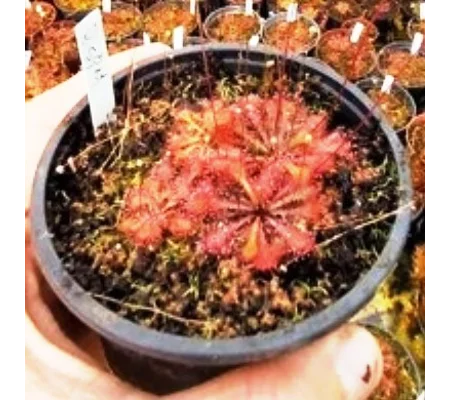
Drosera x tokaiensisA naturaly occuring cross of D. rotundifolia and D. spatulata, originating in Japan, where the native ranges of both parent species intersect. Looks very similar to spatulata and does not go dormant, so it's often mislabeled as a true spatulata. Tiny hot pink flowers on very long stalks. Self fertile and self seeds like it wants to take over the world. You get 4 adult plants per portion, plus seedlings. This sundew is so tough it's often a weed in collections. So, definitely a good choice for a begginer.