
All Products
Terrestrial Utricularia
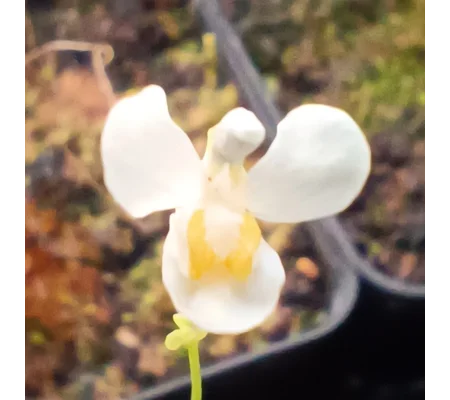
Utricularia nephrophylla White flowerUtricularia nephrophylla White flower is a small to medium-sized lithophyte. it is endemic to Brazil. Its habitat is reported as being wet, mostly vertical rocks in montane forests at altitudes from 600 m to 1,200 m. It was originally published and described by Ludwig Benjamin in 1847. You can find cultivation tips and more on our YouTube channel https://www.youtube.com/@RanchOfPlants
Terrestrial Utricularia
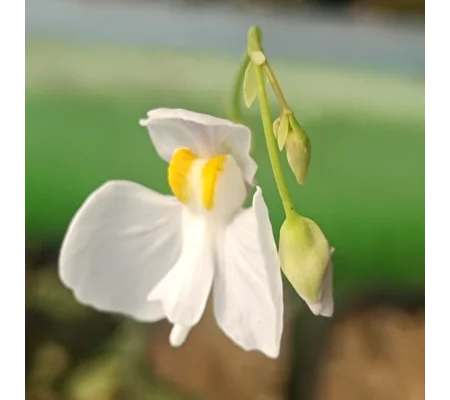
Utricularia nephrophylla x geminilobaUtricularia nephrophylla x geminiloba has very cute leaves shaped like hearts. It grows great in rainforest terrariums. Genes of Utricularia nephrophylla, give the leaves the potential to grow longer petioles if humidity is higher. It can also easily be grown in a pot on a windowsill. It doesn't need strong light. It does need to stand in water at all times. Utricularia nephrophylla x geminiloba is a hybrid of two terrestrial/litophyte species of Utricularia subg. Utricularia sect. Orchidioides endemic to Brazil.You can find cultivation tips and more on our YouTube channel https://www.youtube.com/@RanchOfPlants
Terrestrial Utricularia
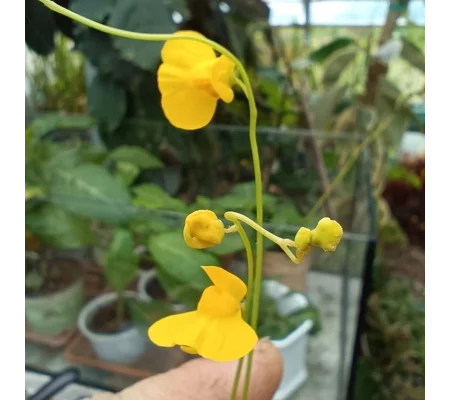
Utricularia praelongaUtricularia praelonga is a medium-sized to large perennial carnivorous plant that belongs to the genus Utricularia. U. praelonga is a terrestrial species endemic to South America, where it is found in northern Argentina, southern Brazil, and Paraguay.Utriculara praelonga has largish yellow flowers on very long stems. But it's oddest feature are the leaves. It grows two very distinct types of leaves at the same time. One set are small, obovate and the other tall and strap-like resembling grass.YouTube channel https://www.youtube.com/@RanchOfPlants
Terrestrial Utricularia
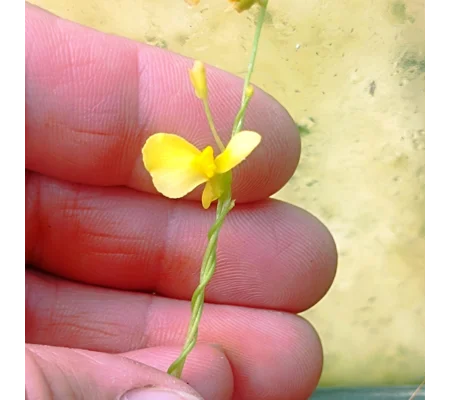
Utricularia prehensilisUtricularia prehensilis is named for its twining or climbing flower stalks. It is native to tropical and southern Africa, from Angola, the Central African Republic, the Democratic Republic of the Congo, Ethiopia, Kenya, Madagascar, South Africa, Eswatini, Tanzania, Zambia, and Zimbabwe. Utricularia prehensilis is a terrestrial bladderwort. It was originally described by Ernst Heinrich Friedrich Meyer in 1837. You can find cultivation tips and more on our YouTube channel https://www.youtube.com/@RanchOfPlants
Terrestrial Utricularia
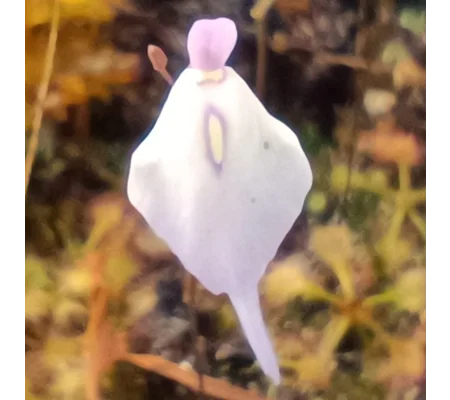
Utricularia pubescensUtricularia pubescens is a terrestrial or lithophytic Utricularia. It grows in boggy grasslands in damp peaty soils at altitudes from sea level to 1,900 m. This species possesses small peltate leaves. That means the leaves are round and the leaf stalk (petiole) attaches at centre of the lower surface of the leaf blade. The flowers with the 'O' are unmistakeable and very cute.It is the only member of Utricularia sect. Lloydia. U. pubescens is native to India, tropical Africa, and Central and South America. It was originally published and described by James Edward Smith in 1819. You can find cultivation tips and more on our YouTube channel https://www.youtube.com/@RanchOfPlants
Terrestrial Utricularia
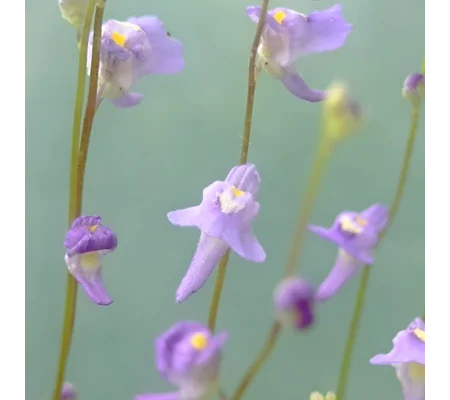
Utricularia sp. HermanusUtricularia s. Hermanus a potentially undescribed species or a form of Utricularia found in the Hermanus region of South Africa, possibly related to Utricularia welwitschii. It is a small, delicate carnivorous plant known for its flowers and the ability to grow in moist, nutrient-poor habitats like seepages.YouTube channel https://www.youtube.com/@RanchOfPlants
Terrestrial Utricularia
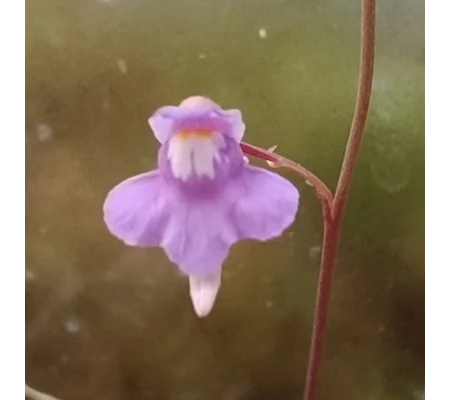
Utricularia tridentataUtricularia tridentata is a small terrestrial carnivorous plant that belongs to the genus Utricularia. U. tridentata is endemic to South America, where it is found in Argentina, Brazil, and Uruguay.You can find cultivation tips and more on our YouTube channel https://www.youtube.com/@RanchOfPlants
Terrestrial Utricularia
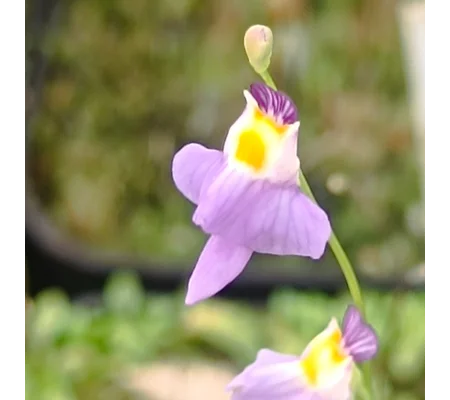
Utricularia warburgiiUtricularia warburgii is a species of terrestrial bladderwort found in South East China, where it grows in sunny wet meadows at an altitude of 900 m. It is fairly hardy, able to survive mild winters or be kept in a cold greenhouse. It belongs to the section Nigrescentes and is closely related to U. caerulea.In the spring Utricularia warburgii produces 5 20 cm. flower scapes bearing 2-6 violet-blue flowers, 8mm in size and bearing a yellow splotch at the throat. These flowers are some of the most beautiful of the genus.The cultivation of this species is not difficult, and is similar to other commonly cultivated terrestrial Utricularia.Plants are best grown in a mixture of peat and sand that is kept constantly moist to wet and placed in bright light conditions. It was described by K.I.Goebel in 1891. You can find cultivation tips and more on our YouTube channel https://www.youtube.com/@RanchOfPlants