
All Products
Terrestrial Utricularia
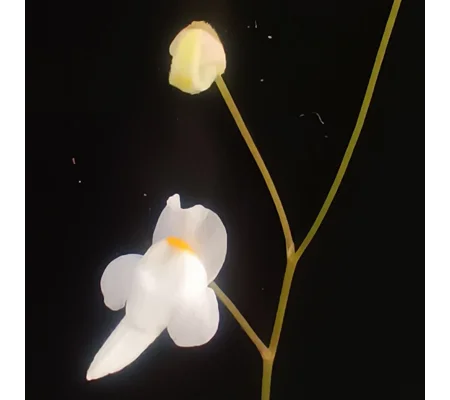
Utricularia amethystinaUtricularia amethystina, the purple bladderwort, 2 is a variable species of terrestrial bladderwort native to Bolivia, Brazil, Guyana, Colombia, Suriname, Trinidad and Tobago, Venezuela, Peru. First published in Compt. Rend. Hebd. Séances Acad. Sci. 7: 870 in 1838 by Salzm. ex A.St.-Hil. & Girard. The small flowers can be purple, lilac, white, bluish, cream, or bright yellow, and are also highly variable in size and shape. You can find cultivation tips and more on our YouTube channel https://www.youtube.com/@RanchOfPlants
Terrestrial Utricularia
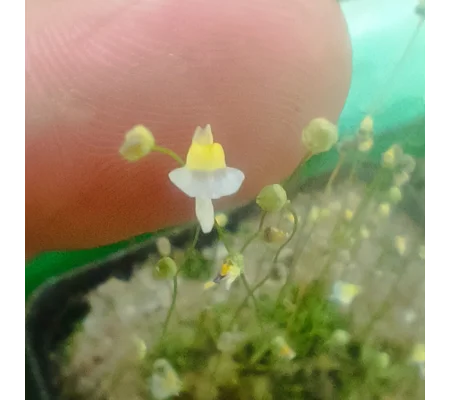
Utricularia bisquamata Bains KloofUtricularia bisquamata is a small carnivorous plant that belongs to the genus Utricularia. The flowering stems grow to a height of about 12 cm. It has a rosette of narrow leaves and wiry stems supporting racemes of flowers with two lips, white, pale violet or occasionally yellow. The upper lip is small with two or three lobes and the lower lip has two short lobes at the side and acentral lobe. The base of the lower lip has a patch of yellow which is variable in size. It is native to southern Africa, where it can be found in Angola, Lesotho, Madagascar, Namibia, Eswatini and South Africa. It is part of the fynbos community, where it grows as a terrestrial plant in damp, sandy or peaty soils among mosses by streams or wet depressions at altitudes from near sea level to 1,200 m in South Africa and up to 2,250 m in Angola. It was originally described and published by Franz von Paula Schrank in 1824. Since it is quite widespread, there are several different forms of the species in cultiv...
Terrestrial Utricularia
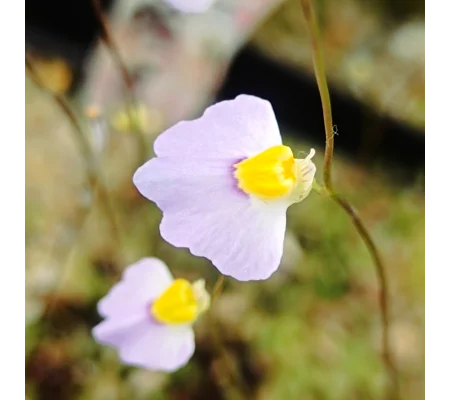
Utricularia bisquamata Betty's BayUtricularia bisquamata is a small carnivorous plant that belongs to the genus Utricularia. The flowering stems grow to a height of about 12 cm. It has a rosette of narrow leaves and wiry stems supporting racemes of flowers with two lips, white, pale violet or occasionally yellow. The upper lip is small with two or three lobes and the lower lip has two short lobes at the side and acentral lobe. The base of the lower lip has a patch of yellow which is variable in size. It is native to southern Africa, where it can be found in Angola, Lesotho, Madagascar, Namibia, Eswatini and South Africa. It is part of the fynbos community, where it grows as a terrestrial plant in damp, sandy or peaty soils among mosses by streams or wet depressions at altitudes from near sea level to 1,200 m in South Africa and up to 2,250 m in Angola. It was originally described and published by Franz von Paula Schrank in 1824. Since it is quite widespread, there are several different forms of the species in cultiv...
Terrestrial Utricularia
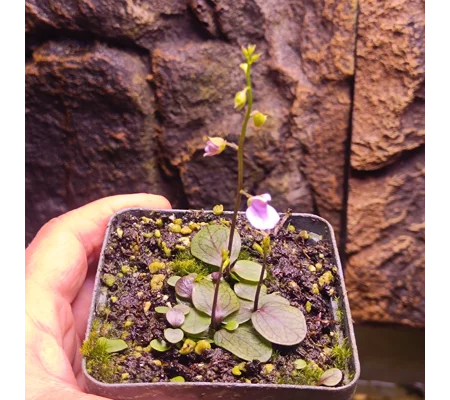
Utricularia calycifida Asenath WaiteUtricularia calycifida is a medium-sized terrestrial perennial. U. calycifida is endemic to northern South America and can be found in Brazil, Guyana, Suriname, and Venezuela. Utricularia calycifida is a popular species due to its large leaves and variations in flower color and size. It used to be quite rare but by now a few location clones and several cultivars have been established. Many cultivars' names are based upon characters in the novels and short stories of H. P. Lovecraft.
Terrestrial Utricularia
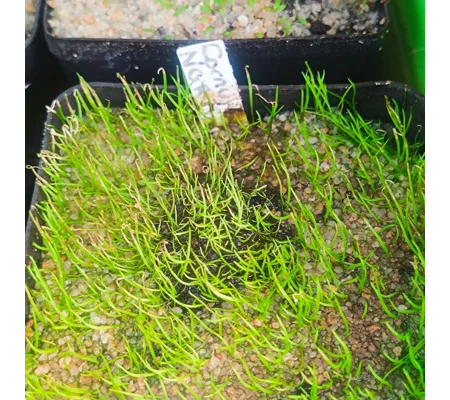
Utricularia cornuta NorthUtricularia cornuta, the horned bladderwort, is small to medium-sized. It is endemic to North America and can be found in the Bahamas, Cuba, Canada, and the United States. Utricularia cornuta grows as a terrestrial or subaquatic plant in marshes, swamps, and pools in shallow waters, mostly at lower altitudes. It was originally described and published by André Michaux in 1803. As the species is widespread, plants from different localities have different cold tolerance. This clone is winterhardy. You can find cultivation tips and more on our YouTube channel https://www.youtube.com/@RanchOfPlants
Terrestrial Utricularia
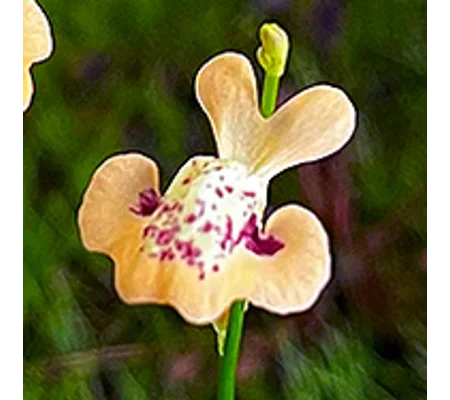
Utricularia fulvaUtricularia fulva is a small to medium-sized annual carnivorous plant that belongs to the genus Utricularia. U. fulva is endemic to Australia, where it appears to be largely restricted to the Northern Territory, specifically the Arnhem Land sandstone escarpment. It grows as a terrestrial or subaquatic plant in or near sandy stream beds. It was originally described and published by Ferdinand von Mueller in 1858. You can find cultivation tips and more on our YouTube channel https://www.youtube.com/@RanchOfPlants
Terrestrial Utricularia
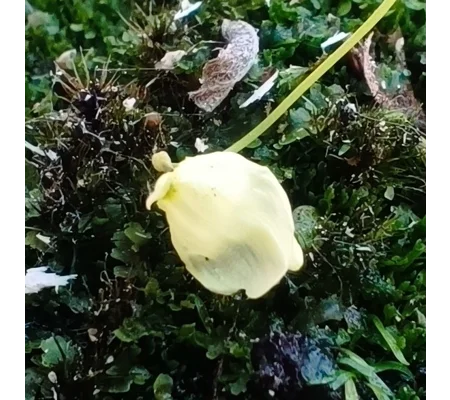
Utricularia livida Lemon flowerUtricularia livida Lemon flower is an unusual form of the species due to its pale yellow flowers. It blooms almost constantly. It can be easily grow as a houseplant on a windowsill or in a terrarium. The Latin specific epithet livida means "pale" or "lead-coloured", referring to the normal colour of the flowers. It was originally described and published by Ernst Heinrich Friedrich Meyer in 1837. It occurs in nature in Angola, the Democratic Republic of the Congo, Ethiopia, Kenya, Lesotho, Madagascar, Malawi, Mozambique, Rwanda, Somalia, South Africa, Sudan, Eswatini, Tanzania, Uganda, Zambia, and Zimbabwe. It also has a widespread native range in Mexico. It grows as a terrestrial plant in boggy areas or shallow soils over rock at altitudes from near sea level to 2,830 m. Utricularia livida Lemon flower is an easy species to grow, but slightly more picky than the Typical form. You can find cultivation tips and more on our YouTube channel https://www.youtube.com/@RanchOfPlants
Terrestrial Utricularia
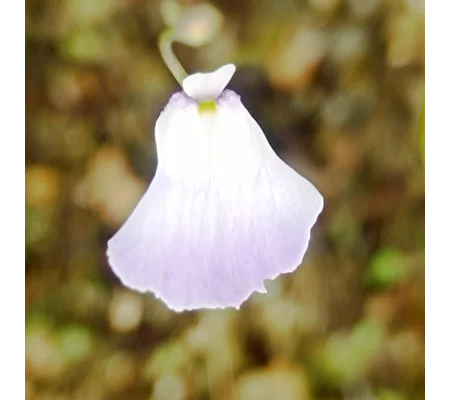
Utricularia livida MexicoUtricularia livida Mexico is very easy to grow and is valued for its pretty pale-violet flowers. It blooms almost constantly. It can be easily grow as a houseplant on a windowsill or in a terrarium. The Latin specific epithet livida means "pale" or "lead-coloured", referring to the colour of the flowers. It was originally described and published by Ernst Heinrich Friedrich Meyer in 1837. It occurs in nature in Angola, the Democratic Republic of the Congo, Ethiopia, Kenya, Lesotho, Madagascar, Malawi, Mozambique, Rwanda, Somalia, South Africa, Sudan, Eswatini, Tanzania, Uganda, Zambia, and Zimbabwe. It also has a widespread native range in Mexico. It grows as a terrestrial plant in boggy areas or shallow soils over rock at altitudes from near sea level to 2,830 m. Utricularia livida Mexico is an easily growing African form.You can find cultivation tips and more on our YouTube channel https://www.youtube.com/@RanchOfPlants
Terrestrial Utricularia
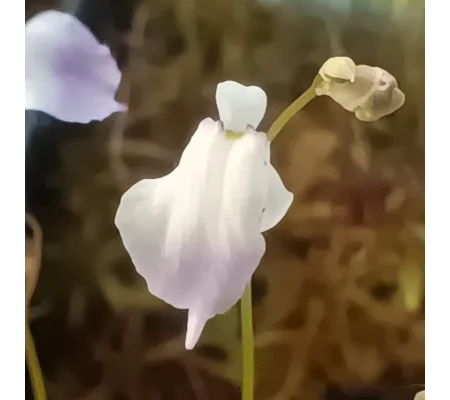
Utricularia livida TypicalUtricularia livida Typical is very easy to grow and is valued for its pretty pale-violet flowers. It blooms almost constantly. It can be easily grow as a houseplant on a windowsill or in a terrarium. The Latin specific epithet livida means "pale" or "lead-coloured", referring to the colour of the flowers. It was originally described and published by Ernst Heinrich Friedrich Meyer in 1837. It occurs in nature in Angola, the Democratic Republic of the Congo, Ethiopia, Kenya, Lesotho, Madagascar, Malawi, Mozambique, Rwanda, Somalia, South Africa, Sudan, Eswatini, Tanzania, Uganda, Zambia, and Zimbabwe. It also has a widespread native range in Mexico. It grows as a terrestrial plant in boggy areas or shallow soils over rock at altitudes from near sea level to 2,830 m. It also has a widespread native range in Mexico. Utricularia livida Typical is an easily growing African form.You can find cultivation tips and more on our YouTube channel https://www.youtube.com/@RanchOfPlants
Terrestrial Utricularia
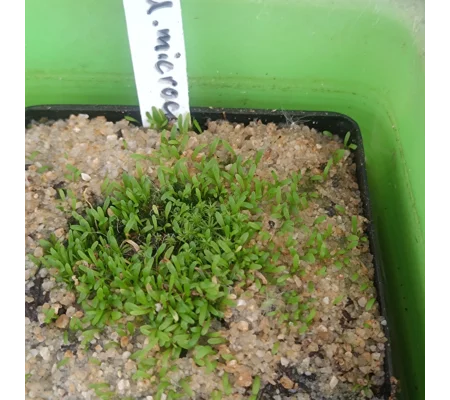
Utricularia microcalyxUtricularia microcalyx is a small to medium-sized carnivorous plant that belongs to the genus Utricularia. It is native to tropical Africa, where it can be found in the Democratic Republic of the Congo and Zambia. U. microcalyx grows as a terrestrial plant in damp, sandy or peaty soils in grasslands at altitudes from 1,200 m to 1,650 m. It typically flowers between February and July. It was originally described and published by Peter Taylor in 1964 as a variety of U. welwitschii. Taylor elevated this variety to the species level in 1971. You can find cultivation tips and more on our YouTube channel https://www.youtube.com/@RanchOfPlants
Terrestrial Utricularia
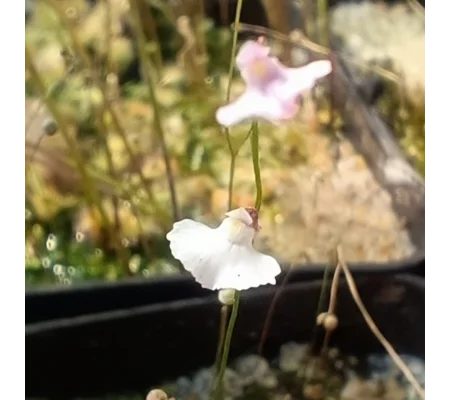
Utricularia rostrata Chapada Diamantina, Bahia, BrazilUtricularia rostrata is a small carnivorous plant that belongs to the genus Utricularia. Utricularia rostrata is endemic to the Chapada Diamantina highlands of Bahia, Brazil. It grows as a terrestrial plant in damp sandy soils near streams and waterfalls in semi-shaded areas at altitudes from 550 to 1,570 metres. It was originally described and published by Andreas Fleischmann and Fernando Rivadavia in 2009, though specimens of this species had been discovered as early as 1992. Fleischmann and Rivadavia note that the species is common throughout the Chapada Diamantina highlands and its distribution includes Chapada Diamantina National Park, thus justifying its ranking as a species of Least Concern under the IUCN. Flowers of U. rostrata are white, mauve, or violet and the lower corolla lip has a yellow area on it. It has been placed in section Aranella and appears to be most closely related to U. costata, though it differs from all members of section Aranella in its rostrate upper ca...