
Temperate Drosera

Temperate Drosera
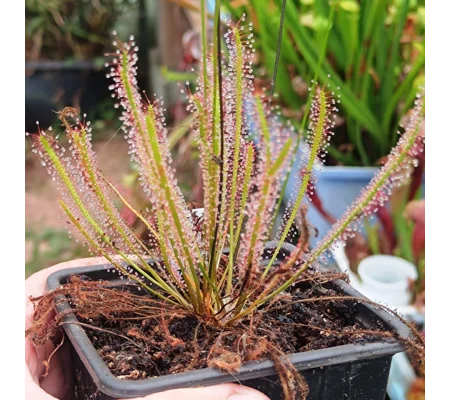
Drosera anglica x filiformis Jakob Kruk cloneDrosera anglica x filiformis Jakob Kruk clone is a hybrid of two sundews: Drosera anglica and Drosera filiformis. Drosera anglica is circumboreal, but some populations are found in warmer climate of southern Japan and southern Europe, and even in the tropical zone on Kauai, Hawai'i. Drosera filiformis is endemic to the eastern seaboard of North America, from Nova Scotia to Florida. The southeren populations of both species are not winter hardy in central Europe, but the northern populations are - Drosera anglica is one of the 3 native European sundews. Any hybrid of these two species is called anglica x filiformis, but their shape, size, color and winter hardiness vary within the range of these traits of the exact parent plants used. Drosera anglica x filiformis Jakob Kruk clone is a fully winter hardy plant. It's leaves are wider than filiformis's and about a third the length. You can find cultivation tips and more on our YouTube channel https://www.youtube.com/@RanchOfPlants
Temperate Drosera
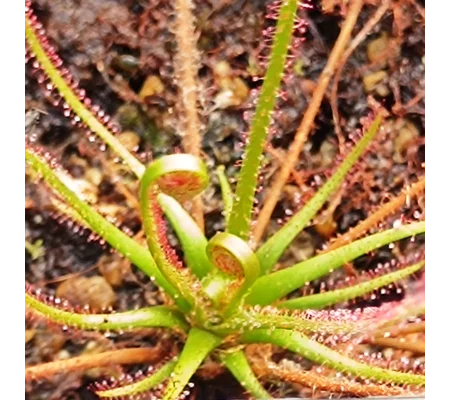
Drosera filiformisDrosera filiformis is a winter hardy plant. It can easily be grown in sphagnum moss on a garden bog or a big trough outside. In those conditions it will self seed profusely. Drosera filiformis and Drosera tracyi are two closely related North American species. So closely infact, that sometimes they are considered just subspecies. Drosera filiformis is found on the Atlantic coast from North Carolina to Nova Scotia along with a few populations in the Florida panhandle. The Florida plants are generally smaller and redder than the Atlantic coast plants and were given the name Drosera filiformis var. floridana. Drosera tracyi is found along the gulf coast from Louisiana to the Florida panhandle and southern Georgia. Both species form hibernacula in the winter although Drosera tracyi and Drosera filiformis var floridana are found in an area generally considered warm temperate and may not survive a real winter. You can find cultivation tips and more on our YouTube channel https://www.youtub...
Temperate Drosera
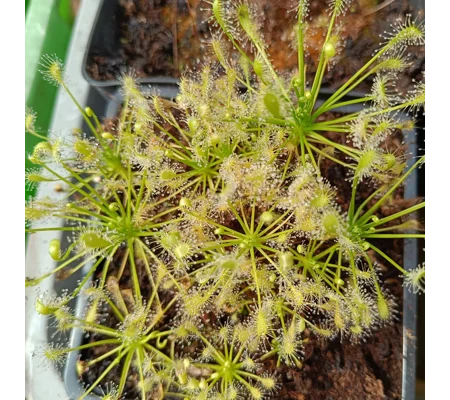
Drosera intermedia Antho free, North Carolina, USADrosera intermedia is one of the most widely distributed species in the genus. It is a temperate or tropical species native to Europe, eastern North America, Cuba, and northern South America. The Cuban and South American forms are tropical and do not form hibernacula in the winter. Drosera intermedia is one of only three Drosera species native to Europe (the others are D. rotundifolia and D. anglica). You can find cultivation tips and more on our YouTube channel https://www.youtube.com/@RanchOfPlants
Temperate Drosera
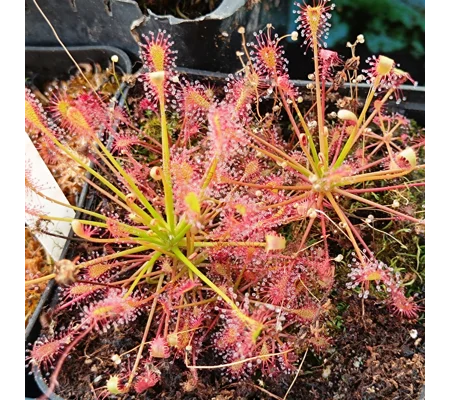
Drosera intermedia RedDrosera intermedia is one of the most widely distributed species in the genus. It is a temperate or tropical species native to Europe, eastern North America, Cuba, and northern South America. The Cuban and South American forms are tropical and do not form hibernacula in the winter. Drosera intermedia is one of only three Drosera species native to Europe (the others are D. rotundifolia and D. anglica). You can find cultivation tips and more on our YouTube channel https://www.youtube.com/@RanchOfPlants
Temperate Drosera
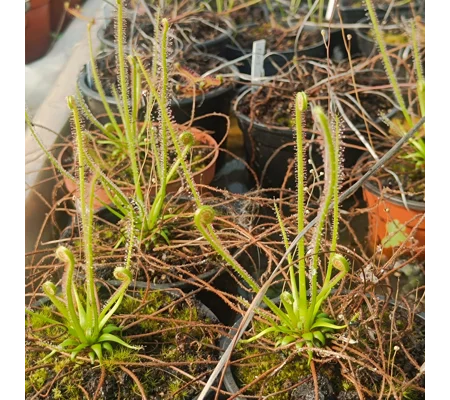
Drosera x californica (subsp. filiformis x subsp. tracy) 'BIG'Drosera filiformis is found on the Atlantic coast of North America from North Carolina to Nova Scotia along with a few populations in the Florida panhandle. The 'BIG' variety forms about 30 cm long and very narrow leaves, covered with sticky hairs. Over a few growing seasons the plant slowly divides to form a clump. To me Drosera filiformis plants look like the land version of a sea anemone. Drosera filiformis is a winter-hardy sundew, it forms a hibernaculum in autumn and dormant throughout winter. It can be grown indoors, but be aware that it will still go dormant. If you don't want or can't overwinter it outside, put the pot with the plant in as cool a spot as possible for 3 to 5 months. Best choice is a fridge. Check the 'Growing CPs' page for more info. Drosera filiformis is self fertile, but doesn't really like to self seed. Also the adult plants are quite big and overgrow smaller ones. So if you want seedlings, do collect the seeds and sow them in a separate pot. One semi-adu...
Temperate Drosera
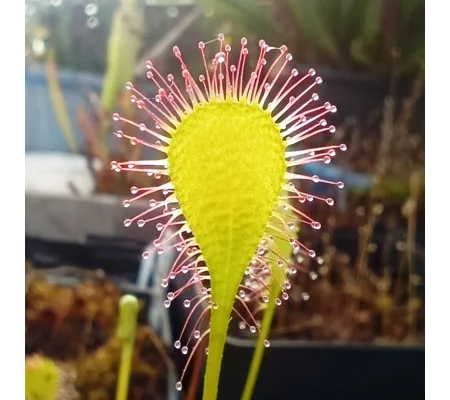
Drosera x obovataDrosera x obovata is an extremely rare natural hybrid of Drosera anglica and Drosera rotundifolia. It can occur anywhere in the northern temperate zone where the two parent species inhabit the same habitat. Natural hybrids are rare, because although both parent are bog plants, they prefer different micro habitats of these environments and may not inhabit the same locality. It can also can be produced by cross-pollinating plants in a collection.


