
Pygmy Drosera

Pygmy Drosera
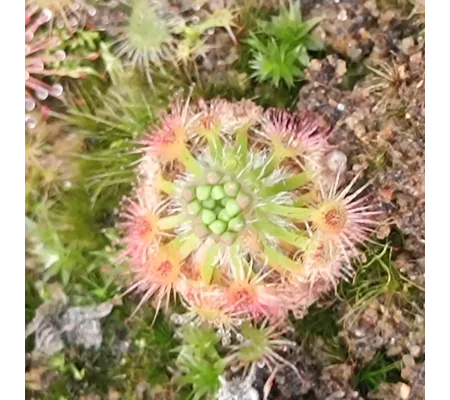
Drosera allantostigma x leucoblasta, 10+ gemmaeDrosera allantostigma x leucoblasta is a rarer pygmy Drosera hybrid. You can find cultivation tips and more on our YouTube channel https://www.youtube.com/@RanchOfPlants
Pygmy Drosera
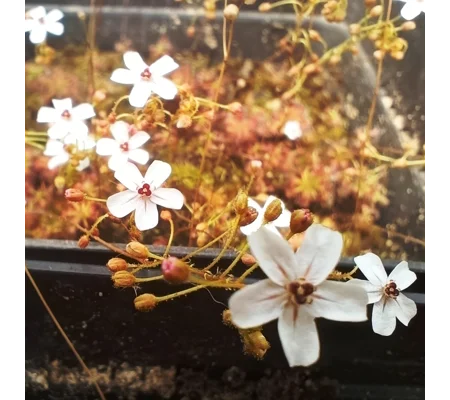
Drosera allantostigma, 10+ gemmaeThe epithet allantostigma is derived from the Greek allantoeidés (sausage-shaped) and stigma (stigma), a reference to the thick, almost horseshoe-shaped and apparently sausage-like stigmas.Drosera allantostigma is known from only a few scattered roadside locations near Hill River north of Perth along the Brand Highway, Western Australia.This species can be found in loam, silica sand or peaty sand soils on the margins of winter-wet depressions.You can find cultivation tips and more on our YouTube channel https://www.youtube.com/@RanchOfPlants
Pygmy Drosera
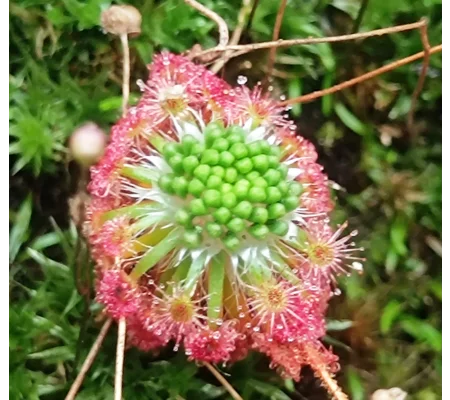
Drosera androsacea, 10+ gemmaeThe epithet androsacea refers to the similarity between the flower of this species and the small, white or pink, 5-petalled flowers of the rock jasmine, Androsace, a genus from the cooler regions of the northern hemisphere. The term androsace (man s shield) is from Greek, a reference to the cushion-like habit of several Androsace species, said to resemble small shields.Drosera androsacea is found in Western Australia to the south of Perth, with records from Corrigin, Dragon Rocks, Katanning, the Stirling Range, Varley and Williams.This species grows in stony, white, sandy-loam soils, as well as in light brown loam with laterite gravels in low, open heath. In summer, these soils may dry out to become compacted and hard.You can find cultivation tips and more on our YouTube channel https://www.youtube.com/@RanchOfPlants
Pygmy Drosera
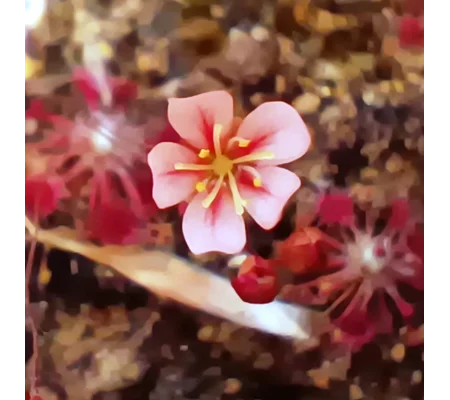
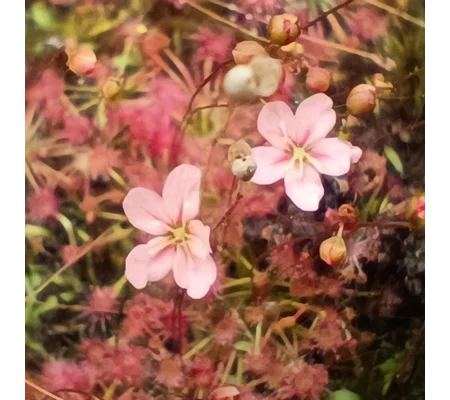
Drosera australis Pink flowers red veins, 10+ gemmaeThe epithet australis is the Latin australis (southern), a reference to this species range at the southwestern tip of Western Australia.Drosera australis is endemic to a strip of land approximately 40 km wide that runs along the south coast of southwestern Western Australia between Augusta and an area east of Esperance.It grows in sandy soils overlying laterite and seems to favour drier situations on ground near to wet depressions.You can find cultivation tips and more on our YouTube channel https://www.youtube.com/@RanchOfPlants
Pygmy Drosera
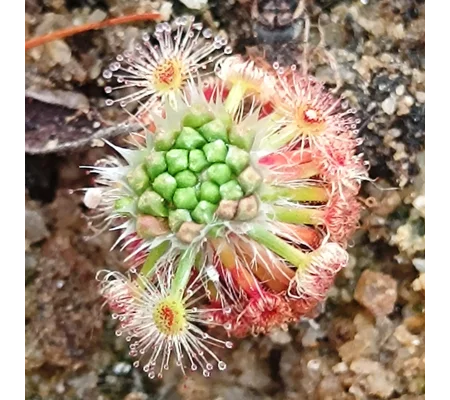
Drosera australis WARRIUP, 10+ gemmaeThe epithet australis is the Latin australis (southern), a reference to this species range at the southwestern tip of Western Australia.Drosera australis is endemic to a strip of land approximately 40 km wide that runs along the south coast of southwestern Western Australia between Augusta and an area east of Esperance.It grows in sandy soils overlying laterite and seems to favour drier situations on ground near to wet depressions.You can find cultivation tips and more on our YouTube channel https://www.youtube.com/@RanchOfPlants
Pygmy Drosera
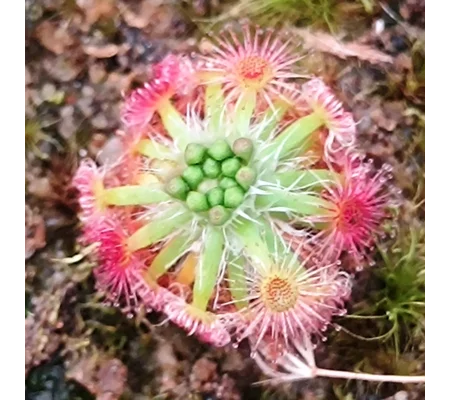
Drosera bindoon, 10+ gemmaeThe epithet bindoon is derived from an indigenous Australian name meaning place where yams grow . This species was first encountered in an area generally referred to as the Bindoon region. Drosera bindoon has a restricted range in Western Australia. It has only been found between Muchea and Wannamal over a distance of 40 km. It grows in heavy laterite soils. You can find cultivation tips and more on our YouTube channel https://www.youtube.com/@RanchOfPlants
Pygmy Drosera
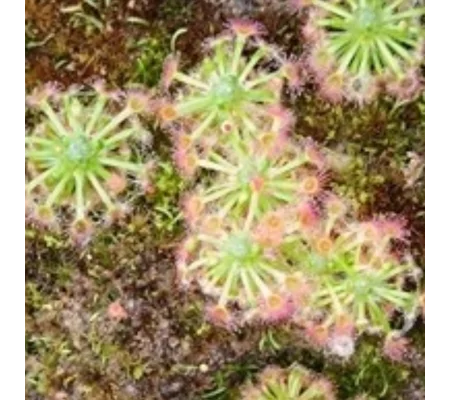
Drosera callistos x lasiantha Dork's Pink, 10+ gemmaeDrosera callistos x lasiantha Dork's pink is the first man-made hybrid pygmy sundew and the first registered variety of pygmy sundew. because of this, it is an extremely important plant in the history of cultivation of this group of plants. On a practical note Dork's pink gave botanists the first conformation that some of the naturally occurring pygmy drosera taxons were actually hybrids and not species. You can find cultivation tips and more on our YouTube channel https://www.youtube.com/@RanchOfPlants
Pygmy Drosera
Drosera callistos, 10+ gemmaeThe epithet callistos is derived from the Greek callistos (beautiful), a reference to the pretty overall form of the plant.Drosera callistos is known from Western Australia where it is recorded around Gidgegannup and the lakes and state forest along the Brookton Highway.It grows in heavy, laterite-covered sandy soils, as well as in patches of pure sand surrounded by laterite derived soils.You can find cultivation tips and more on our YouTube channel https://www.youtube.com/@RanchOfPlants
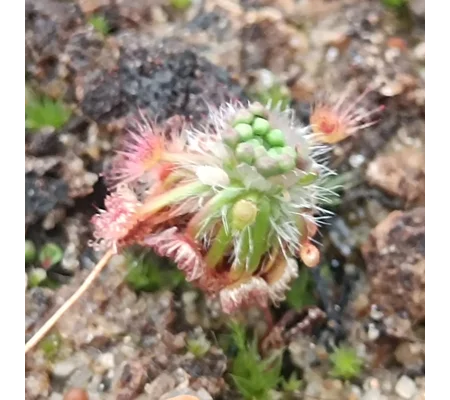
Pygmy Drosera
Drosera closterostigma Mogumber, 10+ gemmaeThe epithet closterostigma is derived from the Greek closteros (spindle-shaped), and stigma (stigma), in reference to the shape of the stigma of this species. Drosera closterostigma is known from Western Australia, with records from Gingin to Cataby, and eastwards towards Mogumber It grows in deep white sand which often appears grey in colour due to the presence of humus. Often situated in winter-wet depressions or swampland heath in association with numerous herbaceous species, low shrubs and paperbark trees (Melaleuca sp.). You can find cultivation tips and more on our YouTube channel https://www.youtube.com/@RanchOfPlants
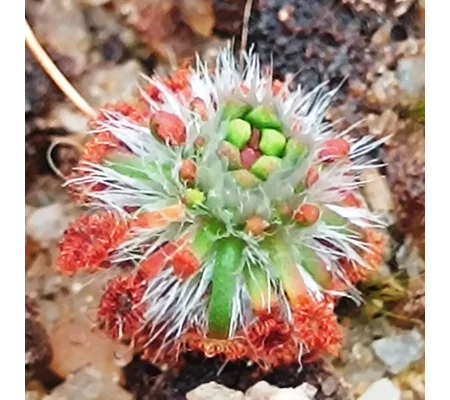
Pygmy Drosera
Drosera coomallo, 10+ gemmaeThe epithet coomallo appears to be derived from a Noongar indigenous Australian word. Its meaning is unknown. Since colonisation, Coomallo has been the name given to Coomallo Creek, named by a surveyor in 1880. Hence, Coomallo Pool, Coomallo phone exchange and Coomallo Nature Reserve, on the edge of which this species was rediscovered. Drosera coomallo is known from Western Australia, with records around Badgingarra, Cataby and Coomallo. This species grows in laterite pebbles with a little silica sand over laterite sheet rock on the slopes of lateritic hills. You can find cultivation tips and more on our YouTube channel https://www.youtube.com/@RanchOfPlants
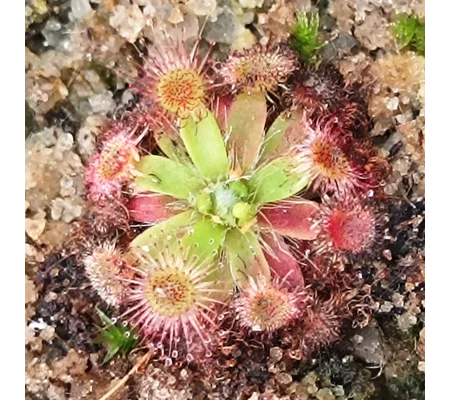
Pygmy Drosera
Drosera depauperata, 10+ gemmaeThe epithet depauperata is from the Latin depauperatus (depauperate), a reference to its much-reduced flower size as compared to the morphologically similar flower of Drosera pulchella. This species is thought to have originated as a fertile natural hybrid between Drosera australis and Drosera pulchella; the reduced flower size of Drosera depauperata may be due to the influence of putative parent Drosera australis, with its rather small flower. Drosera depauperata is known from Western Australia, with records only from the type location on the margins of Lake Pleasant View, near Manypeaks, where it is quite common. It grows on the margins of the lake and in wet depressions in sandy soils under paperbarks (Melaleuca sp.). You can find cultivation tips and more on our YouTube channel https://www.youtube.com/@RanchOfPlants
Pygmy Drosera
Drosera echinoblastus, 10+ gemmaeThe epithet echinoblastus is derived from the Greek echinos (spine) and blastos (shoot), in reference to the bristly stipule bud of this species. Drosera echinoblastus is widespread in the Hill River region, Coomallo and Mount Lesueur in Western Australia, but has a range that runs 100 km to the north and 200 km to the south of this area. It grows in deep white sandy soils or beige clayey-sand soils between and under low shrubs on heathland. Drosera echinoblastus favours sites beside winter-wet streams, streamlets, depressions and watershed areas. You can find cultivation tips and more on our YouTube channel https://www.youtube.com/@RanchOfPlants


